
Science
Innovative Team Targets Chronic Back Pain with Stem Cell Solutions

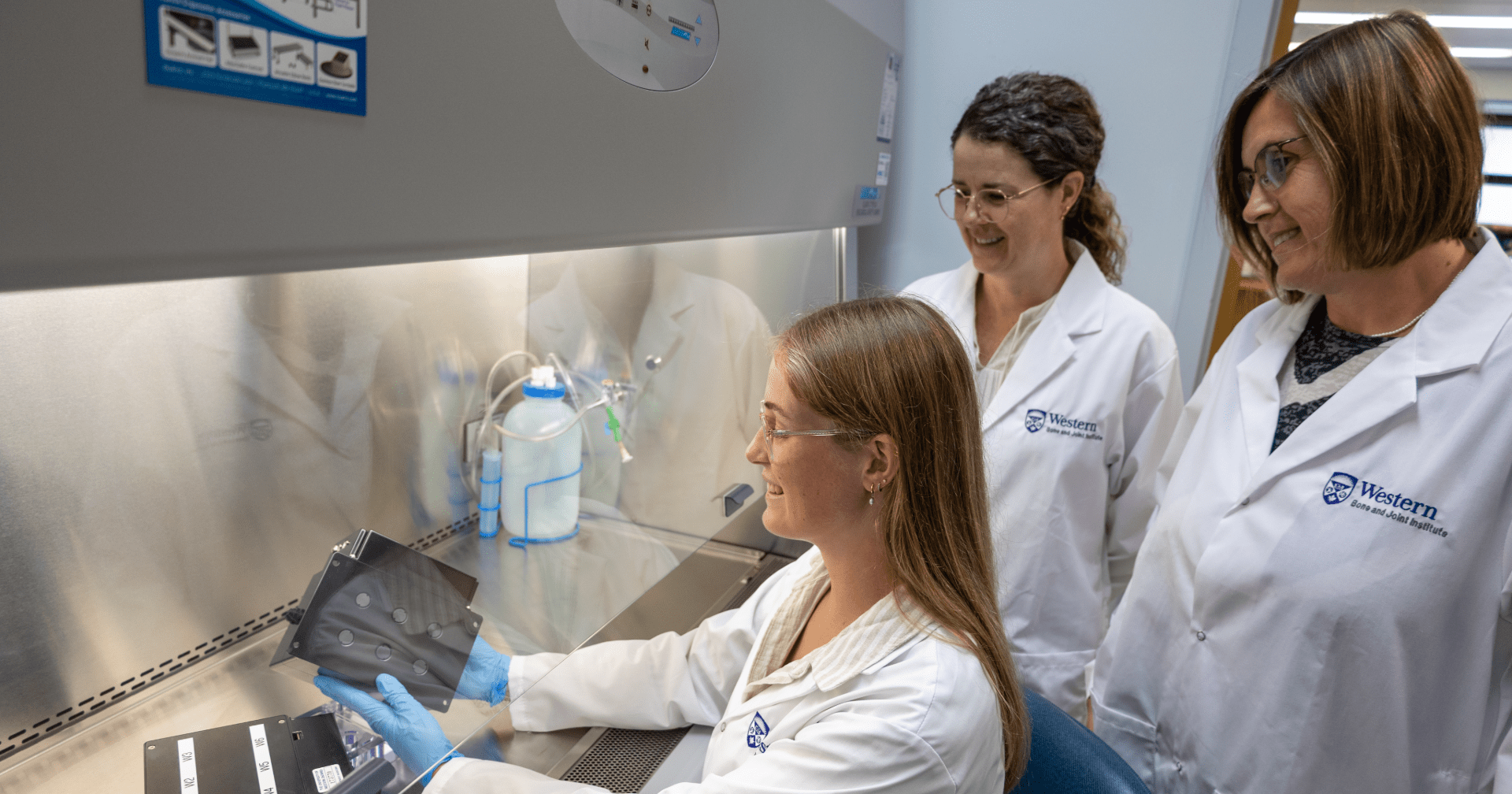
The Bone and Joint Institute at Western University is pioneering a solution for chronic back pain by utilizing stem cells and custom-designed biomaterials. This innovative approach targets intervertebral discs—critical structures that cushion the spine—aiming to restore their function and structure. The interdisciplinary team, co-led by professors Cheryle Séguin and Lauren Flynn, seeks to address a pressing health issue that affects millions globally.
Chronic back pain is one of the most significant health challenges, leading to extensive physical, mental, and economic implications. Currently, there are no effective treatments that restore the function of damaged spinal discs, leaving patients reliant on pain management strategies that often involve frequent visits to healthcare providers. This reliance places a substantial burden on both individuals and healthcare systems.
“We want to create a product that would promote the rebuilding of damaged spinal discs, letting the body heal itself and restoring the structure and mechanical function of the disc—addressing the problem, not just the symptoms,” said Séguin, who is also chair of the Department of Physiology and Pharmacology.
A Unique Research Approach
Séguin’s research focuses on the biology of intervertebral discs in the context of common spine disorders. Recognizing the complexity of repairing degenerative discs, she collaborated with Flynn, who specializes in natural biomaterials that foster soft tissue regeneration. Together, they aim to combine diverse expertise to develop innovative solutions. They also partnered with Brian Amsden from Queen’s University, an expert in synthetic biomaterials, to enhance their research.
“We’ve made important contributions to our respective fields, but to get new ideas for back pain to the finish line, it’s necessary to bring diverse expertise together,” Séguin noted.
Flynn emphasized the excitement of this interdisciplinary collaboration. “We are combining knowledge and techniques with different ingredients so we can make something new. To us, that’s the exciting part—working at the interface between disciplines to develop breakthrough products.”
The Bone and Joint Institute team is also collaborating with researchers across Canada and the United States to validate and test their treatment strategies. Key contributors include Lisbet Haglund from McGill University, who specializes in bioreactor platforms for simulating the human spine, and Dmitriy Sheyn at Cedars-Sinai Medical Center, who analyzes treatments using pre-clinical disc degeneration models. Their insights are vital in shaping the development of new biomaterials and stem cell treatments, according to Flynn.
From Concept to Clinical Application
The journey of interdisciplinary research often begins with passionate discussions among researchers sharing common interests. Séguin and Flynn expressed their gratitude for the seed funding, trainee awards, and collaborative environment provided by the Bone and Joint Institute, which they consider essential for turning their ideas into actionable research.
“The trainees are the ones that allow us to build the bridges. I didn’t have a background in intervertebral discs. I worked with other soft connective tissues. Cheryle and I connected at Bone and Joint Institute events and saw the synergy, and the trainees funded by the institute made it work,” Flynn explained.
After a decade of refining this research idea, the team is now gaining traction with significant funding, including a $960,000 project grant from the Canadian Institutes of Health Research and an $270,000 Impact Award from the Stem Cell Network.
While the research remains in its early stages—focusing on material development and cell culture experiments—the potential impact is substantial. “We need to test and adjust ingredients to improve outcomes, safety, and efficiency, so we are still years away from getting our products to patients,” Flynn said. “But the potential is huge for our healthcare system and, more importantly, for millions of people who may be able to live and work free of pain.”
The work being done at the Bone and Joint Institute represents a significant step forward in addressing chronic back pain, offering hope for improved quality of life for countless individuals suffering from this pervasive condition.

Calvary United Hosts Festive Music Event on Dec. 7, 2025!

Urgent: Police Hunt for White Mercedes SUV in Hit-and-Run

Wayne Gretzky Spotted Golfing with Trump, Sparks Controversy

Ontario’s Loyalty Point Bill Sparks Controversy Amid Consumer Concerns

Vancouver’s Luxury Real Estate Market Faces Challenges Amid Zoning Changes

Alberta Premier Asserts United Conservative Party Is Not Separatist

Metro Vancouver Faces Housing Crisis as Approvals Stall

Pan-Arctic Vision 2025 in Iqaluit Celebrates Cultural Diversity

Innovative Team Targets Chronic Back Pain with Stem Cell Solutions

Secwepemc First Nation Seeks Aboriginal Title Over Kamloops Area

Scientists Unearth Ancient Antarctic Ice to Unlock Climate Secrets

Trump and McCormick to Announce $70 Billion Energy Investments

Four Astronauts Return to Earth After International Space Station Mission

TransLink Launches Food Truck Program to Boost Revenue in Vancouver

Apple Notes Enhances Functionality with Markdown Support in macOS 26

Manitoba’s Burger Champion Shines Again Amid Dining Innovations

Urgent Update: Fatal Crash on Highway 99 Claims Life of Pitt Meadows Man

Ukrainian Tennis Star Elina Svitolina Faces Death Threats Online
-
 Politics4 weeks ago
Secwepemc First Nation Seeks Aboriginal Title Over Kamloops Area
-
 World5 months ago
Scientists Unearth Ancient Antarctic Ice to Unlock Climate Secrets
-
 Entertainment5 months ago
Trump and McCormick to Announce $70 Billion Energy Investments
-
 Science5 months ago
Four Astronauts Return to Earth After International Space Station Mission
-
 Lifestyle5 months ago
TransLink Launches Food Truck Program to Boost Revenue in Vancouver
-
 Technology3 months ago
Apple Notes Enhances Functionality with Markdown Support in macOS 26
-
 Lifestyle3 months ago
Manitoba’s Burger Champion Shines Again Amid Dining Innovations
-
 Top Stories2 months ago
Urgent Update: Fatal Crash on Highway 99 Claims Life of Pitt Meadows Man
-
 Politics4 months ago
Ukrainian Tennis Star Elina Svitolina Faces Death Threats Online
-

 Sports5 months ago
Search Underway for Missing Hunter Amid Hokkaido Bear Emergency
-

 Politics5 months ago
Carney Engages First Nations Leaders at Development Law Summit
-

 Technology5 months ago
Frosthaven Launches Early Access on July 31, 2025