
Entertainment
Pan-Arctic Vision 2025 in Iqaluit Celebrates Cultural Diversity

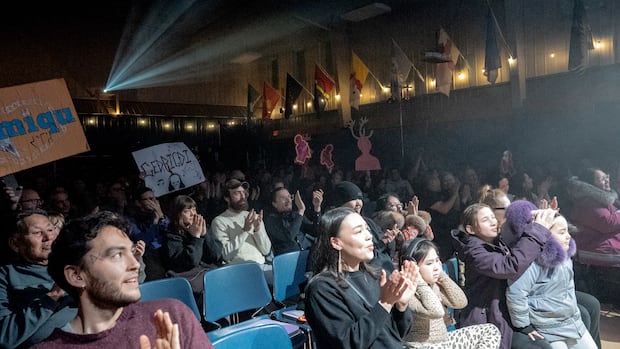
The Pan-Arctic Vision 2025 festival concluded in Iqaluit, Nunavut, on Saturday, celebrating cultural diversity and community through a unique musical experience. This year marked the first time the festival was held in North America, following its inception in 2023 in Vadsø, Norway. The event has become a platform for artists from across the Arctic, showcasing a rich tapestry of languages and cultures.
Nine artists participated in this year’s competition, each bringing their own distinct styles and messages. Festival-goers were treated to performances that explored themes of justice, belonging, and the essence of home. Among the performers was Nunavut rapper Shauna Seeteenak, whose work resonated deeply with the audience.
Rannva Erlingstottir Simonsen, a festival attendee from the Faroe Islands, expressed her excitement about the event. “I got goosebumps all over,” she said, noting that it was the first time an artist from her homeland had taken the stage at this festival. She described the experience as “a crazy amazing dream come true,” highlighting the festival’s ability to unite diverse cultures.
Celebrating Musical Achievement
Icelandic rock band Geðbrigði garnered the award for the most revolutionary song at the festival. Bass player Ásthildur Emma Ingileifardóttir shared that their song challenges the perception of religion and promotes equality for women, queer, and trans individuals. “Be loud and vocal about things that are unfair in life. Stand up for the right thing and fight for the good in the world,” she urged, emphasizing the importance of using music as a platform for social change.
Another notable performance came from Sami artist Linus Johnsen, who, along with drummer Eirik Hagcvedt, won recognition for a traditional yoik. The piece focused on community and the feelings associated with returning home, particularly to his beloved cat and family. “When I get back, I get to pet my cat [Trina] and meet my family,” Johnsen explained. He composed the yoik in the endangered Sapmi language, reinforcing the connection between music, identity, and community.
“It brings a sense of community to have the music in our own language,” he stated, reflecting on the pride that comes from maintaining cultural heritage. Johnsen expressed his joy about participating in the festival, describing the atmosphere in Iqaluit as lively and welcoming.
The festival not only showcased musical talent but also fostered connections among diverse artists and audiences, making it a landmark event in the Arctic cultural calendar. As the festival transitions to the Faroe Islands for 2026, the experiences and stories shared in Iqaluit will undoubtedly resonate in the years to come.











Calvary United Hosts Festive Music Event on Dec. 7, 2025!

Urgent: Police Hunt for White Mercedes SUV in Hit-and-Run

Wayne Gretzky Spotted Golfing with Trump, Sparks Controversy

Ontario’s Loyalty Point Bill Sparks Controversy Amid Consumer Concerns

Vancouver’s Luxury Real Estate Market Faces Challenges Amid Zoning Changes

Alberta Premier Asserts United Conservative Party Is Not Separatist

Metro Vancouver Faces Housing Crisis as Approvals Stall

Pan-Arctic Vision 2025 in Iqaluit Celebrates Cultural Diversity

Innovative Team Targets Chronic Back Pain with Stem Cell Solutions

Secwepemc First Nation Seeks Aboriginal Title Over Kamloops Area

Scientists Unearth Ancient Antarctic Ice to Unlock Climate Secrets

Trump and McCormick to Announce $70 Billion Energy Investments

Four Astronauts Return to Earth After International Space Station Mission

TransLink Launches Food Truck Program to Boost Revenue in Vancouver

Apple Notes Enhances Functionality with Markdown Support in macOS 26

Manitoba’s Burger Champion Shines Again Amid Dining Innovations

Urgent Update: Fatal Crash on Highway 99 Claims Life of Pitt Meadows Man

Ukrainian Tennis Star Elina Svitolina Faces Death Threats Online
-
 Politics4 weeks ago
Secwepemc First Nation Seeks Aboriginal Title Over Kamloops Area
-
 World5 months ago
Scientists Unearth Ancient Antarctic Ice to Unlock Climate Secrets
-
 Entertainment5 months ago
Trump and McCormick to Announce $70 Billion Energy Investments
-
 Science5 months ago
Four Astronauts Return to Earth After International Space Station Mission
-
 Lifestyle5 months ago
TransLink Launches Food Truck Program to Boost Revenue in Vancouver
-
 Technology3 months ago
Apple Notes Enhances Functionality with Markdown Support in macOS 26
-
 Lifestyle3 months ago
Manitoba’s Burger Champion Shines Again Amid Dining Innovations
-
 Top Stories2 months ago
Urgent Update: Fatal Crash on Highway 99 Claims Life of Pitt Meadows Man
-
 Politics4 months ago
Ukrainian Tennis Star Elina Svitolina Faces Death Threats Online
-

 Sports5 months ago
Search Underway for Missing Hunter Amid Hokkaido Bear Emergency
-
 Politics5 months ago
Carney Engages First Nations Leaders at Development Law Summit
-

 Technology5 months ago
Frosthaven Launches Early Access on July 31, 2025