
World
Canadian Border Officer Sues India Over False Terror Claims

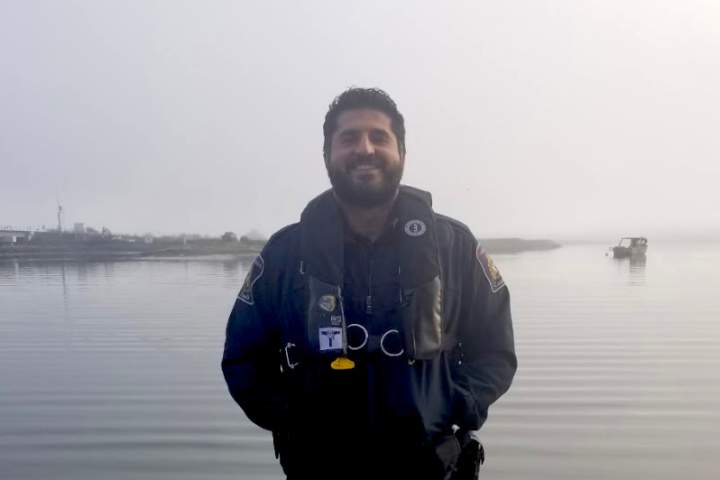
A Canadian border officer is taking legal action against the Indian government, alleging defamation and a state-sponsored disinformation campaign that has significantly impacted his life. The officer, Sandeep Singh Sidhu, was falsely portrayed as a “terrorist” by Indian media, which claimed he was on the payroll of the Canada Border Services Agency (CBSA). The lawsuit seeks $9 million in damages and aims to hold India accountable for what Sidhu describes as an orchestrated effort to embarrass Canada.
In October 2023, several Indian news outlets reported that Sidhu was a fugitive wanted for terrorism, labeling him a “dreaded terrorist.” This claim was accompanied by sensational headlines such as “Trudeau’s tax-funded terrorist” and “Canada rewards assassin.” These assertions were categorically denied by the Canadian government and Sidhu’s legal representatives, who argue that he became a target of an Indian disinformation campaign.
Sidhu, a lifelong resident of British Columbia, has dedicated over two decades to safeguarding Canada’s borders. His lawsuit, filed in Ontario, states that India used him as a scapegoat to retaliate against Canada for accusing the Indian government of violence on Canadian soil. The statement of claim accuses India of recklessly making Sidhu the face of a propaganda effort, which they allege was designed to discredit Canada.
The lawsuit outlines a troubling sequence of events, asserting that Sidhu was subjected to a “tidal wave of aggressive misinformation.” Following the broadcasts, he faced public calls for his arrest and even threats against his life, prompting him to go into hiding. Despite the threats, the CBSA allegedly failed to provide adequate protection, with claims that the agency threatened him with suspension for not cooperating with intrusive background checks.
Sidhu’s troubles began escalating after he was falsely linked to a broader narrative pushed by Indian media that painted Canada as a haven for anti-India terrorists. The situation intensified following the assassination of another Sikh activist, Hardeep Singh Nijjar, in Surrey, British Columbia, which led to heightened tensions between Canada and India.
The disinformation campaign against Sidhu gained traction in a climate where India has increasingly targeted the Sikh diaspora, particularly those advocating for Khalistan, an independent state for Sikhs in India. This hostility culminated in a series of violent incidents, prompting Canadian authorities to investigate potential links between Indian agents and these acts.
In the aftermath of these developments, Sidhu found himself at the center of a media storm. His name and personal information were disseminated across Indian news platforms, where he was labeled a “terrorist mastermind.” The claims, which included disturbing accusations of connections to terrorist organizations, were based on what Sidhu’s lawsuit describes as “blatantly false and defamatory allegations.”
The RCMP has indicated that its investigations support claims of foreign interference and disinformation, yet Canadian Prime Minister Mark Carney has sought to strengthen diplomatic ties with India, even as evidence mounts regarding the Indian government’s actions against Canadians. In a recent meeting at the G20 summit, Carney and Indian Prime Minister Narendra Modi discussed a potential trade deal, which could significantly impact Canada’s economic landscape.
The fallout from Sidhu’s case underscores a broader issue of disinformation and the precarious position of individuals who find themselves caught in geopolitical disputes. As Sidhu’s lawsuit progresses, it raises critical questions about the responsibilities of governments to protect their citizens from international smear campaigns.
Sidhu’s experience has taken a toll on his mental health. He has undergone treatment for clinical depression and post-traumatic stress disorder, exacerbated by the threats and harassment he faced. The lawsuit highlights that Sidhu’s struggles were compounded by a lack of support from his employer, which he claims dismissed his concerns and failed to take necessary precautions for his safety.
The High Commission of India in Ottawa has not responded to requests for comment regarding the allegations made in Sidhu’s lawsuit. Meanwhile, the Indian government has consistently denied engaging in disinformation campaigns or transnational repression.
As this case unfolds, it not only reflects the personal ramifications for Sidhu but also shines a light on the broader implications for Canada’s South Asian community, which has increasingly found itself in the crosshairs of international tensions. The outcome of this lawsuit could set a precedent for how states are held accountable for their actions and the impact of misinformation in the digital age.











Appeals Court Weighs Urgent Release of Immigration Detainees

Calgary Firefighters Battle Blaze in Historic Wooden Building

Whitehorse Nonprofits Urge Government to Revive Free Transit Program

Saskatchewan Health Minister Calls for Urgent Probe into Controversial ALS Facility

Urgent Talks Begin for Repurposing Old RAM Building in Alberta

Friends and Family Demand Justice for Murdered B.C. Mom in Court

Haiti Announces August 2026 Elections Amid Ongoing Gang Violence

Raccoon Launches Late-Night Liquor Store Rampage in Virginia

US-Russia Talks on Ukraine Yield Progress, Challenges Ahead

Secwepemc First Nation Seeks Aboriginal Title Over Kamloops Area

Scientists Unearth Ancient Antarctic Ice to Unlock Climate Secrets

Trump and McCormick to Announce $70 Billion Energy Investments

Four Astronauts Return to Earth After International Space Station Mission

TransLink Launches Food Truck Program to Boost Revenue in Vancouver

Apple Notes Enhances Functionality with Markdown Support in macOS 26

Manitoba’s Burger Champion Shines Again Amid Dining Innovations

Urgent Update: Fatal Crash on Highway 99 Claims Life of Pitt Meadows Man

Ukrainian Tennis Star Elina Svitolina Faces Death Threats Online
-
 Politics4 weeks ago
Secwepemc First Nation Seeks Aboriginal Title Over Kamloops Area
-
 World5 months ago
Scientists Unearth Ancient Antarctic Ice to Unlock Climate Secrets
-
 Entertainment5 months ago
Trump and McCormick to Announce $70 Billion Energy Investments
-
 Science5 months ago
Four Astronauts Return to Earth After International Space Station Mission
-
 Lifestyle5 months ago
TransLink Launches Food Truck Program to Boost Revenue in Vancouver
-
 Technology3 months ago
Apple Notes Enhances Functionality with Markdown Support in macOS 26
-
 Lifestyle3 months ago
Manitoba’s Burger Champion Shines Again Amid Dining Innovations
-
 Top Stories2 months ago
Urgent Update: Fatal Crash on Highway 99 Claims Life of Pitt Meadows Man
-
 Politics4 months ago
Ukrainian Tennis Star Elina Svitolina Faces Death Threats Online
-

 Sports5 months ago
Search Underway for Missing Hunter Amid Hokkaido Bear Emergency
-
 Politics5 months ago
Carney Engages First Nations Leaders at Development Law Summit
-

 Technology5 months ago
Frosthaven Launches Early Access on July 31, 2025