
Science
University of Guelph Awards Shakespeare VR as 2025 Innovation of the Year

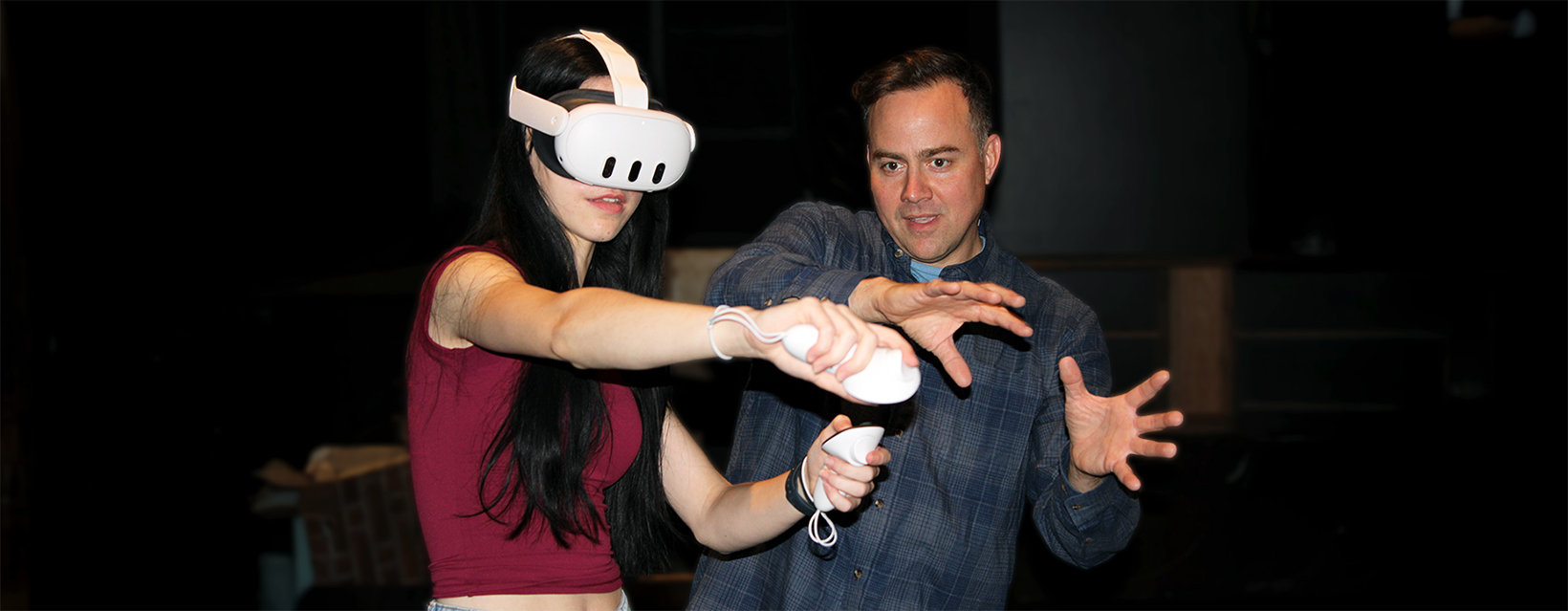
A virtual reality theatre project that immerses high school students in the world of Shakespeare has been honored with the University of Guelph’s 2025 Innovation of the Year Award. This initiative transforms classic plays into interactive performances, making Shakespeare accessible to learners regardless of their location. The award, presented by the University’s Office of Research and the Research Innovation Office, recognizes significant research outcomes that lead to innovative strategies, products, or services that positively impact lives.
Dr. Shayan Sharif, interim vice-president of research at the University, emphasized the project’s potential for real-world impact. “This project is a perfect example of turning innovation into real-world impact,” he stated. “By combining cutting-edge virtual reality with Shakespeare’s works, we’re improving life for students through an immersive, interactive approach that reimagines how these stories are experienced.”
The technology behind this initiative was co-designed by Dr. Peter Kuling, a professor in the School of Theatre, English, and Creative Writing, in collaboration with Calian, an Ottawa-based company specializing in virtual reality development. Dr. Kuling explained his choice of partner: “I partnered with Calian because they understood the psychological and spatial experience of being ‘inside’ a scene.” He noted their prior work with the Canadian War Museum, which provided valuable insights into environmental design and realism in virtual spaces.
The project originated during the COVID-19 pandemic, spurred by a funding initiative from the Government of Ontario aimed at supporting digital and innovative teaching projects for high schools, colleges, and universities. Dr. Kuling sought to explore the potential of bringing theatre into a digital format, asking himself how he could help students better understand Shakespeare. “This project gives students a chance to experience Shakespeare not as a distant text, but as a living, breathing world they can step inside,” he said.
The initiative launched with the Hamlet VR Experience, followed by the Macbeth VR Experience. Each production is designed to be interactive, lasting between 12 and 26 minutes. In the Hamlet VR, users assume the role of Bernardo, a castle guard, who encounters the ghost of Hamlet’s father. They can choose to speak the character’s lines or let an actor deliver them. In the Macbeth VR, users embody one of the three witches, casting spells and delivering prophecies, with the option to replay from each witch’s perspective to experience the narrative differently.
Inclusivity is a key feature of these experiences, which incorporate diverse characters and settings that reflect contemporary Canada. They are designed to be accessible to a broad audience, offering both standing and seated options, as well as multilingual support through recorded dialogue rather than on-screen text. This approach has provided a transformative way for Ontario high school students to engage with Shakespeare, with the resources available to schools across the province and even reaching educators in locations such as California and the United Kingdom.
At John Fraser Secondary School in Mississauga, educators have noted a positive response from students engaging with the VR experiences. English and history teacher Robert Gale remarked, “Watching students step inside the world of the play was incredible, and even those who are usually shy lit up. The immersive details and 360-degree environment helped them feel the story rather than just read it, and it brought Shakespeare to life in a way I’ve never seen in a classroom.”
Looking ahead, Dr. Kuling plans to expand the project with additional Shakespeare plays, including VR Julius Caesar and VR Antony and Cleopatra. He is also developing the Globe VR Experience, a virtual reality recreation of Shakespeare’s Globe Theatre, which will allow students to engage with Shakespeare’s original theatre setting. This project is expected to launch in 2026.
“With the Globe VR Experience, we’re bringing Shakespeare’s world directly to students, with no travel required,” Dr. Kuling stated. “We can bring world-class performances directly to students at every level, from high school to university.”
Dr. Kuling views the Innovation of the Year Award as a collective achievement, highlighting the collaborative effort behind the project. “This project was built on collaboration and creativity, and the award truly belongs to everyone who worked together to make something innovative and inspiring,” he said. “It’s humbling to see an idea that grew through teamwork and imagination recognized as Innovation of the Year. This work is about expanding educational opportunities, supporting students, and demonstrating how the arts can innovate alongside technology.”
Numerous collaborators contributed to the success of the virtual performances, including Theatre Studies PhD students Alice Hinchliffe and Erin O’Brien, alumni Gabriella Sundar-Singh, Kyle Blair, and Kyle Golemba, as well as company members from the Stratford and Shaw Festivals. Funding for this research was provided by the Ontario Exchange Network.












Calgary Braces for Chilly Morning, Flurries Possible until 6 AM

Toronto Maple Leafs Surge to 4-1 Victory Over Panthers

Vancouver Launches Urgent Network to Combat Food Insecurity

Appeals Court Weighs Urgent Release of Immigration Detainees

Calgary Firefighters Battle Blaze in Historic Wooden Building

Whitehorse Nonprofits Urge Government to Revive Free Transit Program

Saskatchewan Health Minister Calls for Urgent Probe into Controversial ALS Facility

Urgent Talks Begin for Repurposing Old RAM Building in Alberta

Friends and Family Demand Justice for Murdered B.C. Mom in Court

Secwepemc First Nation Seeks Aboriginal Title Over Kamloops Area

Scientists Unearth Ancient Antarctic Ice to Unlock Climate Secrets

Trump and McCormick to Announce $70 Billion Energy Investments

Four Astronauts Return to Earth After International Space Station Mission

TransLink Launches Food Truck Program to Boost Revenue in Vancouver

Apple Notes Enhances Functionality with Markdown Support in macOS 26

Manitoba’s Burger Champion Shines Again Amid Dining Innovations

Urgent Update: Fatal Crash on Highway 99 Claims Life of Pitt Meadows Man

Ukrainian Tennis Star Elina Svitolina Faces Death Threats Online
-
 Politics4 weeks ago
Secwepemc First Nation Seeks Aboriginal Title Over Kamloops Area
-
 World5 months ago
Scientists Unearth Ancient Antarctic Ice to Unlock Climate Secrets
-
 Entertainment5 months ago
Trump and McCormick to Announce $70 Billion Energy Investments
-
 Science5 months ago
Four Astronauts Return to Earth After International Space Station Mission
-
 Lifestyle5 months ago
TransLink Launches Food Truck Program to Boost Revenue in Vancouver
-
 Technology3 months ago
Apple Notes Enhances Functionality with Markdown Support in macOS 26
-
 Lifestyle3 months ago
Manitoba’s Burger Champion Shines Again Amid Dining Innovations
-
 Top Stories2 months ago
Urgent Update: Fatal Crash on Highway 99 Claims Life of Pitt Meadows Man
-
 Politics4 months ago
Ukrainian Tennis Star Elina Svitolina Faces Death Threats Online
-

 Sports5 months ago
Search Underway for Missing Hunter Amid Hokkaido Bear Emergency
-

 Politics5 months ago
Carney Engages First Nations Leaders at Development Law Summit
-

 Technology5 months ago
Frosthaven Launches Early Access on July 31, 2025