
Sports
New Wave of Female Fans Transforms Formula One’s Landscape

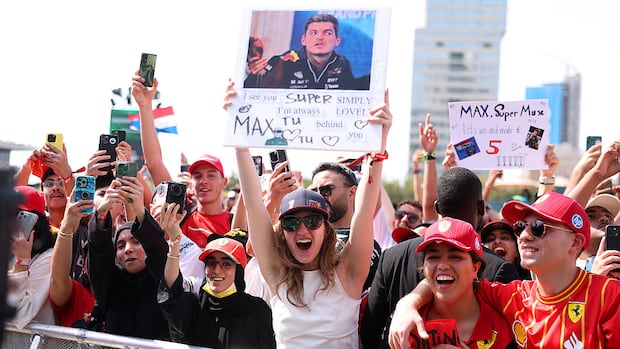
The landscape of Formula One (F1) is undergoing a significant transformation as a new generation of female fans and Gen Z enthusiasts reshape the sport’s future. This evolution, marked by increased engagement and a more diverse audience, is partly attributed to the influence of social media and innovative content creators.
Cadence Wille, a 26-year-old F1 content creator from Victoria, Australia, embodies this shift. With a family history in motorsport, she began following F1 in 2020, quickly becoming captivated by the intricate world of car development and racing rules. “Instantly,” she recalls, “it wasn’t just the track action that was exciting.” In recent years, F1 has surged from a niche motorsport to a mainstream spectacle, significantly influenced by the Netflix series Drive to Survive.
From niche to mainstream, F1 has evolved into a global entertainment powerhouse, leading to a burgeoning fan base that is younger and more diverse than ever. According to recent statistics, 42 percent of F1 fans are now under the age of 35, while women represent 41 percent of the fan demographic. Notably, female fans account for three out of every four new followers, highlighting a substantial shift from traditional perceptions of the sport.
Tiggy Valen, another prominent content creator based in California, started her journey in 2022. She recognized a gap in accessible content for new fans, predominantly dominated by technical analyses presented by older male commentators. Valen aimed to create an “educational on-ramp” for newcomers, producing starter-pack videos that explain the basics of F1. “When people are saying DRS [drag reduction system], what does that mean?” she asked, emphasizing the need for clarity in a sport that can seem daunting to newcomers.
As the sport expands, it has fostered community building among fans, particularly women. Valen reflects on the early 2020s when F1 fandom in the United States lacked a cohesive community. “We wanted to create a community of mostly women who enjoyed the sport and didn’t really have a lot of people in their lives to talk to about it,” she explained.
The rapid growth of the sport’s popularity is evident, with a more eclectic fan base emerging. James Hinchcliffe, a Canadian racecar driver and analyst for F1TV, noted the remarkable transformation, saying, “We went from it being a stuffy, old rich white guy sport to it being one of the most eclectic fan bases of any sport anywhere.”
This transformation is not just superficial; it has led to greater accessibility within the sport. Bernie Collins, an analyst for Sky Sports F1 and former head of race strategy for Aston Martin, emphasized the importance of social media in bridging the gap between F1 and its fans. “Now they’ve done the best with social media interaction, with short clips,” he said, highlighting the sport’s shift towards engaging content that appeals to a broader audience.
Today’s F1 drivers are also embracing a more open and relatable image. Reigning World Drivers’ Champion Max Verstappen, for example, has cultivated a significant following on platforms like Twitch, where he engages with fans directly. Lewis Hamilton has transformed into a fashion icon, securing partnerships with brands like Lululemon and Dior, further broadening F1’s appeal beyond traditional motorsport audiences.
The financial implications of this shift are substantial. The average value of an F1 team now exceeds $5 billion CAD, with Alpine, the sport’s lowest-performing team, valued at more than $3 billion CAD—nearly double its value from 2023. Valen pointed out that women are demonstrating increased purchasing power within the sport. “They’re showing up not only with energy and passion, but they’re also buying the merch,” she noted.
Recognizing the evolving audience, F1 teams are forming partnerships with beauty brands such as Charlotte Tilbury and Elemis, marking a departure from traditional sponsorship deals dominated by tech and betting companies. Valen highlighted this trend as a significant shift in the type of brands associated with the sport, reflecting a more inclusive approach to sponsorship.
The representation of women in F1 is also improving. Laura Mueller made headlines as F1’s first female race engineer when she was appointed by Haas in early 2025. Meanwhile, Hannah Schmitz, the principal strategy engineer for Red Bull, celebrated a podium finish alongside Verstappen, showcasing the growing visibility of women in technical roles.
In 2022, F1 launched the F1 Academy, an all-female racing series aimed at nurturing female talent in the sport. This initiative, led by former professional driver Susie Wolff, aims to promote gender diversity within motorsport, with all ten F1 teams sponsoring Academy drivers.
Despite these advancements, challenges remain. While women now comprise 38 percent of the sport’s workforce—up from 28 percent in 2017—they still occupy a higher percentage of lower-paying roles. This disparity highlights ongoing issues in the pursuit of equality within the sport.
Valen remains optimistic about the future, believing that the shifting fan demographic is instrumental in pushing for greater representation. “I think fans—especially newer fans and especially female fans—are making their voices heard,” she stated. “I think they’re holding the sport accountable in a way that it really hasn’t been held accountable in the past.”
The transformation of Formula One illustrates a significant cultural shift, driven by a new generation of fans who are reshaping the narrative of the sport. As F1 continues to grow, the influence of women and younger audiences will likely play a crucial role in defining its future.













Zohran Mamdani, Louvre Among Most Mispronounced Words of 2025

FIFA World Cup 2026 Draw Set for Friday at Kennedy Center

College of the Rockies Launches Gasfitter Class B Level 2 Program

Ecuador’s President Linked to Alleged Drug Trafficking Through Bananas

Hearing on Charter Rights of Kitchener Encampment Residents Delayed

Christians Face Persecution Globally as Freedom Wanes

Sister Abandons Family Care for Romance During Costa Rica Retreat

Urgent: Canadian Families Face $1,000 Grocery Increase in 2026

First Nations Hunter Strengthens Bonds with Farmers in Saskatchewan

Secwepemc First Nation Seeks Aboriginal Title Over Kamloops Area

Scientists Unearth Ancient Antarctic Ice to Unlock Climate Secrets

Trump and McCormick to Announce $70 Billion Energy Investments

Four Astronauts Return to Earth After International Space Station Mission

TransLink Launches Food Truck Program to Boost Revenue in Vancouver

Apple Notes Enhances Functionality with Markdown Support in macOS 26

Manitoba’s Burger Champion Shines Again Amid Dining Innovations

Urgent Update: Fatal Crash on Highway 99 Claims Life of Pitt Meadows Man

Ukrainian Tennis Star Elina Svitolina Faces Death Threats Online
-
 Politics4 weeks ago
Secwepemc First Nation Seeks Aboriginal Title Over Kamloops Area
-
 World5 months ago
Scientists Unearth Ancient Antarctic Ice to Unlock Climate Secrets
-
 Entertainment5 months ago
Trump and McCormick to Announce $70 Billion Energy Investments
-
 Science5 months ago
Four Astronauts Return to Earth After International Space Station Mission
-
 Lifestyle5 months ago
TransLink Launches Food Truck Program to Boost Revenue in Vancouver
-
 Technology3 months ago
Apple Notes Enhances Functionality with Markdown Support in macOS 26
-
 Lifestyle3 months ago
Manitoba’s Burger Champion Shines Again Amid Dining Innovations
-
 Top Stories2 months ago
Urgent Update: Fatal Crash on Highway 99 Claims Life of Pitt Meadows Man
-
 Politics4 months ago
Ukrainian Tennis Star Elina Svitolina Faces Death Threats Online
-

 Sports5 months ago
Search Underway for Missing Hunter Amid Hokkaido Bear Emergency
-

 Politics5 months ago
Carney Engages First Nations Leaders at Development Law Summit
-

 Technology5 months ago
Frosthaven Launches Early Access on July 31, 2025