
Top Stories
Saskatoon Cuts Solar Power Rates, Disappoints Local Business Owner

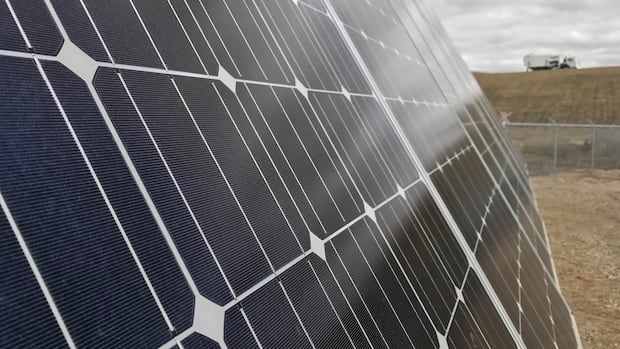
URGENT UPDATE: Saskatoon’s solar power landscape is shifting dramatically after city council’s unanimous decision to slash compensation rates for solar energy producers. This move, revealed during budget talks last week, has left local business owners and eco-conscious citizens reeling over the future of renewable energy in the city.
The council’s decision, made on October 10, 2023, reduces the compensation rates for customers of Saskatoon Light and Power, impacting those who generate solar energy and sell it back to the grid. The new rates will dramatically decrease annual savings from $70,000 to just $25,000, marking a significant blow to the local green energy movement.
Brent Veitch, co-owner of Rock Paper Sun Ltd., expressed his disappointment during an interview on Saskatoon Morning with host Stephanie Massicotte. “We used to be a real leader in the country,” Veitch lamented. “I was really proud to be a Saskatoon citizen, leading with green and solar technologies.” His sentiments reflect a growing concern among the 458 customers currently participating in these renewable energy programs.
The council did endorse a grandfather clause, allowing existing participants to retain their higher rates for the next 10 years. However, this decision is still seen as a regression, as the changes align Saskatoon Light and Power rates with those of SaskPower, which reduced its net metering credit rates from 14 cents to 7.5 cents per kilowatt-hour in 2019.
As the city grapples with budgetary constraints—settling on property tax hikes of 6.7 percent for next year and 5.81 percent in 2027—these changes are part of a broader strategy to minimize expenditures. Although some council members, like Coun. Zach Jeffries, advocated for the grandfather clause, he acknowledged that affected residents invested significant sums—often between $10,000 and $25,000—in good faith, aiming to contribute to reducing carbon emissions.
In the face of these challenges, the impact on future investments in solar energy is concerning. Veitch noted that while Saskatoon’s program remains better than many across Canada, the changes will likely deter new customers. He emphasized that two-thirds of his clientele are served by Saskatoon Light and Power, indicating that the local market could see a downturn in solar adoption.
Despite these challenges, officials at Saskatoon Light and Power remain optimistic. Jose Cheruvallath, the metering and sustainable electricity manager, stated that the city’s commitment to renewable energy remains strong. He reported that the current solar energy contributions have increased from 1.6 gigawatt-hours last year to 1.8 gigawatt-hours this year, enough to power about 200 to 225 homes. Additionally, around 45 new customers join these programs annually.
As Saskatoon updates its climate action plan to align with federal and provincial targets for hitting net zero by 2050, the focus will remain on fostering a sustainable future, even amidst these recent setbacks.
Residents and stakeholders are now left to ponder what these changes mean for the city’s renewable energy goals and their own investments in solar technology. The urgency for a more supportive framework for green initiatives has never been clearer, as the community seeks to retain its standing as a leader in sustainable practices.
Stay tuned for developments as this story evolves.












Annual Freezin’ for a Reezin’ Raises Funds for Ottawa’s Food Basket

Eurovision Faces Boycotts as Countries Withdraw Support for Israel

New Research Links Volcanic Activity to Spread of Black Death

Discover Why “Gut Rest” Is Gaining Popularity Globally

CSE Suspends Four Companies Following Regulatory Orders

OpenAI Fast-Tracks GPT-5.2 Release to Counter Google’s Gemini 3

Colleen Jones Honored at Funeral in Halifax Amid Outpouring of Grief

Urgent: N.W.T. Schools Get Immediate Support After Lead Found

Saskatoon Cuts Solar Power Rates, Disappoints Local Business Owner

Secwepemc First Nation Seeks Aboriginal Title Over Kamloops Area

Scientists Unearth Ancient Antarctic Ice to Unlock Climate Secrets

Trump and McCormick to Announce $70 Billion Energy Investments

Four Astronauts Return to Earth After International Space Station Mission

TransLink Launches Food Truck Program to Boost Revenue in Vancouver

Apple Notes Enhances Functionality with Markdown Support in macOS 26

Manitoba’s Burger Champion Shines Again Amid Dining Innovations

Urgent Update: Fatal Crash on Highway 99 Claims Life of Pitt Meadows Man

Ukrainian Tennis Star Elina Svitolina Faces Death Threats Online
-
 Politics4 weeks ago
Secwepemc First Nation Seeks Aboriginal Title Over Kamloops Area
-
 World5 months ago
Scientists Unearth Ancient Antarctic Ice to Unlock Climate Secrets
-
 Entertainment5 months ago
Trump and McCormick to Announce $70 Billion Energy Investments
-
 Science5 months ago
Four Astronauts Return to Earth After International Space Station Mission
-
 Lifestyle5 months ago
TransLink Launches Food Truck Program to Boost Revenue in Vancouver
-
 Technology3 months ago
Apple Notes Enhances Functionality with Markdown Support in macOS 26
-
 Lifestyle3 months ago
Manitoba’s Burger Champion Shines Again Amid Dining Innovations
-
 Top Stories2 months ago
Urgent Update: Fatal Crash on Highway 99 Claims Life of Pitt Meadows Man
-
 Politics4 months ago
Ukrainian Tennis Star Elina Svitolina Faces Death Threats Online
-

 Sports5 months ago
Search Underway for Missing Hunter Amid Hokkaido Bear Emergency
-
 Politics5 months ago
Carney Engages First Nations Leaders at Development Law Summit
-

 Technology5 months ago
Frosthaven Launches Early Access on July 31, 2025