
Lifestyle
University of Calgary Professor Honored for Groundbreaking 3D Mapping System

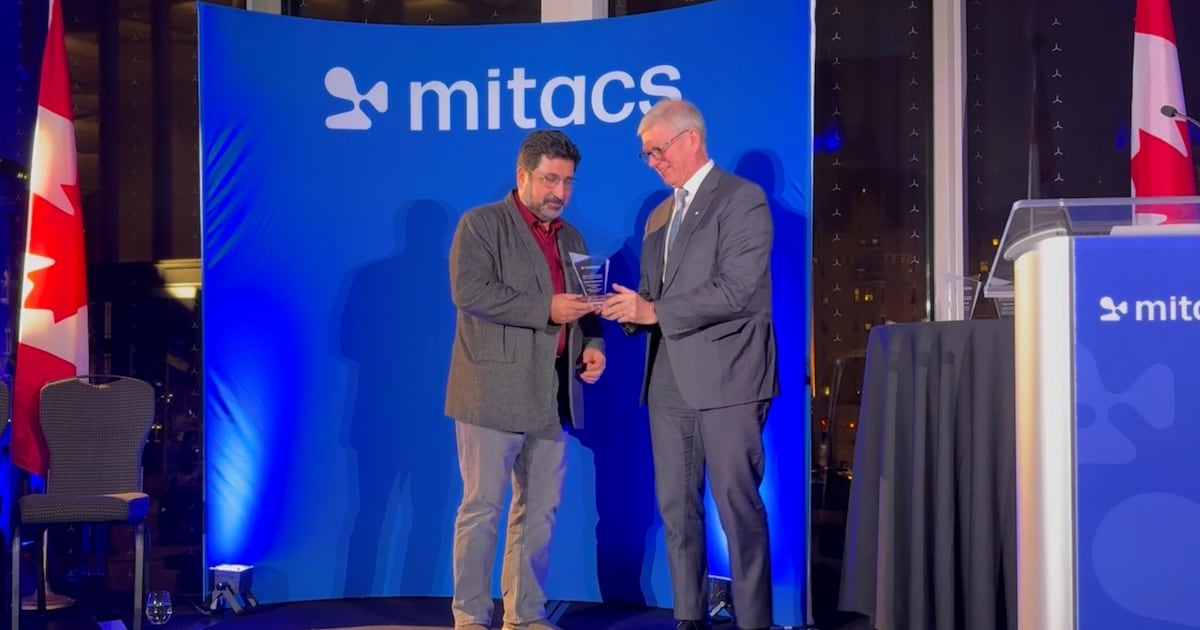
A professor from the University of Calgary has received significant recognition for his pioneering work in 3D digital mapping. Faramarz Samavati was presented with the Mitacs Innovation Award for Outstanding Research Leadership due to his contributions to developing a 3D mapping system over the past 15 years. The award, given by Mitacs, emphasizes the importance of collaboration between industry and academia.
Samavati expressed his gratitude, stating, “It is a great honor to receive that, and also I am proud of the team that I have built and the mentorship and supervision of many graduate students and interns because this innovation is kind of a collective achievement.” His 3D digital mapping system addresses a common flaw in traditional digital mapping applications, which often portray geographical features inaccurately due to their reliance on a “flat Earth” model.
Digital maps such as Google Maps can distort sizes and shapes of continents. For instance, Greenland appears much larger than Brazil, despite being smaller in reality. “When we take this on the 3D form, on the curved Earth, we can see the right size of Greenland versus Brazil, and we can avoid this kind of distortion,” Samavati explained.
Innovative Technology and Collaboration
In collaboration with Vivid Theory, a software company based in Calgary, Samavati and his graduate students developed a Discrete Global Grid System (DGGS). This system divides the surface of the Earth into small cells, each assigned a unique code, similar to postal codes. “These codes are used to store information about that region, creating a much more efficient system for processing data related to the Earth,” he noted.
Graduate student Lakin Wecker emphasized the importance of speed in accessing the vast data generated by the DGGS. He is currently working to optimize performance, measuring speed in nanoseconds. “We were measuring things that we can do 250 million times a second, seeing if there were potentially smaller ways to reduce that from 20 nanoseconds down to 10 nanoseconds,” Wecker stated. Although this might seem trivial, the cumulative savings can significantly enhance efficiency given the scale of data involved.
Samavati has also established a partnership with BigGeo, a Calgary-based startup developing a privacy-secure, intelligent cloud computing system for location-based data. Brent Lane, the CEO of BigGeo, highlighted the importance of spatial data, which accounts for 80 percent of all data on Earth, marking it as a vital component of the future of artificial intelligence.
“AI can use Samavati’s 3D mapping system to provide users with quicker, more accurate information,” Lane explained. He provided an example, saying, “If you’re using your ChatGPT interface, you could use our connected technology to answer questions about what’s the best place to pick up your laundry on the way home from your kid’s soccer practice.”
A Vision for the Future
Mitacs awards the Innovation Award for Outstanding Research Leadership to recognize post-secondary supervisors who excel in fostering collaborations with business partners and providing valuable research experiences to their interns. The organization receives funding from the Government of Canada and various provincial governments.
Samavati envisions a future where his system not only digitizes the surface of the Earth but also captures what lies beneath and above it. “My vision is to have a living digital twin of the Earth, through which we can understand our planet in a better, totally different way and build tools for occurrences that you can’t always understand,” he stated. He believes this technology could be instrumental in predicting disasters and addressing critical environmental challenges.
To learn more about BigGeo and its initiatives, visit https://biggeo.com/.













Morris Churches Unite for Annual Good Friday Walk With the Cross

Chloe Zhao’s ‘Buffy’ Reboot Cancelled: Sarah Michelle Gellar Speaks Out

Essential Ingredients for Life Found in Ryugu Asteroid Samples

Urgent Rescue: NSR Airlifts Injured Climber from Nanaimo

Riverside Heart Ball Achieves Record $815,000 for Mental Health

Cognizant Launches AI Factory to Enhance Enterprise AI Scalability

Samsung’s Galaxy Watch 9 to Feature Larger Battery Than Before

Toronto’s AIDS Memorial Faces Potential Redesign Amid Community Concerns

Bayern Munich Loses Luis Díaz Red Card Appeal Despite Referee’s Admission

Secwepemc First Nation Seeks Aboriginal Title Over Kamloops Area

Fatal Crash on Highway 11 Claims Three Lives, Major Closure Ongoing

Manitoba’s Burger Champion Shines Again Amid Dining Innovations

Canadian Curler E.J. Harnden Announces Retirement from Competition

Urgent Fire Erupts at Salvation Army on Christmas Evening

Scientists Unearth Ancient Antarctic Ice to Unlock Climate Secrets

Minister Faces Scrutiny Over Delayed Foreign Interference Watchdog Appointment

Trump and McCormick to Announce $70 Billion Energy Investments

Monika Hibbs Unveils Acres Market & Interiors in Major Rebrand
-
 Politics5 months ago
Secwepemc First Nation Seeks Aboriginal Title Over Kamloops Area
-
 Top Stories4 months ago
Fatal Crash on Highway 11 Claims Three Lives, Major Closure Ongoing
-
 Lifestyle7 months ago
Manitoba’s Burger Champion Shines Again Amid Dining Innovations
-
 Sports3 months ago
Canadian Curler E.J. Harnden Announces Retirement from Competition
-
 Top Stories4 months ago
Urgent Fire Erupts at Salvation Army on Christmas Evening
-
 World9 months ago
Scientists Unearth Ancient Antarctic Ice to Unlock Climate Secrets
-
 World5 months ago
Minister Faces Scrutiny Over Delayed Foreign Interference Watchdog Appointment
-
 Entertainment9 months ago
Trump and McCormick to Announce $70 Billion Energy Investments
-
 Lifestyle9 months ago
Monika Hibbs Unveils Acres Market & Interiors in Major Rebrand
-

 Science9 months ago
Four Astronauts Return to Earth After International Space Station Mission
-

 Lifestyle9 months ago
TransLink Launches Food Truck Program to Boost Revenue in Vancouver
-

 World1 month ago
Ranchman’s Cookhouse & Dancehall to Relocate by Early 2027