
World
New Russian Military Unit in Mali Accused of Atrocities

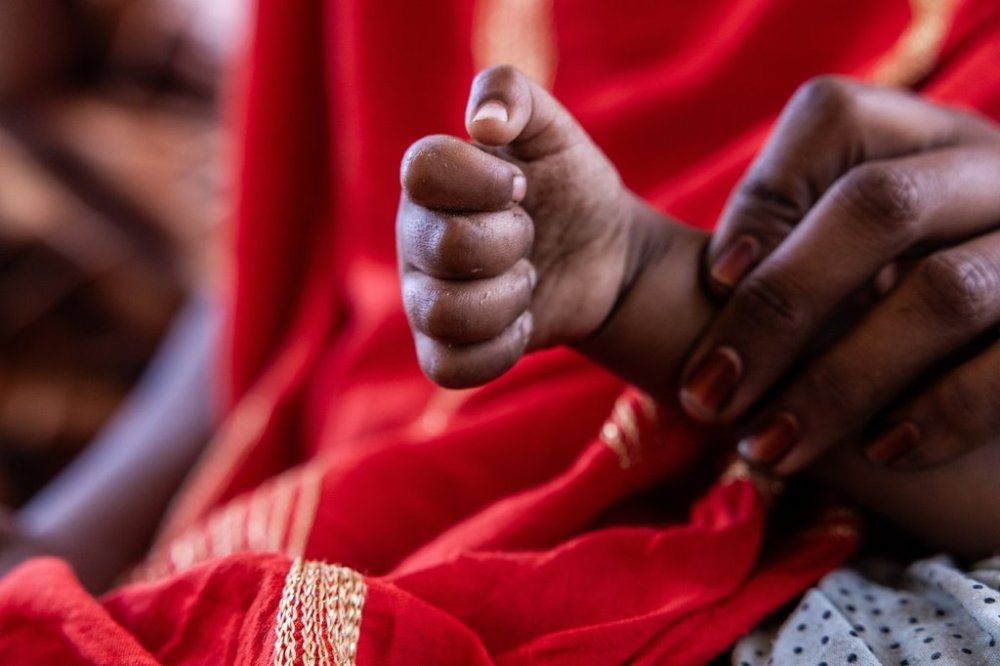
Dozens of individuals fleeing Mali have reported serious abuses being committed by a new Russian military unit known as the Africa Corps. This unit replaced the Wagner Group earlier this year and is allegedly engaging in brutal actions, including rapes and beheadings, as it collaborates with Mali’s military to combat extremist groups. These accounts, gathered by The Associated Press (AP) at the Mauritanian border, highlight a troubling continuation of violence in a region already grappling with severe security challenges.
The Africa Corps, which operates under the auspices of Russia’s Defense Ministry, has reportedly adopted tactics reminiscent of the Wagner Group. Refugees described a “reign of terror” inflicted by the unit, which they referred to as the “white men.” The United Nations has noted that all parties involved in the Malian conflict have committed abuses, and the hope that the Africa Corps would usher in a less brutal approach has not materialized. Instead, reports indicate that the situation may have worsened.
One Malian village chief, who fled to Mauritania last month, expressed his disillusionment, stating, “There is no difference between Wagner and Africa Corps.” He described a “scorched-earth policy” where soldiers indiscriminately kill civilians. “Anyone they see, they shoot. No questions, no warning,” he added.
Despite the gravity of the situation, Malian authorities have not publicly acknowledged the presence of either the Wagner Group or the Africa Corps. Nevertheless, Russian state media have recently praised the Africa Corps for its role in defending Mali against “terrorists,” while Russia’s Foreign Ministry confirmed the unit’s activities in the country at the request of Malian officials. Questions remain unanswered regarding operational details, including the number of fighters, which analysts estimate to be around 2,000. Furthermore, witnesses have reported seeing soldiers of diverse nationalities, suggesting that not all personnel are Russian.
Escalating Violence and Human Rights Concerns
The collaboration between the Africa Corps and the Malian military intensified in September 2023, particularly as JNIM, an extremist group linked to al-Qaida, imposed a blockade on fuel supplies into Mali from neighboring countries. The violence has reached alarming levels, with estimates of civilian casualties difficult to ascertain due to limited access for journalists and humanitarian workers in Mali.
Sukru Cansizoglu, the representative for the United Nations refugee agency in Mauritania, stated, “There is a lot of people raped, attacked, killed. Families are separated, there is no doubt about that.” The situation has created a precarious environment for civilians, who feel trapped between the actions of the Africa Corps and the threats from extremist groups.
Heni Nsaibia from the Armed Conflict Location & Event Data Project emphasized the dire circumstances faced by civilians. “They are between a rock and a hard place,” he noted, explaining that individuals risk retaliation from both the military and militants depending on their allegiances or disclosures about sightings of jihadists.
Legal experts have pointed out that the transition from Wagner to the Africa Corps could have significant implications for accountability under international law. According to Lindsay Freeman, senior director of international accountability at the UC Berkeley School of Law’s Human Rights Center, the continuity in personnel and tactics between the two groups suggests that the Russian government could be held responsible for any war crimes committed by the Africa Corps.
Freeman stated, “That means any war crimes committed by Africa Corps in Mali are, in principle, attributable to the Russian government under the rules on state responsibility.”
As the situation unfolds, the international community remains watchful of the implications of Russia’s increasing involvement in Mali, particularly as the Africa Corps operates under the umbrella of the Russian state. The potential for further atrocities raises urgent questions about accountability and the future of human rights in a region already beleaguered by violence.











Two Men Fined $7K for Illegal Moose Hunting in Ontario

Tyler Seguin’s Injury Sparks Urgent Trade Opportunities for Stars

Urgent Update: Surrey Police Link Shots Fired to Vehicle Fires

Air Transat Pilots Issue 72-Hour Strike Notice, Passengers Urged to Know Rights

Mercedes-Benz Unveils Enhanced 2027 GLB Compact Crossover

Community Gathers for Prestige XP’s Table Topics in Winnipeg

Nova Scotia Business Owner Introduces Mauritian Cuisine to Canada

Discover the Top 10 Longest Nonstop Flights on Boeing 787-8

Zohran Mamdani Empowers Immigrants to Stand Up Against ICE

Secwepemc First Nation Seeks Aboriginal Title Over Kamloops Area

Scientists Unearth Ancient Antarctic Ice to Unlock Climate Secrets

Trump and McCormick to Announce $70 Billion Energy Investments

Four Astronauts Return to Earth After International Space Station Mission

TransLink Launches Food Truck Program to Boost Revenue in Vancouver

Apple Notes Enhances Functionality with Markdown Support in macOS 26

Manitoba’s Burger Champion Shines Again Amid Dining Innovations

Urgent Update: Fatal Crash on Highway 99 Claims Life of Pitt Meadows Man

Homemade Houseboat ‘Neverlanding’ Captivates Lake Huron Voyagers
-
 Politics1 month ago
Secwepemc First Nation Seeks Aboriginal Title Over Kamloops Area
-
 World5 months ago
Scientists Unearth Ancient Antarctic Ice to Unlock Climate Secrets
-
 Entertainment5 months ago
Trump and McCormick to Announce $70 Billion Energy Investments
-
 Science5 months ago
Four Astronauts Return to Earth After International Space Station Mission
-
 Lifestyle5 months ago
TransLink Launches Food Truck Program to Boost Revenue in Vancouver
-
 Technology3 months ago
Apple Notes Enhances Functionality with Markdown Support in macOS 26
-
 Lifestyle3 months ago
Manitoba’s Burger Champion Shines Again Amid Dining Innovations
-
 Top Stories2 months ago
Urgent Update: Fatal Crash on Highway 99 Claims Life of Pitt Meadows Man
-
 Top Stories1 week ago
Homemade Houseboat ‘Neverlanding’ Captivates Lake Huron Voyagers
-

 Politics4 months ago
Ukrainian Tennis Star Elina Svitolina Faces Death Threats Online
-

 Sports5 months ago
Search Underway for Missing Hunter Amid Hokkaido Bear Emergency
-
 Politics5 months ago
Carney Engages First Nations Leaders at Development Law Summit