
Technology
Korean Design Studio Revitalizes Writing with Experimental Pencils

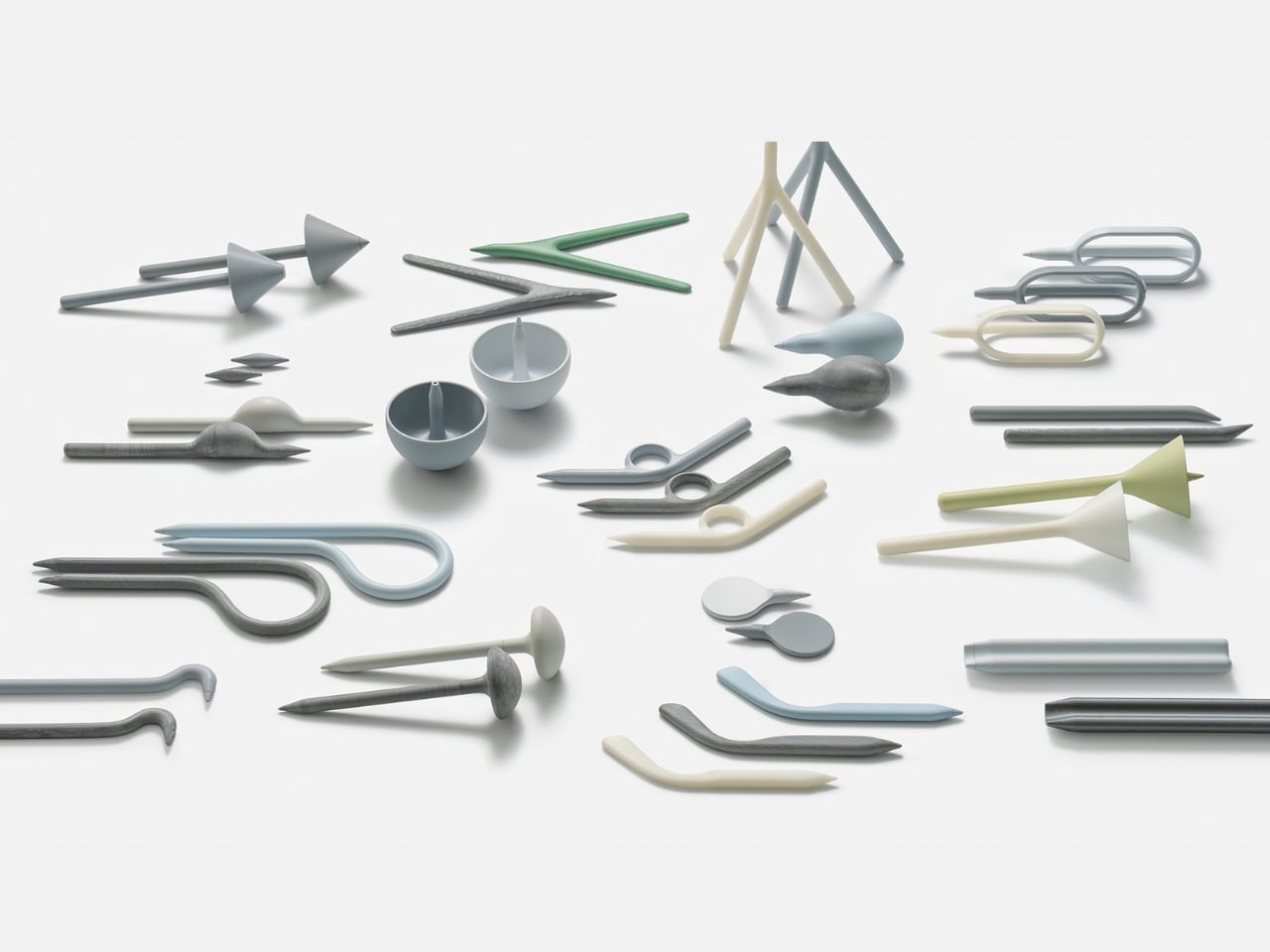
Korean design studio BKID has unveiled an innovative project titled “Write Draw Think,” aiming to transform the conventional perception of writing tools. This initiative challenges the prevailing belief that handwriting is becoming obsolete in an increasingly digital world. Scheduled for exhibition at the Hangeul Museum in 2025, the project features sixteen experimental writing tools specifically crafted to explore the relationship between the act of writing and physical expression.
Rather than viewing pencils as mere instruments for recording thoughts, BKID reimagines them as connections between the mind and body. Through meticulous research, the studio analyzed how individuals engage with pencils, focusing on gestures, hand movements, and the habits that arise during writing. This research informed the design of each tool, creating unique writing experiences that encourage users to rethink their approach to mark-making.
Transforming Writing into Art
The project offers a diverse range of writing experiences, catering to both individual and collaborative efforts. Some tools are intended for deep, introspective writing, facilitating a flow state that fosters creativity. Others are designed for group activities, allowing multiple individuals to draw or write together on a shared line. This interactive approach highlights the potential of collaborative creativity and redefines traditional writing practices.
BKID’s design philosophy pays close attention to the mechanics of writing. Tools with sharp edges emphasize the tension in letter structures, enhancing awareness of angles and pressure, while rounded designs evoke a softer, more fluid interaction that reflects the unique qualities of Korean vowels. These intentional choices impact how users engage with the tools, challenging them to reconsider their writing techniques.
Celebrating Korean Typography
The project also serves as a homage to Korean typography. The geometric clarity and systematic nature of Hangeul create a rich backdrop for examining the interplay between writing instruments and the marks they produce. BKID’s exploration emphasizes that writing systems are not merely abstract symbols; they are physical acts shaped by the tools that create them. By rethinking these tools, BKID opens avenues for reimagining the marks themselves.
In an era where artificial intelligence generates text and voice notes replace handwritten communication, “Write Draw Think” stands as a testament to the enduring value of analog tools. The project does not advocate for the supremacy of handwriting nor does it romanticize the past. Instead, it champions the idea that the physical act of writing still holds untapped potential, with experiences accessible only through the direct connection between hand, tool, and surface.
BKID’s approach to this design challenge emphasizes the importance of user behavior and gesture over purely aesthetic considerations. By grounding their designs in real-world usage, the studio ensures that the experimental tools are functional and meaningful rather than arbitrary. This balance of tradition and innovation showcases a respect for craftsmanship while exploring new possibilities in design.
For those intrigued by the intersection of design, culture, and everyday objects, “Write Draw Think” serves as a reminder that true innovation does not always require technological advancements. Sometimes, it involves stripping an idea down to its core and exploring what new experiences can emerge. This project encourages individuals to reconsider their writing tools, opening their minds to the myriad ways they can write, draw, and think through the simple act of mark-making.

Celebrini Surpasses McDavid at 19, Dominates NHL Scoring Race

Urgent Update: CBSA Busts Major Drug Ring, Seizes Hundreds of Kilos

Art Gallery Kimberley Launches Urgent Holiday Photo Challenge!

Urgent Weather Update: Brampton Faces Snow and Chills This Week

G7 Ministers Gather in Montreal to Tackle AI and Quantum Issues

Young Fan’s Dream Comes True as Blue Jays Star George Springer Connects

Nexus Uranium Partners with Canamera for Great Divide Basin Project

Korean Design Studio Revitalizes Writing with Experimental Pencils

Young Football Players Boost Community with Christmas Tree Sale

Secwepemc First Nation Seeks Aboriginal Title Over Kamloops Area

Scientists Unearth Ancient Antarctic Ice to Unlock Climate Secrets

Trump and McCormick to Announce $70 Billion Energy Investments

Four Astronauts Return to Earth After International Space Station Mission

TransLink Launches Food Truck Program to Boost Revenue in Vancouver

Apple Notes Enhances Functionality with Markdown Support in macOS 26

Manitoba’s Burger Champion Shines Again Amid Dining Innovations

Urgent Update: Fatal Crash on Highway 99 Claims Life of Pitt Meadows Man

Homemade Houseboat ‘Neverlanding’ Captivates Lake Huron Voyagers
-
 Politics1 month ago
Secwepemc First Nation Seeks Aboriginal Title Over Kamloops Area
-
 World5 months ago
Scientists Unearth Ancient Antarctic Ice to Unlock Climate Secrets
-
 Entertainment5 months ago
Trump and McCormick to Announce $70 Billion Energy Investments
-
 Science5 months ago
Four Astronauts Return to Earth After International Space Station Mission
-
 Lifestyle5 months ago
TransLink Launches Food Truck Program to Boost Revenue in Vancouver
-
 Technology3 months ago
Apple Notes Enhances Functionality with Markdown Support in macOS 26
-
 Lifestyle3 months ago
Manitoba’s Burger Champion Shines Again Amid Dining Innovations
-
 Top Stories2 months ago
Urgent Update: Fatal Crash on Highway 99 Claims Life of Pitt Meadows Man
-
 Top Stories1 week ago
Homemade Houseboat ‘Neverlanding’ Captivates Lake Huron Voyagers
-

 Politics4 months ago
Ukrainian Tennis Star Elina Svitolina Faces Death Threats Online
-

 Sports5 months ago
Search Underway for Missing Hunter Amid Hokkaido Bear Emergency
-

 Politics5 months ago
Carney Engages First Nations Leaders at Development Law Summit