
World
Supreme Court Reviews GOP Bid to Lift Party Spending Limits

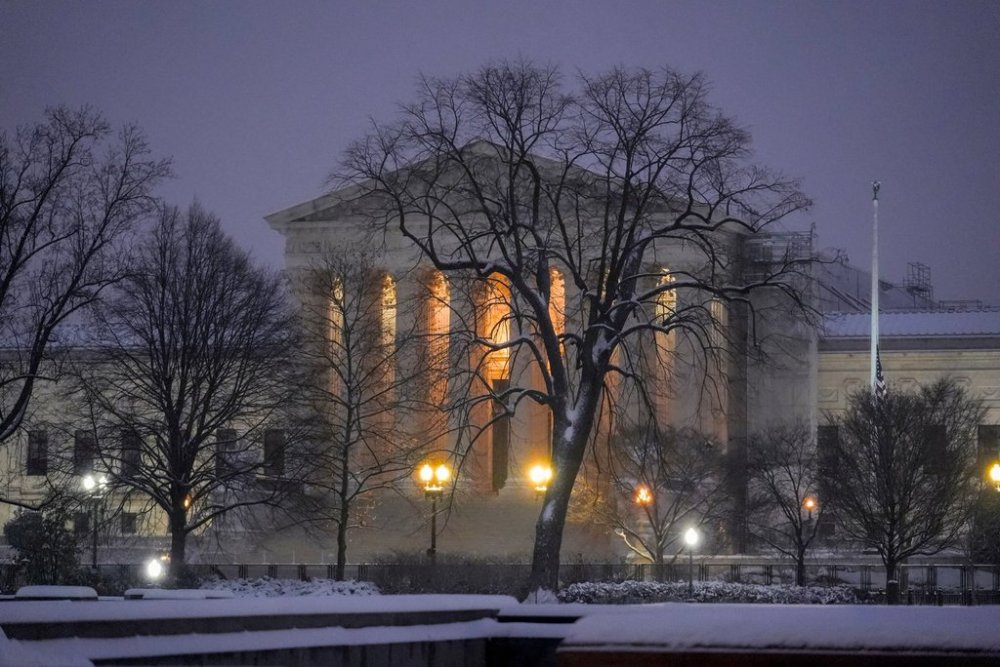
The Supreme Court is currently evaluating a Republican-led initiative aimed at overturning a longstanding decision that limits how much political parties can spend in coordination with candidates for congressional and presidential elections. This appeal, supported by the administration of former President Donald Trump, seeks to eliminate restrictions established over 50 years ago.
This case revisits a pivotal 2001 decision that upheld certain provisions of federal election law. The ongoing deliberation comes shortly after the court’s indication that it may overturn a 90-year-old precedent concerning the president’s authority to dismiss heads of independent agencies. Democratic lawmakers are urging the court to maintain the existing campaign finance laws, which intend to prevent large donors from circumventing individual contribution limits by directing substantial funds to political parties.
The Federal Election Commission (FEC) and Republican advocates argue that the Supreme Court should reconsider these limits, echoing a trend in recent rulings that have dismantled various legislative restrictions on political spending. Chief Justice John Roberts leads a conservative majority that has already altered the landscape of campaign finance, notably through the landmark 2010 Citizens United decision. This ruling set a precedent for unlimited independent expenditures in federal elections.
The Trump administration, aligning with Republican interests, has called for the court to invalidate the campaign finance law. In response, the justices have appointed lawyer Roman Martinez, a seasoned Supreme Court advocate, to defend the law. Martinez contends that the case might be moot since the FEC now concurs with Republican claims regarding the law’s unconstitutionality, stating there is “no credible risk” that the agency will attempt to enforce it.
The lawsuit, initiated by the Republican committees for House and Senate candidates in Ohio in 2022, includes support from two local Republicans: then-Senator JD Vance, who is now vice president, and then-Representative Steve Chabot.
As the case unfolds, the ramifications for campaign financing are significant. In March 2025, coordinated spending limits for Senate races vary dramatically, ranging from $127,200 in states with smaller populations to nearly $4 million in larger states like California. For House races, the limits are set at $127,200 in states with a single representative and $63,600 in others.
The outcome of this Supreme Court consideration could reshape the financial dynamics of future elections, impacting the way political parties fund their campaigns and engage with candidates.









Thailand and Cambodia Clash: Tens of Thousands Flee Border Fighting

Owners Flee After Deadly Goa Nightclub Fire Claims 25 Lives

Sue Dewar’s Cartoon Tackles Current Events with Humor

National Arts Centre Appoints Annabelle Cloutier as New CEO

Win Tickets for Beverly Glenn-Copeland’s Live Performance

Ten AI Innovators Shaping the Future of Technology

Manitoba Health Officials Urge Flu Vaccination Amid Mismatches

Toronto Maple Leafs’ Hildeby Secures First NHL Shutout in 2-0 Win

Alberta Man Charged After Guns and Nazi Flag Seized in Lloydminster

Secwepemc First Nation Seeks Aboriginal Title Over Kamloops Area

Scientists Unearth Ancient Antarctic Ice to Unlock Climate Secrets

Trump and McCormick to Announce $70 Billion Energy Investments

Four Astronauts Return to Earth After International Space Station Mission

TransLink Launches Food Truck Program to Boost Revenue in Vancouver

Apple Notes Enhances Functionality with Markdown Support in macOS 26

Manitoba’s Burger Champion Shines Again Amid Dining Innovations

Urgent Update: Fatal Crash on Highway 99 Claims Life of Pitt Meadows Man

Homemade Houseboat ‘Neverlanding’ Captivates Lake Huron Voyagers
-
 Politics1 month ago
Secwepemc First Nation Seeks Aboriginal Title Over Kamloops Area
-
 World5 months ago
Scientists Unearth Ancient Antarctic Ice to Unlock Climate Secrets
-
 Entertainment5 months ago
Trump and McCormick to Announce $70 Billion Energy Investments
-
 Science5 months ago
Four Astronauts Return to Earth After International Space Station Mission
-
 Lifestyle5 months ago
TransLink Launches Food Truck Program to Boost Revenue in Vancouver
-
 Technology3 months ago
Apple Notes Enhances Functionality with Markdown Support in macOS 26
-
 Lifestyle3 months ago
Manitoba’s Burger Champion Shines Again Amid Dining Innovations
-
 Top Stories2 months ago
Urgent Update: Fatal Crash on Highway 99 Claims Life of Pitt Meadows Man
-
 Top Stories1 week ago
Homemade Houseboat ‘Neverlanding’ Captivates Lake Huron Voyagers
-

 Politics4 months ago
Ukrainian Tennis Star Elina Svitolina Faces Death Threats Online
-

 Sports5 months ago
Search Underway for Missing Hunter Amid Hokkaido Bear Emergency
-
 Politics5 months ago
Carney Engages First Nations Leaders at Development Law Summit