
Top Stories
Trump’s Immigration Policies Hit Child Care Workers Hard, Schools React

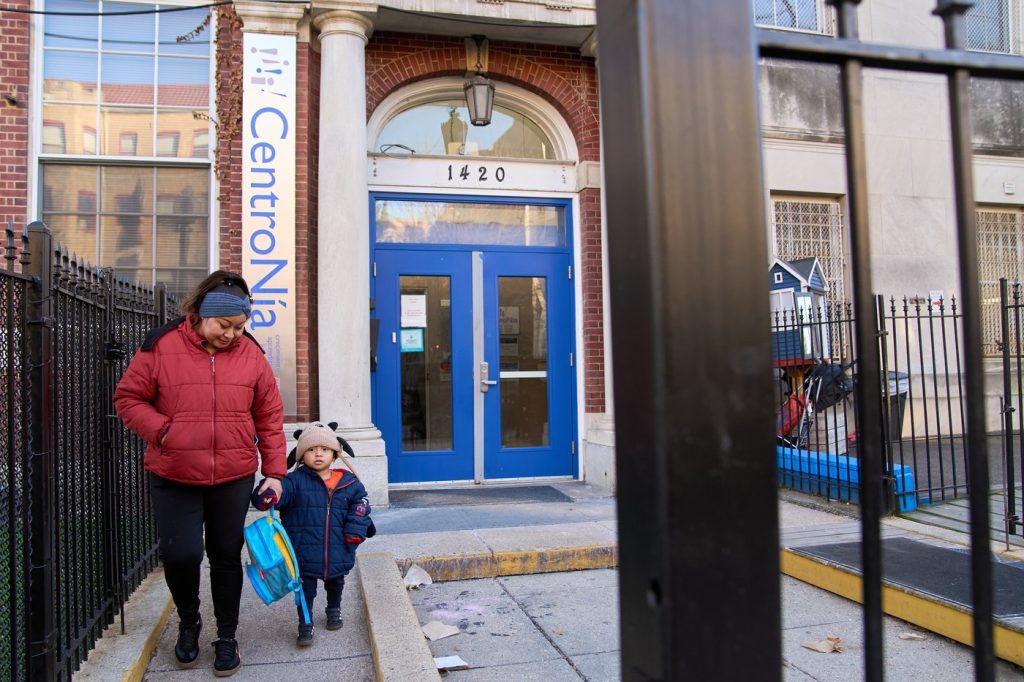
URGENT UPDATE: The impact of President Donald Trump’s immigration crackdown is being felt deeply in child care centers across the United States as fear grips workers and families. Following a series of ICE (Immigration and Customs Enforcement) raids, schools like CentroNía Bilingual Preschool are altering operations to ensure safety, halting outdoor activities, and even canceling cultural events.
Just last month, an incident in Chicago saw ICE arrest a teacher at a Spanish immersion preschool, adding to the anxiety among immigrant workers. Reports indicate that nearly 40% of child care workers in major cities are foreign-born, highlighting the sector’s reliance on immigrant labor. As tensions rise, many are left feeling vulnerable, with some forced to leave their jobs due to the hostile climate.
At CentroNía, located in a historically Latino neighborhood, the presence of ICE has spurred drastic changes. Teachers now avoid taking children to parks and libraries, previously seen as essential extensions of the classroom. Myrna Peralta, CEO of CentroNía, confirmed, “That really dominates all of our decision making,” as staff adapt to new protocols that prioritize safety over educational enrichment.
The emotional toll is significant. Teachers report increased anxiety, with some experiencing panic attacks during school hours. Joangelee Hernández-Figueroa, site director at CentroNía, expressed concern for the mental health of staff, stating that the school brought in mental health consultants to support teachers instead of students, fearing that their distress could affect the children.
Reports indicate that 300,000 immigrants from Venezuela recently lost their Temporary Protected Status (TPS), exacerbating the workforce crisis in child care. At CentroNía alone, two employees were forced out because they lost TPS, while other centers, such as Tierra Encantada, have seen a dozen teachers depart. This legal pressure has left many educators questioning their future in the profession.
The effects extend beyond the staff. At a Guidepost Montessori School in Portland, Oregon, a recent ICE encounter led to a lockdown, deeply unsettling the children. Teachers noted an increase in behavioral issues among students following the incident, illustrating that fear permeates even affluent communities.
The Department of Homeland Security defends ICE’s actions, stating that officials are urged to exercise “common sense.” However, the cultural and emotional impact of these policies is undeniable. Tricia McLaughlin, spokesperson for the DHS, commented on the Chicago incident, clarifying that the teacher was not arrested within school grounds but in a vestibule, a distinction that offers little comfort to those on the front lines.
As the climate of fear continues to grow, the child care industry faces a critical challenge. The reliance on immigrant workers is crucial, especially as the demand for bilingual education rises. Parents seek these programs to give their children an edge in language acquisition, but the ongoing immigration policies threaten to dismantle this vital resource.
The situation remains fluid, and the community is watching closely as child care centers adapt to these evolving challenges. As the debate over immigration policy rages on, the human cost is becoming increasingly apparent—especially for those dedicated to nurturing the next generation.
What’s next? Schools and child care workers are bracing for further developments as the administration’s policies unfold. The urgent need for supportive measures and protections for immigrant workers in education is more critical than ever. Parents and educators alike must advocate for a safe environment where children can thrive without fear.













Russell 2000 Challenges $252 Resistance as Bitcoin Rebounds

Small Plane Crashes onto Car During Emergency Landing in Florida

École Notre-Dame-du-Sault Students Create Blankets for Local Women

United Airlines Launches Historic Non-Stop Route to Adelaide

Vancouver City Council Reverses Decision on Advisory Committees

Urgent Alert: Snow and Extreme Cold Hit Northern Alberta, B.C.

Port Moody Scraps Key Retrofit, Calls for Climate Plan Reevaluation

Conservative MP Faces Backlash Over Pipeline Support Shift

Trump’s Immigration Policies Hit Child Care Workers Hard, Schools React

Secwepemc First Nation Seeks Aboriginal Title Over Kamloops Area

Scientists Unearth Ancient Antarctic Ice to Unlock Climate Secrets

Trump and McCormick to Announce $70 Billion Energy Investments

Four Astronauts Return to Earth After International Space Station Mission

TransLink Launches Food Truck Program to Boost Revenue in Vancouver

Apple Notes Enhances Functionality with Markdown Support in macOS 26

Manitoba’s Burger Champion Shines Again Amid Dining Innovations

Urgent Update: Fatal Crash on Highway 99 Claims Life of Pitt Meadows Man

Homemade Houseboat ‘Neverlanding’ Captivates Lake Huron Voyagers
-
 Politics1 month ago
Secwepemc First Nation Seeks Aboriginal Title Over Kamloops Area
-
 World5 months ago
Scientists Unearth Ancient Antarctic Ice to Unlock Climate Secrets
-
 Entertainment5 months ago
Trump and McCormick to Announce $70 Billion Energy Investments
-
 Science5 months ago
Four Astronauts Return to Earth After International Space Station Mission
-
 Lifestyle5 months ago
TransLink Launches Food Truck Program to Boost Revenue in Vancouver
-
 Technology3 months ago
Apple Notes Enhances Functionality with Markdown Support in macOS 26
-
 Lifestyle3 months ago
Manitoba’s Burger Champion Shines Again Amid Dining Innovations
-
 Top Stories2 months ago
Urgent Update: Fatal Crash on Highway 99 Claims Life of Pitt Meadows Man
-
 Top Stories2 weeks ago
Homemade Houseboat ‘Neverlanding’ Captivates Lake Huron Voyagers
-

 Politics4 months ago
Ukrainian Tennis Star Elina Svitolina Faces Death Threats Online
-

 Sports5 months ago
Search Underway for Missing Hunter Amid Hokkaido Bear Emergency
-

 Politics5 months ago
Carney Engages First Nations Leaders at Development Law Summit