
Politics
Quebec Cree Families Unite for Boarding Home Compensation Claims

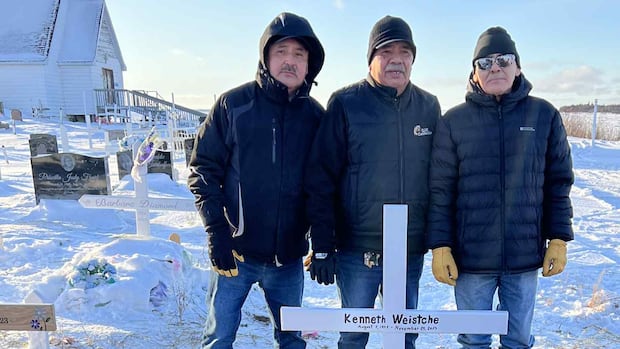
A significant number of families from the Cree Nation in Quebec are stepping forward to seek compensation for their experiences in government-run boarding homes. More than 500 Cree families have joined a class-action lawsuit, driven by a commitment to address historical injustices. The push for accountability is particularly inspired by the late Kenneth Weistche, who was a prominent advocate for recognition of the impacts of these institutions.
Roy Weistche, Kenneth’s brother, recalls being taken as a child to live with a non-Indigenous family in Gatineau, over 900 kilometres from his home in Waskaganish. This separation marked the beginning of a traumatic journey for him and his siblings, as they were placed in various boarding homes during their formative years. “He was one of the leaders that really saw the impact of a residential school,” Roy said, highlighting Kenneth’s relentless pursuit of justice for their community.
The ongoing class-action effort seeks compensation for Indigenous individuals who were removed from their communities to attend government-run boarding homes or day schools. Compensation is divided into two categories: Category 1 offers $10,000, while Category 2 provides awards ranging from $10,000 to $200,000, depending on the severity of abuse reported. Survivors can apply for both categories.
Roy Weistche reflects on the emotional scars left by their experiences in residential schools. “We relive the experience when we apply. I went to residential school for nine years. The stories will never go away,” he noted. The Weistche family, which includes four brothers and seven sisters, has a diverse range of experiences with residential schools, boarding homes, and day schools, further illustrating the widespread impact of these institutions.
The emotional toll of separation extends beyond the children. Roy emphasizes the suffering of parents who were forced to send their children away. “My parents took their children down towards the plane and then went home to an empty house. They cried a lot for their children,” he said, underscoring the broader familial impact of these policies.
Legal support is crucial for families navigating the claims process. Marsela Ianni, a lawyer with the Montreal-based Dionne Schulze law firm, is assisting over 500 Cree clients in filing their claims. Ianni recalls Kenneth’s advocacy, which inspired the firm to support survivors. “This injustice had to be repaired,” she stated, emphasizing the importance of acknowledging past wrongs.
As of now, across Canada, there have been 23,729 Category 1 claims filed, with 5,597 approved and 6,621 under review. Meanwhile, 6,539 Category 2 claims have been submitted, with 245 approved and 1,749 still pending review. The firm has made significant efforts to reach communities, having already opened over 90 claims in Chisasibi, the highest number processed in any single community to date.
Ianni stresses the importance of accessibility in the claims process, noting that common issues in self-filed claims often include missing information or incomplete forms. “It is extremely important to us that it becomes more accessible,” she said, highlighting the firm’s commitment to providing support across Eeyou Istchee, including visits to communities like Waswanipi and Oujé-Bougoumou in the spring of 2024.
Roy acknowledges the lasting effects of the residential school system but remains hopeful for the future. “Having a little bit of compensation to help us, we’ll take it. It will not bring healing in our personal journeys,” he remarked, adding that he has chosen a path of forgiveness. He encourages fellow survivors to apply for compensation, emphasizing the potential for healing through land-based activities with family.
The deadline for submitting claims is set for early 2027, providing a window for those impacted to seek recognition and assistance. Despite the loss of Kenneth in November 2023, Roy believes his brother’s legacy will continue to inspire others in the pursuit of justice. “Kenneth was part of all the different groups and advocated that residential schools students be treated fairly,” Roy said, expressing pride in Kenneth’s efforts on behalf of Indigenous students across Canada.










Ottawa Plans $1 Million Security Pilot for ByWard Market

Quebec Cree Families Unite for Boarding Home Compensation Claims

Bursey’s Bus Service Offers Free Rides for Students with Accessibility Needs

Chloé Zhao’s *Hamnet* Explores Shakespeare’s Heartbreaking Loss

University of Manitoba Researchers Explore Genetic Testing for Mental Health Medications

Health Minister Targets Full Primary Care Access Amid Backlog

Quebec Cree Families Surge in Boarding Home Compensation Claims

Trump Announces Pardon for Colorado Election Official Convicted of Fraud

Steve Nease’s Latest Cartoon Sparks Conversations on December 12

Secwepemc First Nation Seeks Aboriginal Title Over Kamloops Area

Scientists Unearth Ancient Antarctic Ice to Unlock Climate Secrets

Trump and McCormick to Announce $70 Billion Energy Investments

TransLink Launches Food Truck Program to Boost Revenue in Vancouver

Four Astronauts Return to Earth After International Space Station Mission

Manitoba’s Burger Champion Shines Again Amid Dining Innovations

Apple Notes Enhances Functionality with Markdown Support in macOS 26

Urgent Update: Fatal Crash on Highway 99 Claims Life of Pitt Meadows Man

Homemade Houseboat ‘Neverlanding’ Captivates Lake Huron Voyagers
-
 Politics1 month ago
Secwepemc First Nation Seeks Aboriginal Title Over Kamloops Area
-
 World5 months ago
Scientists Unearth Ancient Antarctic Ice to Unlock Climate Secrets
-
 Entertainment5 months ago
Trump and McCormick to Announce $70 Billion Energy Investments
-
 Lifestyle5 months ago
TransLink Launches Food Truck Program to Boost Revenue in Vancouver
-
 Science5 months ago
Four Astronauts Return to Earth After International Space Station Mission
-
 Lifestyle3 months ago
Manitoba’s Burger Champion Shines Again Amid Dining Innovations
-
 Technology4 months ago
Apple Notes Enhances Functionality with Markdown Support in macOS 26
-
 Top Stories2 months ago
Urgent Update: Fatal Crash on Highway 99 Claims Life of Pitt Meadows Man
-
 Top Stories2 weeks ago
Homemade Houseboat ‘Neverlanding’ Captivates Lake Huron Voyagers
-

 Politics4 months ago
Ukrainian Tennis Star Elina Svitolina Faces Death Threats Online
-

 Sports5 months ago
Search Underway for Missing Hunter Amid Hokkaido Bear Emergency
-

 Politics5 months ago
Carney Engages First Nations Leaders at Development Law Summit