
Lifestyle
Reflecting on Stephen Harper’s Legacy After 20 Years in Politics

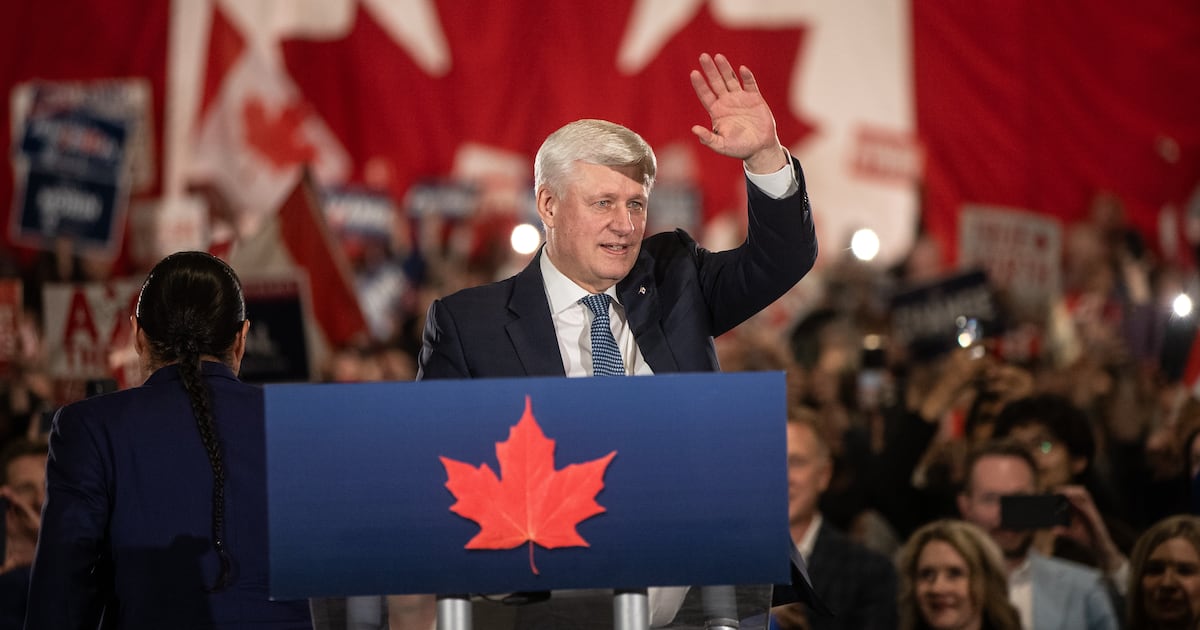
Former Prime Minister Stephen Harper is commemorating his legacy this week as his official portrait is unveiled on Parliament Hill. This marks the 20th anniversary of his election as Canada’s 22nd prime minister, a tenure that lasted from 2006 to 2015. Harper’s journey from a small tavern in Quyon, Quebec, to the highest political office in Canada is a remarkable story of resilience and strategic leadership.
From Humble Beginnings to National Leadership
In early 2002, Harper was just beginning his campaign for leadership of the Canadian Alliance. That night at a local tavern, he faced an audience of only a few supporters, including his father and a couple of parliamentary aides. This gathering was emblematic of the challenges that lay ahead for Harper and the conservative movement in Canada, which was fragmented after losing three consecutive elections to Prime Minister Jean Chrétien.
The Canadian conservative landscape was notably divided among three factions: the Canadian Alliance, the Progressive Conservative Party, and a group of former MPs known as the Democratic Representative Caucus. At that time, the Canadian Alliance was struggling with low poll numbers and internal conflicts, making Harper’s ascent to leadership all the more impressive.
Building a New Conservative Coalition
Harper’s tenure as leader was characterized by his ability to unite these disparate groups. He successfully merged the Canadian Alliance with the Progressive Conservative Party, forming the new Conservative Party of Canada. This strategic move culminated in the 2004 election, where Harper transformed the Liberal majority into a minority government, setting the stage for his eventual premiership.
During his time in office, Harper showcased effective governance through pragmatic decision-making. He led Canada through the global recession of 2008-2009, implementing policies that resulted in one of the healthiest economies in the G7. His government reduced taxes and balanced the budget after temporary deficits, contributing to a robust middle class.
Harper’s foreign policy was defined by a strong stance on international issues. He responded decisively to the annexation of Crimea by Vladimir Putin, garnering public support through clear and principled communication. Similarly, his administration took significant actions against ISIS, aligning with Canadian values and demonstrating leadership on the world stage.
Innovative Trade Policies and Diplomatic Relations
As an economist, Harper understood the importance of expanding Canada’s trade relationships. When he took office, Canada had free trade agreements with just five countries. By the end of his tenure, this number had surged to include over fifty percent of the global economy, positioning Canada as a key player in international trade.
His administration also prioritized diplomatic relationships, notably with the United States. Harper worked effectively with leaders across the political spectrum, including both Republican George W. Bush and Democrat Barack Obama. His focus on collaboration led to substantial achievements in areas such as infrastructure and continental security.
In selecting ambassadors and cabinet members, Harper prioritized capability over party affiliation. He appointed individuals like former Manitoba premier Gary Doer, a member of the New Democratic Party, and former Liberal deputy prime minister John Manley, valuing their expertise and ability to foster relationships beneficial to Canada.
These decisions reflect Harper’s commitment to governance that transcends partisan divides, emphasizing character and competence as foundational elements of effective leadership.
As Harper’s portrait is unveiled, those who have worked alongside him are gathering in Ottawa to celebrate his achievements. His legacy as a leader marked by sound judgment, deep character, and pragmatism is set to be a lasting influence on Canadian politics. For many, the pride in Harper’s leadership and his contributions to a prosperous, safe, and united Canada remains a significant chapter in the nation’s history.










American Airlines Pilots Challenge Management After Poor Results

Kirsten Hillman Concludes Historic Ambassadorial Tenure in Washington

Centenarian Mildred “Blondie” Siegel Celebrates 100 Years of Life

Experts Warn of Rapid Rise in AI-Generated Threats to Canada

Trump Faces Criticism as Super Bowl Approaches Without His Presence

Researchers Test Birth Control to Tame Chicago’s Rat Population

Trump Skips Super Bowl Amid Rising Tensions and Backlash

European Central Bank Maintains Steady Rates Amid Resilient Economy

Canada Invests $570 Million to Reskill Auto Workers for Future

Secwepemc First Nation Seeks Aboriginal Title Over Kamloops Area

Scientists Unearth Ancient Antarctic Ice to Unlock Climate Secrets

Urgent Fire Erupts at Salvation Army on Christmas Evening

Canadian Curler E.J. Harnden Announces Retirement from Competition

Manitoba’s Burger Champion Shines Again Amid Dining Innovations

Fatal Crash on Highway 11 Claims Three Lives, Major Closure Ongoing

Trump and McCormick to Announce $70 Billion Energy Investments

Four Astronauts Return to Earth After International Space Station Mission

TransLink Launches Food Truck Program to Boost Revenue in Vancouver
-
 Politics3 months ago
Secwepemc First Nation Seeks Aboriginal Title Over Kamloops Area
-
 World7 months ago
Scientists Unearth Ancient Antarctic Ice to Unlock Climate Secrets
-
 Top Stories1 month ago
Urgent Fire Erupts at Salvation Army on Christmas Evening
-
 Sports1 month ago
Canadian Curler E.J. Harnden Announces Retirement from Competition
-
 Lifestyle5 months ago
Manitoba’s Burger Champion Shines Again Amid Dining Innovations
-
 Top Stories2 months ago
Fatal Crash on Highway 11 Claims Three Lives, Major Closure Ongoing
-
 Entertainment7 months ago
Trump and McCormick to Announce $70 Billion Energy Investments
-
 Science7 months ago
Four Astronauts Return to Earth After International Space Station Mission
-
 Lifestyle7 months ago
TransLink Launches Food Truck Program to Boost Revenue in Vancouver
-

 Technology5 months ago
Apple Notes Enhances Functionality with Markdown Support in macOS 26
-

 Top Stories1 month ago
Blue Jays Sign Kazuma Okamoto: Impact on Bo Bichette’s Future
-

 Top Stories2 months ago
NHL Teams Inquire About Marc-André Fleury’s Potential Return