
Top Stories
Calgary Teen’s Poem Performance Banned Over Language Concerns

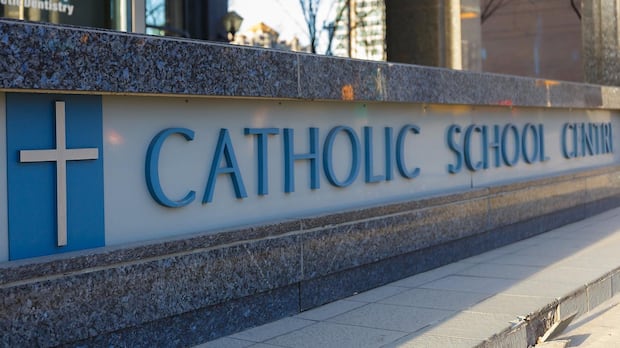
A Grade 12 student in Calgary has been prohibited from reciting a poem that addresses unwanted sexual advances during a local poetry competition. Josephine Trigg, who attends a school within the Calgary Catholic School District, chose to read “Dick Pics,” a poem by Kingston, Ontario, poet Sarah Tsiang, at the regional round of the annual “Poetry in Voice” competition. The decision to ban her from performing the poem has sparked discussions about censorship and the importance of addressing sensitive topics in educational settings.
Trigg, 17, has participated in the “Poetry in Voice” competition since her sophomore year. She often selects poems that tackle serious issues like sexual assault and harassment, aiming to provoke thought and awareness. This year, she believed that Tsiang’s poem would resonate with the audience due to its candid exploration of a critical societal issue. In a recent interview with CBC Radio, Trigg expressed her conviction: “You can’t hear this poem and not be listening to the message, not be listening to the words.”
Despite her enthusiasm, Trigg’s performance faced backlash. Following the recital, her school’s vice-principal informed her English teacher that the poem likely would not be suitable for the regional competition. Notably, the poem had received prior approval from the English teacher in charge and was included in the event’s program. The Calgary Catholic School District did not provide an interview but issued a statement emphasizing their commitment to maintaining language that aligns with the values of their faith-based learning community.
The district stated, “While the poem addresses serious and important issues, our responsibility is to ensure that content shared in school environments upholds the dignity of the human person and is suitable for students of all ages.” They clarified that the decision was based on the language used in the poem, rather than the significance of its subject matter.
Addressing Unwanted Advances
The poem “Dick Pics” addresses a pressing issue faced by many girls and women: unsolicited sexual images sent by men. Tsiang wrote the poem after learning that her daughter’s friend, then in Grade 10, had received explicit images from strangers. The poem opens with the striking lines, “Two dicks, sitting in my daughter’s inbox, like men without hats, waiting for any door to open.” Tsiang aims to highlight the absurdity and discomfort of such experiences, using humor to diminish the perceived power of these images, which she likens to “baloney on a plate.”
Reflecting on the poem’s deeper implications, Tsiang shared, “It’s really about the mother’s relationship with her daughter and how alienating it is to live in a world in which you don’t know what is getting sent to your child.” She was both pleased and surprised that Trigg chose to perform her work, and she expressed disappointment regarding the school’s decision to censor it, especially given the relevance of the issues discussed.
Trigg voiced her frustration about the censorship, stating, “If you censor the words, you’re censoring the message. You can’t detach one from the other.” She has since submitted an alternate poem for the regional round of the competition, scheduled for Tuesday, but she remains hopeful that public pressure may lead the school to reconsider its stance on Tsiang’s poem.
The controversy surrounding this incident underscores ongoing debates about the appropriateness of discussing sensitive subjects in educational environments. As schools navigate their responsibilities to uphold community values while fostering open dialogue about critical issues, the outcome of Trigg’s case may have broader implications for similar situations in the future.












Morris Churches Unite for Annual Good Friday Walk With the Cross

Chloe Zhao’s ‘Buffy’ Reboot Cancelled: Sarah Michelle Gellar Speaks Out

Essential Ingredients for Life Found in Ryugu Asteroid Samples

Urgent Rescue: NSR Airlifts Injured Climber from Nanaimo

Riverside Heart Ball Achieves Record $815,000 for Mental Health

Cognizant Launches AI Factory to Enhance Enterprise AI Scalability

Samsung’s Galaxy Watch 9 to Feature Larger Battery Than Before

Toronto’s AIDS Memorial Faces Potential Redesign Amid Community Concerns

Bayern Munich Loses Luis Díaz Red Card Appeal Despite Referee’s Admission

Secwepemc First Nation Seeks Aboriginal Title Over Kamloops Area

Fatal Crash on Highway 11 Claims Three Lives, Major Closure Ongoing

Manitoba’s Burger Champion Shines Again Amid Dining Innovations

Canadian Curler E.J. Harnden Announces Retirement from Competition

Urgent Fire Erupts at Salvation Army on Christmas Evening

Scientists Unearth Ancient Antarctic Ice to Unlock Climate Secrets

Minister Faces Scrutiny Over Delayed Foreign Interference Watchdog Appointment

Trump and McCormick to Announce $70 Billion Energy Investments

Four Astronauts Return to Earth After International Space Station Mission
-
 Politics5 months ago
Secwepemc First Nation Seeks Aboriginal Title Over Kamloops Area
-
 Top Stories4 months ago
Fatal Crash on Highway 11 Claims Three Lives, Major Closure Ongoing
-
 Lifestyle7 months ago
Manitoba’s Burger Champion Shines Again Amid Dining Innovations
-
 Sports3 months ago
Canadian Curler E.J. Harnden Announces Retirement from Competition
-
 Top Stories3 months ago
Urgent Fire Erupts at Salvation Army on Christmas Evening
-
 World9 months ago
Scientists Unearth Ancient Antarctic Ice to Unlock Climate Secrets
-
 World5 months ago
Minister Faces Scrutiny Over Delayed Foreign Interference Watchdog Appointment
-
 Entertainment9 months ago
Trump and McCormick to Announce $70 Billion Energy Investments
-
 Science9 months ago
Four Astronauts Return to Earth After International Space Station Mission
-

 Lifestyle9 months ago
TransLink Launches Food Truck Program to Boost Revenue in Vancouver
-

 Lifestyle9 months ago
Monika Hibbs Unveils Acres Market & Interiors in Major Rebrand
-

 World1 month ago
Ranchman’s Cookhouse & Dancehall to Relocate by Early 2027