
Top Stories
Toronto Beaches Warned Unsafe for Swimming Amid E. coli Concerns

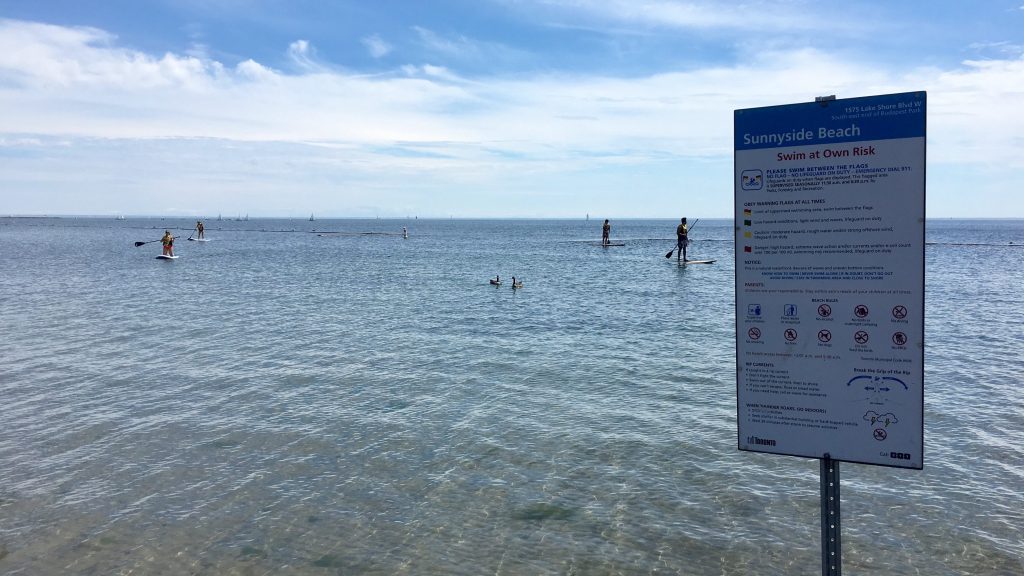
Two beaches in Toronto are currently deemed unsafe for swimming due to elevated levels of E. coli. Water samples collected at Sunnyside Beach on March 10, 2024, revealed a concerning level of 344 E. coli per 100 milliliters, significantly higher than the City of Toronto’s safety threshold of 100 E. coli per 100 milliliters. Consequently, the city has issued a public advisory indicating that caution is advised for beachgoers.
At Marie Curtis Park East Beach, E. coli levels were recorded at 34 E. coli per 100 milliliters on the same day. Despite being below the safety limit, the City has raised concerns. A public health advisory noted that “heavy rainfall and declining weather conditions indicate an increasing trend in E. coli levels,” prompting the same cautionary status for this beach as well.
Daily Monitoring and Public Safety Measures
The City of Toronto conducts daily testing of beach water quality to monitor bacterial levels, which can fluctuate based on various environmental factors, including weather and potential pollution sources. However, lab results typically take 24 hours to process. As a result, the city urges the public not to rely solely on the daily test results. Beachgoers are encouraged to make informed decisions based on recent rainfall, wind conditions, and the presence of birds, as these factors can influence water quality.
Officials also highlight that shallow bodies of water tend to warm more quickly, which can lead to a rapid increase in bacteria levels. Wet sand areas are particularly susceptible to higher E. coli concentrations, further complicating safety assessments.
For the latest updates, the City of Toronto has provided a comprehensive list of designated beaches and their current water quality status on its official website. Residents and visitors are advised to check this information regularly before planning their beach outings to ensure a safe experience.
With the arrival of warmer weather, the city emphasizes the importance of staying informed about water quality to protect public health.












Ambassador Bridge Fees Surge $2 by January 2026

Holiday Shoppers Urged to Caution on ‘Buy Now, Pay Later’ Plans

New Study Reveals Remote Work Boosts Mental Health Benefits

Prioritizing Preventative Care: The Importance of Screening Tests

Gas Prices Decrease in Nova Scotia as December Begins

White-Collar Workers Turn to AI Training Amid Job Market Challenges

Whitecaps Aim for MLS Cup Glory Against Inter Miami

Thunder Bay Students Promote Kindness for Winter Holidays

Liberal MP Nathalie Provost Urges Action on Gun Control Now

Secwepemc First Nation Seeks Aboriginal Title Over Kamloops Area

Scientists Unearth Ancient Antarctic Ice to Unlock Climate Secrets

Trump and McCormick to Announce $70 Billion Energy Investments

Four Astronauts Return to Earth After International Space Station Mission

TransLink Launches Food Truck Program to Boost Revenue in Vancouver

Apple Notes Enhances Functionality with Markdown Support in macOS 26

Manitoba’s Burger Champion Shines Again Amid Dining Innovations

Urgent Update: Fatal Crash on Highway 99 Claims Life of Pitt Meadows Man

Ukrainian Tennis Star Elina Svitolina Faces Death Threats Online
-
 Politics4 weeks ago
Secwepemc First Nation Seeks Aboriginal Title Over Kamloops Area
-
 World5 months ago
Scientists Unearth Ancient Antarctic Ice to Unlock Climate Secrets
-
 Entertainment5 months ago
Trump and McCormick to Announce $70 Billion Energy Investments
-
 Science5 months ago
Four Astronauts Return to Earth After International Space Station Mission
-
 Lifestyle5 months ago
TransLink Launches Food Truck Program to Boost Revenue in Vancouver
-
 Technology3 months ago
Apple Notes Enhances Functionality with Markdown Support in macOS 26
-
 Lifestyle3 months ago
Manitoba’s Burger Champion Shines Again Amid Dining Innovations
-
 Top Stories2 months ago
Urgent Update: Fatal Crash on Highway 99 Claims Life of Pitt Meadows Man
-
 Politics4 months ago
Ukrainian Tennis Star Elina Svitolina Faces Death Threats Online
-

 Sports5 months ago
Search Underway for Missing Hunter Amid Hokkaido Bear Emergency
-

 Politics5 months ago
Carney Engages First Nations Leaders at Development Law Summit
-

 Technology5 months ago
Frosthaven Launches Early Access on July 31, 2025