
Business
Arctic Corridor Project Sparks Debate Over Economic Benefits

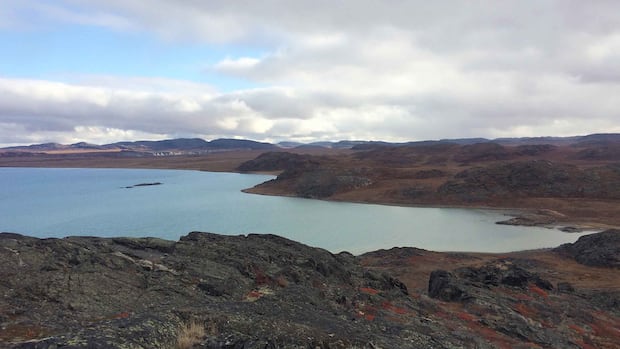
The proposed Arctic economic and security corridor has ignited a complex debate among various stakeholders about its potential benefits and drawbacks. Northern leaders assert that the project, which runs through the Northwest Territories and Nunavut, could serve as a significant “nation-building” initiative, yet opinions diverge on its actual impact.
Jackson Lafferty, Grand Chief of the Tłı̨chǫ government, views the corridor as an opportunity for economic revitalization, particularly in light of declining mining activities in the Northwest Territories. In November 2023, the Tłı̨chǫ government, in collaboration with the Yellowknives Dene First Nation, signed a memorandum of understanding to jointly oversee the project from the N.W.T. side. Lafferty emphasized, “The last 25 years, the diamond mines came and it was on their terms… Now it’s on our terms.”
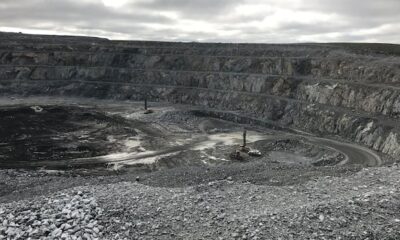
The federal government has identified the corridor as a potential fast-tracked project, which includes plans for a deep-water port at Grays Bay in Nunavut. This port is designed to accommodate both navy vessels and large cargo ships, facilitating the transportation of materials from future critical mineral mines in the region. A proposed 230-kilometre all-weather road would link the port to Jericho Station, a former diamond mine site, and further connect to a winter road leading to Yellowknife.
Lafferty is already in discussions with key stakeholders in Ottawa and abroad to gather support for the initiative. He envisions the corridor as a means to enhance connectivity for remote communities like Gamètı̀ and Wekweètì, enabling them to access essential services and resources.
While some stakeholders are optimistic about the project, concerns are surfacing within local communities regarding its long-term benefits. Amanda Dumond, manager of the Kugluktuk Hunters and Trappers Organization, expressed skepticism about the employment opportunities the corridor might create. She cites existing projects in the North that struggle to maintain workforce levels, suggesting that many jobs may be temporary and rotational, which could strain families.
In contrast, Brendan Bell, CEO of the West Kitikmeot Resources Corp., argues that the corridor could mirror the economic benefits seen in Yellowknife from nearby mining operations. He believes the project will provide much-needed access to tidewater for communities in the Kitikmeot region, facilitating the transport of building materials and seasonal supplies.
The corridor also carries implications for Arctic security. Bell noted that the port would allow greater access for vessels such as Canadian Coast Guard ships, enhancing the region’s security infrastructure. Nonetheless, Lori Idlout, Nunavut’s NDP MP, asserts that true nation-building involves addressing fundamental issues such as food security and housing conditions in local communities. She questions whether the project genuinely supports the well-being of Nunavummiut.
Concerns about environmental impacts are also prevalent. Dumond highlighted the cultural significance of the Grays Bay area, which is traditionally used for hunting and fishing. She worries that the construction of the port and road could disrupt local wildlife and migration routes, particularly impacting the Dolphin-Union caribou population.
While Bell acknowledges potential environmental repercussions, he insists that ongoing community consultations and wildlife assessments will inform mitigation strategies during the project’s development. An impact statement is expected to be submitted to the Nunavut Impact Review Board by spring 2026.
The estimated cost of the corridor project is around $1 billion for the Nunavut side, with construction anticipated to begin in 2030. Bell plans to raise 25 percent of the funding through private markets, while seeking federal support for the remaining costs.
Arlen Foster, operations lead for the territories at Stantec, noted that while the project’s logistical challenges are significant—given that the road would be built on permafrost—there are successful precedents, such as the all-season Inuvik–Tuktoyaktuk Highway. Foster believes that increased attention from the federal government could also lead to improvements in basic infrastructure needs within local communities.
As discussions continue, the Arctic economic and security corridor stands at a crossroads, balancing the promise of economic development with the pressing needs and concerns of local communities.










Morris Churches Unite for Annual Good Friday Walk With the Cross

Chloe Zhao’s ‘Buffy’ Reboot Cancelled: Sarah Michelle Gellar Speaks Out

Essential Ingredients for Life Found in Ryugu Asteroid Samples

Urgent Rescue: NSR Airlifts Injured Climber from Nanaimo

Riverside Heart Ball Achieves Record $815,000 for Mental Health

Cognizant Launches AI Factory to Enhance Enterprise AI Scalability

Samsung’s Galaxy Watch 9 to Feature Larger Battery Than Before

Toronto’s AIDS Memorial Faces Potential Redesign Amid Community Concerns

Bayern Munich Loses Luis Díaz Red Card Appeal Despite Referee’s Admission

Secwepemc First Nation Seeks Aboriginal Title Over Kamloops Area

Fatal Crash on Highway 11 Claims Three Lives, Major Closure Ongoing

Manitoba’s Burger Champion Shines Again Amid Dining Innovations

Canadian Curler E.J. Harnden Announces Retirement from Competition

Urgent Fire Erupts at Salvation Army on Christmas Evening

Scientists Unearth Ancient Antarctic Ice to Unlock Climate Secrets

Minister Faces Scrutiny Over Delayed Foreign Interference Watchdog Appointment

Trump and McCormick to Announce $70 Billion Energy Investments

Monika Hibbs Unveils Acres Market & Interiors in Major Rebrand
-
 Politics5 months ago
Secwepemc First Nation Seeks Aboriginal Title Over Kamloops Area
-
 Top Stories4 months ago
Fatal Crash on Highway 11 Claims Three Lives, Major Closure Ongoing
-
 Lifestyle7 months ago
Manitoba’s Burger Champion Shines Again Amid Dining Innovations
-
 Sports4 months ago
Canadian Curler E.J. Harnden Announces Retirement from Competition
-
 Top Stories4 months ago
Urgent Fire Erupts at Salvation Army on Christmas Evening
-
 World9 months ago
Scientists Unearth Ancient Antarctic Ice to Unlock Climate Secrets
-
 World5 months ago
Minister Faces Scrutiny Over Delayed Foreign Interference Watchdog Appointment
-
 Entertainment9 months ago
Trump and McCormick to Announce $70 Billion Energy Investments
-
 Lifestyle9 months ago
Monika Hibbs Unveils Acres Market & Interiors in Major Rebrand
-

 Science9 months ago
Four Astronauts Return to Earth After International Space Station Mission
-
 Lifestyle9 months ago
TransLink Launches Food Truck Program to Boost Revenue in Vancouver
-
 World2 months ago
Ranchman’s Cookhouse & Dancehall to Relocate by Early 2027