
Business
Canada Prepares for Groundbreaking Trade Mission to Mexico

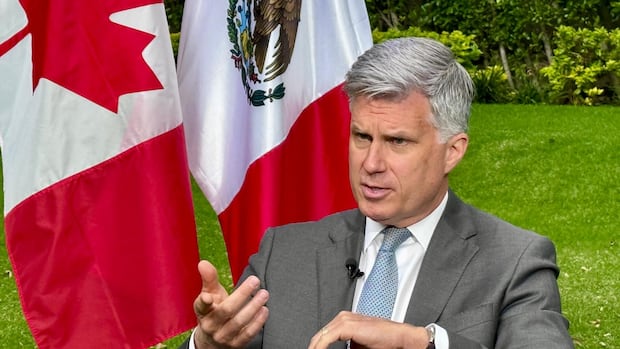
The Canadian government is gearing up for a significant trade mission to Mexico in February 2025, which could become one of the largest such initiatives ever undertaken by Canada. According to Cameron MacKay, the Canadian ambassador to Mexico, hundreds of businesses from Canada have expressed interest in participating in this mission, which is scheduled to take place from February 15 to February 20. The mission will be led by Dominic LeBlanc, Canada’s Trade Minister responsible for U.S. relations.
MacKay highlighted the overwhelming response from the Canadian business community, stating, “In terms of the number of businesses who have applied to join the minister and come and look at export opportunities here, it’ll be the biggest one we’ve ever done.” He noted that the level of interest is so high that logistical constraints might limit the number of participants. “We really want to make sure that the businesses themselves are export-ready,” he added.
Focus Areas and Itinerary
The trade mission will emphasize key sectors such as agriculture, advanced manufacturing, information communications technology, clean energy, and creative industries. The itinerary includes visits to major cities, including Mexico City, Monterrey, and Guadalajara. LeBlanc’s recent visit to Mexico included a meeting with Marcelo Ebrard, Mexico’s Secretary of the Economy, to lay the groundwork for this upcoming mission.
MacKay’s comments come amid uncertainty surrounding the future of the Canada-U.S.-Mexico Agreement (CUSMA), the successor to the North American Free Trade Agreement (NAFTA). As the trilateral trade deal undergoes a formal review process next year, questions have arisen regarding its ongoing relevance, particularly following discussions at the FIFA 2026 World Cup draw involving Prime Minister Mark Carney, Claudia Sheinbaum, and U.S. President Donald Trump.
Trade Relations and Economic Impact
Despite existing trade tensions between Canada and the U.S., MacKay remains optimistic about Mexico’s commitment to CUSMA. He stated, “Canada and Mexico will need each other more than we ever have, and we want to be working together and trying to solve problems together.” He underscored the importance of CUSMA, which has supported hundreds of thousands of jobs across North America, enhancing the competitiveness of each economy.
In 2024, Mexico was Canada’s third-largest trading partner, following the U.S. and China, with trade between the two nations reaching approximately $56 billion CAD. This figure marks a significant increase from the nearly $5 billion CAD in trade recorded at the onset of NAFTA in 1994. As highlighted by Export Development Canada, Mexico is considered a priority market for Canadian businesses.
The strong economic ties are further evidenced by the fact that Canada was the fifth-largest trading partner for Mexico during the same period. Canadian direct investment in Mexico reached around $46.5 billion CAD in 2024, primarily driven by the provisions of CUSMA. The automotive industry particularly benefits from this relationship, with over 60 Canadian car part companies operating in Mexico and employing approximately 30,000 Mexicans.
With the backdrop of changing trade dynamics and the impending renegotiation of CUSMA in 2026, MacKay emphasized that there has never been a better opportunity for Canadian businesses to explore expansion into the Mexican market. He concluded, “With the pressure that’s on the Canadian business community now, I would say there’s never been a better opportunity and more motivation for Canadian business to think about expanding and looking at whether Mexico is a good market for them.”












Judge Schedules Urgent Hearing for Fired Saskatoon Cops’ Appeal

North Star Air Launches Flights from Kenora to Thunder Bay Jan. 15

Urgent: Manitoba Winter Storm Delays Health Appointments Now

Blue Jays Explore Trade Options, Eye Ketel Marte Amid High Demands

Prince George School Launches Food Program for Struggling Families

New Hampshire Seeks Public Help in 2001 Murder of Louise Chaput

Liberal Government Introduces Landmark Bill to Protect Vulnerable Groups

Union Launches Support Centre for Algoma Steel Workers Facing Layoffs

Paramount and Netflix Engage in Competitive Bidding for Warner Bros.

Secwepemc First Nation Seeks Aboriginal Title Over Kamloops Area

Scientists Unearth Ancient Antarctic Ice to Unlock Climate Secrets

Trump and McCormick to Announce $70 Billion Energy Investments

Four Astronauts Return to Earth After International Space Station Mission

TransLink Launches Food Truck Program to Boost Revenue in Vancouver

Apple Notes Enhances Functionality with Markdown Support in macOS 26

Manitoba’s Burger Champion Shines Again Amid Dining Innovations

Urgent Update: Fatal Crash on Highway 99 Claims Life of Pitt Meadows Man

Homemade Houseboat ‘Neverlanding’ Captivates Lake Huron Voyagers
-
 Politics1 month ago
Secwepemc First Nation Seeks Aboriginal Title Over Kamloops Area
-
 World5 months ago
Scientists Unearth Ancient Antarctic Ice to Unlock Climate Secrets
-
 Entertainment5 months ago
Trump and McCormick to Announce $70 Billion Energy Investments
-
 Science5 months ago
Four Astronauts Return to Earth After International Space Station Mission
-
 Lifestyle5 months ago
TransLink Launches Food Truck Program to Boost Revenue in Vancouver
-
 Technology3 months ago
Apple Notes Enhances Functionality with Markdown Support in macOS 26
-
 Lifestyle3 months ago
Manitoba’s Burger Champion Shines Again Amid Dining Innovations
-
 Top Stories2 months ago
Urgent Update: Fatal Crash on Highway 99 Claims Life of Pitt Meadows Man
-
 Top Stories2 weeks ago
Homemade Houseboat ‘Neverlanding’ Captivates Lake Huron Voyagers
-

 Politics4 months ago
Ukrainian Tennis Star Elina Svitolina Faces Death Threats Online
-

 Sports5 months ago
Search Underway for Missing Hunter Amid Hokkaido Bear Emergency
-

 Politics5 months ago
Carney Engages First Nations Leaders at Development Law Summit