
Business
Canadian Manufacturing Sector Faces Prolonged Recession

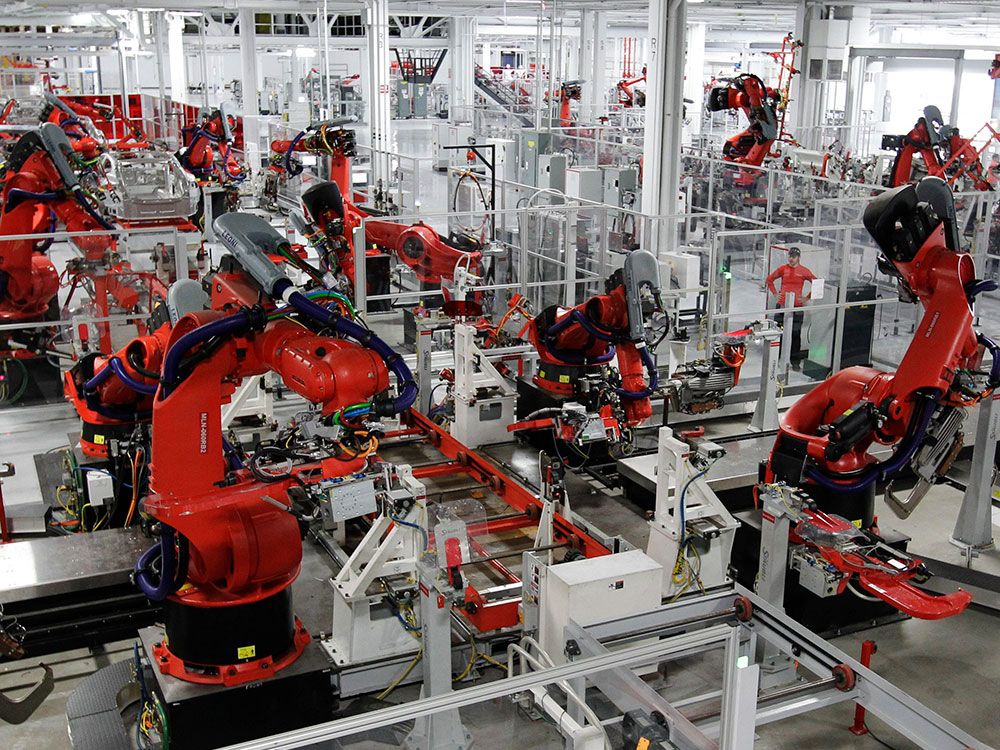
The Canadian manufacturing sector is experiencing a significant downturn, entering its 32nd month of recession. This prolonged economic struggle has raised concerns among economists, particularly as the overall Canadian economy remains relatively stable. According to Stefane Marion, an economist with the National Bank of Canada, the manufacturing sector has been in recession since May 2023, marking the longest stretch of decline in nearly three decades.
The latest data indicates that Canada’s gross domestic product (GDP) stalled in November, with manufacturing output reaching its lowest level since 2013, excluding the pandemic period. A report from CIBC Capital Markets highlights that the manufacturing GDP in Canada has faced a decline for over 20 years, a trend that has only intensified in recent months.
Economic comparisons between Canada and the United States reveal stark differences. While U.S. manufacturing output has surged to nearly 10 percent above pre-pandemic levels, Canada has yet to recover to its 2019 figures. This disparity is largely attributed to the U.S. manufacturing sector being significantly more capital-intensive. Capital-intensive industries, which include sectors such as automotive, semiconductor production, and pharmaceuticals, rely heavily on investments in technology and machinery rather than labor.
The CIBC report indicates that the capital intensity in U.S. manufacturing has increased by an average of 3 percent annually since the late 1980s, with an accelerated rise of over 10 percent since the pandemic began. In contrast, Canada has seen a decline in the ratio of production in capital-intensive industries compared to non-capital-intensive ones since 2019. This trend is widening the gap between the capital intensity of manufacturing in the two countries.
Productivity metrics further illustrate the challenges faced by Canadian manufacturers. Since the pandemic, U.S. manufacturing productivity has increased by more than 2 percent, whereas Canada’s has dropped by over 5 percent. Additionally, profit margins in U.S. capital-intensive industries are reportedly nine percentage points higher than in other manufacturing sectors, contributing to a growing profitability gap between the two nations.
Looking ahead, the CIBC economists anticipate that the situation may worsen. The rapid adoption of artificial intelligence and other technological advancements is set to further enhance capital intensity in U.S. manufacturing, similar to trends observed during the dot-com boom of the late 1990s. As businesses increasingly replace labor with capital, Canadian manufacturing leaders must adapt to this evolving landscape.
In response to the challenges facing the manufacturing sector, Prime Minister Mark Carney and Industry Minister Melanie Joly are expected to unveil a new automotive strategy aimed at revitalizing the industry. As the Canadian economy grapples with these significant shifts, stakeholders across various sectors are keenly observing how the government will address the pressing issues within manufacturing.
The outlook remains uncertain, but it is clear that the Canadian manufacturing sector faces an uphill battle in regaining its footing. As conditions evolve, industry leaders and policymakers alike are tasked with navigating a path toward recovery.













Morris Churches Unite for Annual Good Friday Walk With the Cross

Chloe Zhao’s ‘Buffy’ Reboot Cancelled: Sarah Michelle Gellar Speaks Out

Essential Ingredients for Life Found in Ryugu Asteroid Samples

Urgent Rescue: NSR Airlifts Injured Climber from Nanaimo

Riverside Heart Ball Achieves Record $815,000 for Mental Health

Cognizant Launches AI Factory to Enhance Enterprise AI Scalability

Samsung’s Galaxy Watch 9 to Feature Larger Battery Than Before

Toronto’s AIDS Memorial Faces Potential Redesign Amid Community Concerns

Bayern Munich Loses Luis Díaz Red Card Appeal Despite Referee’s Admission

Secwepemc First Nation Seeks Aboriginal Title Over Kamloops Area

Fatal Crash on Highway 11 Claims Three Lives, Major Closure Ongoing

Manitoba’s Burger Champion Shines Again Amid Dining Innovations

Canadian Curler E.J. Harnden Announces Retirement from Competition

Urgent Fire Erupts at Salvation Army on Christmas Evening

Scientists Unearth Ancient Antarctic Ice to Unlock Climate Secrets

Minister Faces Scrutiny Over Delayed Foreign Interference Watchdog Appointment

Trump and McCormick to Announce $70 Billion Energy Investments

Four Astronauts Return to Earth After International Space Station Mission
-
 Politics5 months ago
Secwepemc First Nation Seeks Aboriginal Title Over Kamloops Area
-
 Top Stories4 months ago
Fatal Crash on Highway 11 Claims Three Lives, Major Closure Ongoing
-
 Lifestyle7 months ago
Manitoba’s Burger Champion Shines Again Amid Dining Innovations
-
 Sports3 months ago
Canadian Curler E.J. Harnden Announces Retirement from Competition
-
 Top Stories3 months ago
Urgent Fire Erupts at Salvation Army on Christmas Evening
-
 World9 months ago
Scientists Unearth Ancient Antarctic Ice to Unlock Climate Secrets
-
 World5 months ago
Minister Faces Scrutiny Over Delayed Foreign Interference Watchdog Appointment
-
 Entertainment9 months ago
Trump and McCormick to Announce $70 Billion Energy Investments
-
 Science9 months ago
Four Astronauts Return to Earth After International Space Station Mission
-

 Lifestyle9 months ago
Monika Hibbs Unveils Acres Market & Interiors in Major Rebrand
-

 Lifestyle9 months ago
TransLink Launches Food Truck Program to Boost Revenue in Vancouver
-

 World1 month ago
Ranchman’s Cookhouse & Dancehall to Relocate by Early 2027