
Business
Métis Nation–Saskatchewan Transforms Federal Investments into Economic Growth


The recent socio-economic impact assessment reveals that Métis Nation–Saskatchewan (MN–S) has successfully transformed federal investments into significant economic activity over the past seven years. The independent report, titled MN–S invests in Métis citizens, provincial economy benefits two-fold, was released on November 22, 2023, by the national accounting firm MNP and presented at the MN–S Legislative Assembly in Saskatoon. This assessment marks the first comprehensive evaluation of its kind since 2017.
According to the findings, investments made by the MN–S have generated approximately $740 million in economic activity across Saskatchewan, stemming from $486 million in spending since 2017. These initiatives have supported 15,178 jobs and created an estimated $26.5 million in tax revenue. The report underscores that funding directed towards Métis citizens contributes to both economic growth and improved social outcomes for all Saskatchewan residents.
Housing and Community Initiatives Drive Growth
Housing programs emerged as a key driver of economic activity, with MN–S completing 818 urgent home repairs and assisting 729 first-time home buyers. These actions generated $20.6 million in local consumer spending and created 197 jobs. Additionally, early learning and cultural initiatives reached over 10,000 Métis children, while health programs provided assistance to around 14,000 citizens through medical travel and related supports.
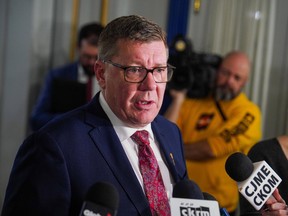
MN–S Chief Operating Officer Matthew Vermette emphasized the importance of the analysis, stating that it reinforces the internal data collected by the organization. “When the federal government invests in MN–S, it’s not just dollar for dollar. When $1 is put into MN–S, it actually generates $2 in economic output,” he noted.
Public services have also expanded significantly, increasing from 164 employees in 2022 to 374 employees projected for 2025. This growth reflects ongoing efforts to address disparities in health, income, and access to services, and the workforce now prominently features Indigenous and women leaders.
Negotiations for Self-Government and Future Prospects
As MN–S continues discussions with the Government of Canada regarding a self-government treaty, the progress outlined in the report is particularly timely. Formal recognition between 2017 and 2019 established MN–S as the political representative for Métis citizens in Saskatchewan, paving the way for the current negotiations. Vermette described the self-governance framework as a transformative shift for MN–S, attributing this development to the recognition of its inherent right to self-governance.
Vermette emphasized that meaningful self-government requires comprehensive engagement from community members and adequate support from the federal government. “Success will involve engagement and the support of the community at all levels, paired with resources and capacity from the federal government,” he stated.
The Nation is also positioning itself to engage in significant infrastructure projects, including potential pipeline and resource developments. Vermette articulated MN–S’ position on equity stakes, asserting that any large-scale project on Métis territory should involve equity participation from the Nation. He pointed out that true economic reconciliation with Indigenous peoples necessitates their involvement in projects at all levels.
Access to capital remains a challenge for MN–S, as Vermette noted the constraints that limit participation in larger projects. He acknowledged the importance of initiatives like the Saskatchewan Indigenous Investment Finance Corporation and the National Indigenous Loan Guarantee Program but stressed the need for additional resources to enable full participation.
In addition, MN–S is engaging with citizens about taking jurisdiction over Child and Family Services, a shift that Vermette believes will have lasting impacts. “We can’t think about the future without thinking about our kids,” he said, highlighting the importance of investing in the next generation.
The momentum reflected in the MNP assessment is attributed to several years of stable funding and the growing capacity of MN–S, which has been shaped directly by the input of Métis citizens. Vermette expressed pride in the accomplishments of the government and emphasized a commitment to building on this success. “We’re going to continue to grow on that success and build on the lessons we learned,” he stated.
For further details, the full report can be accessed through the MN–S digital library at https://metisnationsk.com/.










Jacob Fowler Shines in NHL Debut as Canadiens Tame Penguins

Urgent Flood Warning Issued as Storms Hit B.C. Coast Today

Global Governments Enact Historic Protections for Sharks and Rays

Sudbury Faces COVID-19 and Flu Outbreaks in Long-Term Care Homes

Alberta Auditor General Warns of Budget Shortfall Impact

Innovative Tray210 Redefines Recycled Plastic Design Aesthetics

Tristan Jarry Returns to Edmonton to Revitalize Oilers’ Goal

Family Lifestyle Expert Shares Smart Saving Strategy for Education

Tristan Jarry Joins Edmonton Oilers in Urgent Trade Move

Secwepemc First Nation Seeks Aboriginal Title Over Kamloops Area

Scientists Unearth Ancient Antarctic Ice to Unlock Climate Secrets

Trump and McCormick to Announce $70 Billion Energy Investments

TransLink Launches Food Truck Program to Boost Revenue in Vancouver

Four Astronauts Return to Earth After International Space Station Mission

Manitoba’s Burger Champion Shines Again Amid Dining Innovations

Apple Notes Enhances Functionality with Markdown Support in macOS 26

Urgent Update: Fatal Crash on Highway 99 Claims Life of Pitt Meadows Man

Homemade Houseboat ‘Neverlanding’ Captivates Lake Huron Voyagers
-
 Politics1 month ago
Secwepemc First Nation Seeks Aboriginal Title Over Kamloops Area
-
 World5 months ago
Scientists Unearth Ancient Antarctic Ice to Unlock Climate Secrets
-
 Entertainment5 months ago
Trump and McCormick to Announce $70 Billion Energy Investments
-
 Lifestyle5 months ago
TransLink Launches Food Truck Program to Boost Revenue in Vancouver
-
 Science5 months ago
Four Astronauts Return to Earth After International Space Station Mission
-
 Lifestyle3 months ago
Manitoba’s Burger Champion Shines Again Amid Dining Innovations
-
 Technology4 months ago
Apple Notes Enhances Functionality with Markdown Support in macOS 26
-
 Top Stories2 months ago
Urgent Update: Fatal Crash on Highway 99 Claims Life of Pitt Meadows Man
-
 Top Stories2 weeks ago
Homemade Houseboat ‘Neverlanding’ Captivates Lake Huron Voyagers
-

 Politics4 months ago
Ukrainian Tennis Star Elina Svitolina Faces Death Threats Online
-

 Sports5 months ago
Search Underway for Missing Hunter Amid Hokkaido Bear Emergency
-
 Politics5 months ago
Carney Engages First Nations Leaders at Development Law Summit