
Business
Supreme Court Ruling on Trump’s Tariffs Sparks $150 Billion Refund Battle

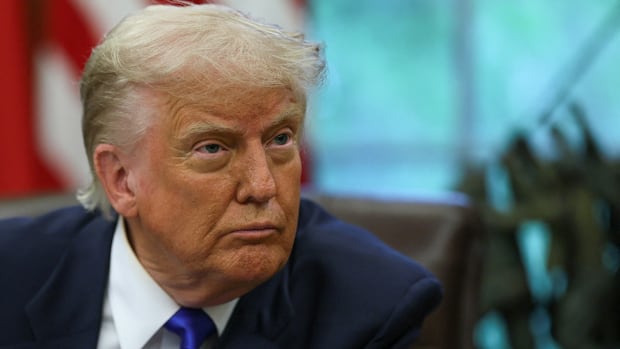
Executives, customs brokers, and trade lawyers are preparing for a significant Supreme Court ruling that could determine the legality of U.S. President Donald Trump’s broad global tariffs. The outcome may lead to a contentious battle over approximately $150 billion in refunds from the U.S. government for duties already paid by importers if the tariffs are struck down. The anticipation surrounding this ruling heightened after court arguments in November, where both conservative and liberal justices expressed skepticism regarding Trump’s authority under the International Emergency Economic Powers Act (IEEPA) of 1977 to impose these tariffs.
The Supreme Court is expected to issue its decision on February 6, 2025, although it has not disclosed which cases will be addressed. If the ruling invalidates the tariffs, some companies fear that the refund process may not be straightforward. “It’s not in the government’s DNA to give back money. And Trump would not want to give back money,” said Jim Estill, CEO of Danby Appliances, a Canadian manufacturer of small appliances affected by these tariffs. Estill emphasized concerns that even if Danby can reclaim the $7 million it paid in tariffs, retailers like Home Depot may also expect a share of the refunds.
Since the inception of the tariffs, the U.S. government has collected approximately $133.5 billion in duties, with the total nearing $150 billion as of late December 2025, based on average daily collection rates, according to the U.S. Customs and Border Protection (CBP). Trump is notable for being the first president to invoke the IEEPA for tariff imposition, a law historically used for sanctions against adversaries.
U.S. Treasury Secretary Scott Bessent has expressed confidence that the Supreme Court will uphold Trump’s tariffs, while U.S. Trade Representative Jamieson Greer indicated that any refund rights would require clarification from the Treasury and CBP. Greer also suggested that any lost revenue could potentially be compensated through new tariffs under alternative legal provisions.
Trump’s tariffs were implemented in two phases. The first, announced in April 2025, involved “reciprocal” tariffs on goods from various trading partners due to a declared national emergency over trade deficits. The second phase, targeting China, Canada, and Mexico, stemmed from concerns over the trafficking of illicit drugs.
Importers’ hopes for refunds hinge on whether the Supreme Court provides clear guidance on the refund process or remands the issue to lower courts, particularly the Court of International Trade. Typically, importers have a 314-day window to correct their submissions before they are liquidated, meaning no refunds can be issued. For many, this deadline has already passed, particularly for products imported from China subject to tariffs in February 2025.
Several companies, including Costco, have preemptively filed lawsuits against CBP to safeguard their rights to potential refunds. Costco noted the necessity of legal action, arguing that even if the Supreme Court rules the tariffs unlawful, there is no guarantee of refunds without judicial intervention. Other companies, including Bumble Bee Foods, Revlon, and EssilorLuxottica, have taken similar legal steps.
Jay Foreman, CEO of Basic Fun!, which produces popular toys, voiced skepticism regarding the return of the $6 million in tariffs his company paid prior to the holiday season. He anticipates that the Trump administration may “obfuscate or delay” refund payments, even if ordered.
Trade advisory director Pete Mento from Baker Tilly recommends that companies maintain detailed records and act swiftly. He believes that firms will need to demonstrate that they paid IEEPA-based tariffs to qualify for any refunds. “The people that get their claims in early and have them done correctly are the ones who are going to reap the benefits the fastest,” Mento stated. However, he cautioned that it could take years for companies to receive any refunds.
In a recent announcement, CBP disclosed a technical change that will transition all tariff refunds to electronic distribution beginning on February 6. While this move does not establish a fully automated refund process, it indicates that Customs is preparing to manage refunds if the Supreme Court rules against Trump’s tariffs. A CBP spokesperson did not respond to inquiries about how the agency would handle a potential ruling against the tariffs.
As the Supreme Court deliberates, businesses remain in limbo, unsure of the implications for their operations and finances.









UPEI’s High-Tech Simulation Centre Enhances Future Healthcare Skills

Canadian Astronaut Chris Hadfield Advocates for Eye Health

GPIQ and QYLD: Evaluating Strategies Amid Market Stagnation

Norovirus Outbreak Forces Canada’s Hockey Game Postponement

Fauna Robotics Unveils Sprout: A Humanoid Robot for Home Use

Team Canada Faces Goaltending Concerns Ahead of Olympics

Celebrating the Life of Irena Peritz: A Legacy of Love and Resilience

India, U.S. Announce Urgent Trade Deal to Slash Tariffs Now

American Airlines Pilots Challenge Management After Poor Results

Secwepemc First Nation Seeks Aboriginal Title Over Kamloops Area

Scientists Unearth Ancient Antarctic Ice to Unlock Climate Secrets

Urgent Fire Erupts at Salvation Army on Christmas Evening

Canadian Curler E.J. Harnden Announces Retirement from Competition

Manitoba’s Burger Champion Shines Again Amid Dining Innovations

Fatal Crash on Highway 11 Claims Three Lives, Major Closure Ongoing

Trump and McCormick to Announce $70 Billion Energy Investments

Four Astronauts Return to Earth After International Space Station Mission

TransLink Launches Food Truck Program to Boost Revenue in Vancouver
-
 Politics3 months ago
Secwepemc First Nation Seeks Aboriginal Title Over Kamloops Area
-
 World7 months ago
Scientists Unearth Ancient Antarctic Ice to Unlock Climate Secrets
-
 Top Stories1 month ago
Urgent Fire Erupts at Salvation Army on Christmas Evening
-
 Sports1 month ago
Canadian Curler E.J. Harnden Announces Retirement from Competition
-
 Lifestyle5 months ago
Manitoba’s Burger Champion Shines Again Amid Dining Innovations
-
 Top Stories2 months ago
Fatal Crash on Highway 11 Claims Three Lives, Major Closure Ongoing
-
 Entertainment7 months ago
Trump and McCormick to Announce $70 Billion Energy Investments
-
 Science7 months ago
Four Astronauts Return to Earth After International Space Station Mission
-
 Lifestyle7 months ago
TransLink Launches Food Truck Program to Boost Revenue in Vancouver
-

 Technology5 months ago
Apple Notes Enhances Functionality with Markdown Support in macOS 26
-

 Top Stories1 month ago
Blue Jays Sign Kazuma Okamoto: Impact on Bo Bichette’s Future
-

 Top Stories2 months ago
NHL Teams Inquire About Marc-André Fleury’s Potential Return