
Business
Toronto Condo Sales Stagnate as Builders Face Market Challenges

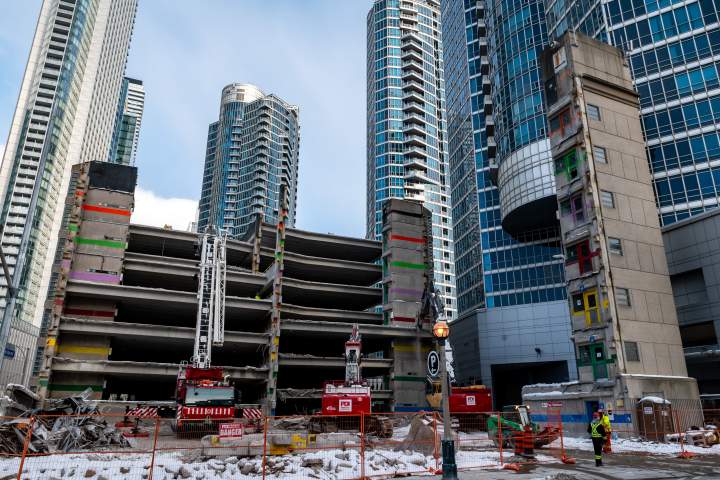
Toronto’s condominium market has seen a significant downturn, with builders halting sales on thousands of units. Between 2020 and 2025, data from the Building Industry and Land Development Association (BILD) indicates that 25 projects have stopped sales on over 3,200 new units. This trend reflects a broader stagnation in the city’s housing market, which is now nearing a complete standstill.
According to Dave Wilkes, president and CEO of BILD, the phrase “projects not pencilling” encapsulates the current reality. He explained to Global News, “From a builder’s point of view, projects aren’t proceeding; they’re not getting off the ground.” The inability to initiate new projects is concerning, as it leaves a gap in the supply of much-needed housing.
A closer look at the data reveals that six projects ceased sales in 2020, followed by five more in 2021. In 2022, the number ballooned to 10 projects abandoning their sales attempts, with an additional four folding in 2023. Notably, no projects stopped selling in 2024 or 2025, primarily because fewer than 10 highrises have attempted to launch in the last two years. Builders are grappling with high construction costs, making it challenging to attract buyers.
Wilkes emphasized the urgency of the situation, stating, “It’s just that they can’t get off the ground because that cost to build has reached a point which is just far too high.” Without new developments, the region may face a “severe shortage of housing” by 2027 and 2028.
In October 2023, only 54 new condos were sold in Toronto, a sharp decline from 145 in October 2022 and 457 in October 2021. This decrease is critical for builders, as most condominium projects require a significant percentage of units to be sold to secure financing for construction.
These troubling housing figures align with findings from a recent report by the University of Ottawa’s Missing Middle Initiative. The study revealed a 51 percent drop in condo apartment starts during the first three quarters of the year, along with a 43 percent decrease in ground-oriented housing starts. In contrast, purpose-built rentals saw a 42 percent increase compared to previous years.
Richard Lyall, council president, expressed concern over the data, stating, “We are staring into the abyss” regarding residential construction. Despite these challenges, the Ford government maintains an ambitious goal of building 1.5 million new homes by 2031. Officials are optimistic that recent legislative efforts will rejuvenate the market by spring, although critics remain skeptical about the feasibility of these plans.
As the Toronto housing market grapples with these challenges, the path forward remains uncertain. The combination of halted projects, escalating costs, and declining sales underscores a pressing need for effective solutions to stimulate both construction and buyer interest in the years ahead.













Local Authors Release Must-Read Books Ahead of Holiday Season

Snow Squalls Hit Northern Ontario with Up to 40cm Expected!

Manitoba’s New Emergency Placement Policy Sparks Urgent Concerns

Calgary Police Urge Parents to Combat AI-Generated Child Exploitation

Yukon Premier Promises Cancer Coverage for Wildland Firefighters

Toronto Condo Sales Stagnate as Builders Face Market Challenges

New CEO of CCI Vows to Enhance Support for Canadian Businesses

Invest Wisely for the Year-End Rally: Insights from Experts

Tim Brandt Honors Late Brother Through Winnipeg’s Little Free Libraries

Secwepemc First Nation Seeks Aboriginal Title Over Kamloops Area

Scientists Unearth Ancient Antarctic Ice to Unlock Climate Secrets

Trump and McCormick to Announce $70 Billion Energy Investments

Four Astronauts Return to Earth After International Space Station Mission

TransLink Launches Food Truck Program to Boost Revenue in Vancouver

Apple Notes Enhances Functionality with Markdown Support in macOS 26

Manitoba’s Burger Champion Shines Again Amid Dining Innovations

Urgent Update: Fatal Crash on Highway 99 Claims Life of Pitt Meadows Man

Homemade Houseboat ‘Neverlanding’ Captivates Lake Huron Voyagers
-
 Politics1 month ago
Secwepemc First Nation Seeks Aboriginal Title Over Kamloops Area
-
 World5 months ago
Scientists Unearth Ancient Antarctic Ice to Unlock Climate Secrets
-
 Entertainment5 months ago
Trump and McCormick to Announce $70 Billion Energy Investments
-
 Science5 months ago
Four Astronauts Return to Earth After International Space Station Mission
-
 Lifestyle5 months ago
TransLink Launches Food Truck Program to Boost Revenue in Vancouver
-
 Technology3 months ago
Apple Notes Enhances Functionality with Markdown Support in macOS 26
-
 Lifestyle3 months ago
Manitoba’s Burger Champion Shines Again Amid Dining Innovations
-
 Top Stories2 months ago
Urgent Update: Fatal Crash on Highway 99 Claims Life of Pitt Meadows Man
-
 Top Stories1 week ago
Homemade Houseboat ‘Neverlanding’ Captivates Lake Huron Voyagers
-

 Politics4 months ago
Ukrainian Tennis Star Elina Svitolina Faces Death Threats Online
-

 Sports5 months ago
Search Underway for Missing Hunter Amid Hokkaido Bear Emergency
-

 Politics5 months ago
Carney Engages First Nations Leaders at Development Law Summit