
Education
Canadian Armed Forces Experience Surge in New Recruits

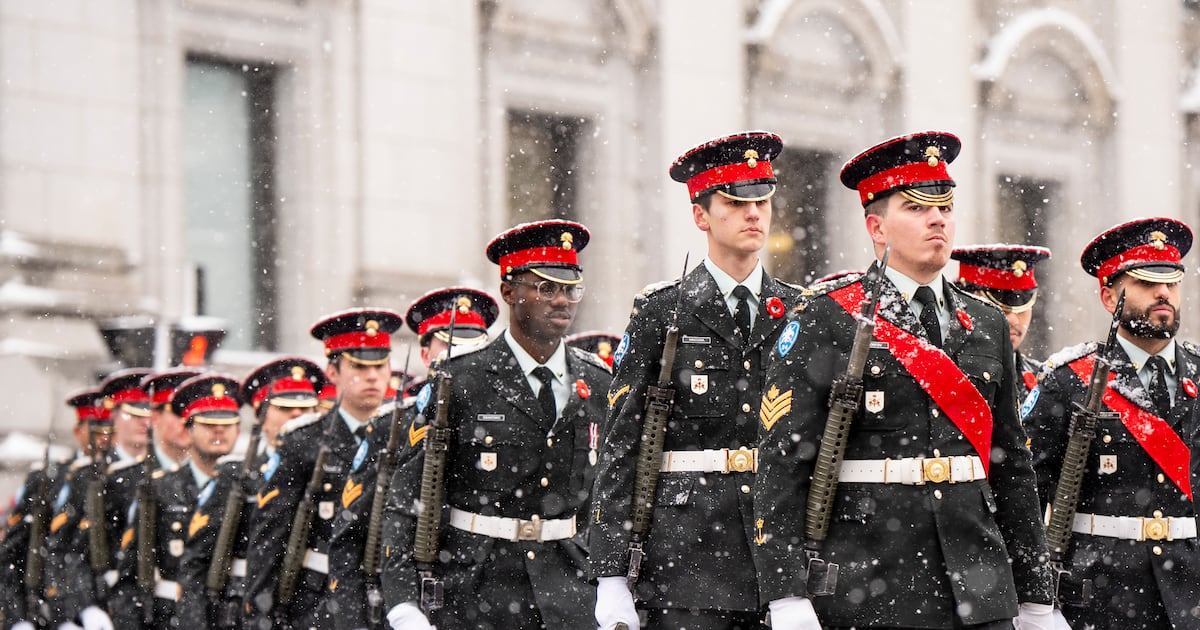
The Canadian Armed Forces (CAF) are witnessing a notable increase in recruitment, with a record number of graduates from the Leadership and Recruit School in St-Jean-Sur-Richelieu, Quebec. After years of struggling to meet recruitment targets, the military is now celebrating the successful completion of basic training for 204 recruits, including soldiers, sailors, aviators, and new officers. This graduation marks a significant turnaround in the armed forces’ recruitment efforts.
Commandant Marc Kieley announced that this year, the CAF offered 7,600 basic training seats, the highest in its post-Cold War history. “This is the most we have ever run,” Kieley stated, underscoring the ongoing commitment to bolster military ranks. In attendance at the parade were hundreds of family members and friends, including Private Erica Jerome-Valdez, a 22-year-old recruit who praised the efforts to enhance the military’s image and promote diversity. “I think the Canadian Forces worked really hard to improve their image and also diversity,” she remarked.
Despite these improvements, challenges remain. Women comprise only 18 percent of applicants, even as the military takes steps to address issues of sexual misconduct within its ranks. Overall, various initiatives, including financial incentives, have contributed to a more welcoming environment. In August, Prime Minister Mark Carney announced pay increases retroactive to April 1, 2025, which includes a substantial 20 percent wage increase for Regular Force privates, along with a new Military Service Pay benefit.
The recruitment process has also been streamlined. A recent report from the Auditor General assessed recruitment from 2022 to 2025, noting that the military had not met its operational needs in terms of applicant numbers. While gaps still exist, progress is evident.
Captain David White, an instructor at the Leadership and Recruit School, highlighted a common misconception regarding the age of recruits. “There is a common misconception that most people joining are between the ages of 18 and 22,” he explained. “We do skew towards a younger side; however, a lot of candidates that we see coming through are in their late 20s, late 30s, and even in their 40s.”
Geopolitical tensions have heightened the focus on national security, prompting the federal government to plan a significant investment in the military over the next four years. This financial commitment has not only increased recruitment numbers but also diversified the demographic of those enlisting. Traditionally, many recruits came from military families. For example, Private Logan McMackin from New Brunswick is inspired by his grandfather, who served in the Second World War. “My middle name is Thomas too,” he shared, reflecting on the legacy of service within his family.
However, a growing number of recruits now join without any military background. “It’s wonderful to have second and third and fourth generation CAF members,” Kieley noted. “But having Canadians and new Canadians with no family history of the military suddenly showing up in greater numbers is great. They know there is a need to support Canadian security and the security of our values.”
As the CAF continues to adapt and evolve, the Leadership and Recruit School aims to maintain this upward trend in recruitment, responding to both the needs of the military and the aspirations of a new generation of Canadians ready to serve their country.













Santa Claus’ Legacy Evolves Amid Retail Changes This Holiday Season

Parking Fees at Lake Louise to Surge 10.7% in 2026

Oxford Names “Rage Bait” as Word of the Year for 2025

Understanding How Red Blood Cells Influence A1C Levels

Lake Louise to Raise Parking Fees by 10.7% in 2026

Exploring Barriers in Birth Care and the Protein Debate

Uncertain Future for Lacrosse Promotion Program in Northern Canada

Canadian Armed Forces Experience Surge in New Recruits

URGENT: Mom Claims Children’s Aid Persecuted Her After Son’s Death

Secwepemc First Nation Seeks Aboriginal Title Over Kamloops Area

Scientists Unearth Ancient Antarctic Ice to Unlock Climate Secrets

Trump and McCormick to Announce $70 Billion Energy Investments

Four Astronauts Return to Earth After International Space Station Mission

TransLink Launches Food Truck Program to Boost Revenue in Vancouver

Apple Notes Enhances Functionality with Markdown Support in macOS 26

Manitoba’s Burger Champion Shines Again Amid Dining Innovations

Urgent Update: Fatal Crash on Highway 99 Claims Life of Pitt Meadows Man

Ukrainian Tennis Star Elina Svitolina Faces Death Threats Online
-
 Politics4 weeks ago
Secwepemc First Nation Seeks Aboriginal Title Over Kamloops Area
-
 World5 months ago
Scientists Unearth Ancient Antarctic Ice to Unlock Climate Secrets
-
 Entertainment5 months ago
Trump and McCormick to Announce $70 Billion Energy Investments
-
 Science5 months ago
Four Astronauts Return to Earth After International Space Station Mission
-
 Lifestyle5 months ago
TransLink Launches Food Truck Program to Boost Revenue in Vancouver
-
 Technology3 months ago
Apple Notes Enhances Functionality with Markdown Support in macOS 26
-
 Lifestyle3 months ago
Manitoba’s Burger Champion Shines Again Amid Dining Innovations
-
 Top Stories2 months ago
Urgent Update: Fatal Crash on Highway 99 Claims Life of Pitt Meadows Man
-
 Politics4 months ago
Ukrainian Tennis Star Elina Svitolina Faces Death Threats Online
-
 Sports5 months ago
Search Underway for Missing Hunter Amid Hokkaido Bear Emergency
-
 Politics5 months ago
Carney Engages First Nations Leaders at Development Law Summit
-
 Top Stories1 week ago
Homemade Houseboat ‘Neverlanding’ Captivates Lake Huron Voyagers