
Education
Canadian Educator Freda Ahenakew’s Life Celebrated in New Documentary

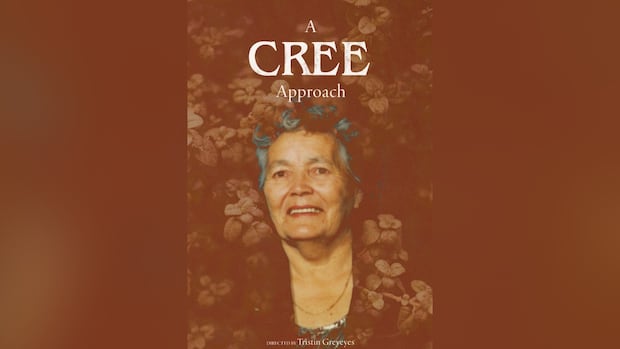
A new documentary titled A Cree Approach highlights the remarkable life of Freda Ahenakew, a dedicated Cree educator who devoted her life to preserving the Cree language while nurturing her family. Directed by her granddaughter Tristin Greyeyes, the film will have its world premiere on March 7, 2024, at the VIFF Centre in Vancouver, as part of the Gender Equity in Media Festival (GEMFest).
Born in 1932 on the Ahtahkakoop Cree Nation in Saskatchewan, Ahenakew’s life story is one of resilience and dedication. She faced significant challenges, including attending an Indian residential school in her youth and later dropping out of high school to marry. However, in 1968, Ahenakew returned to education, attending high school alongside some of her 12 children. Her goal was not only to complete her own studies but also to inspire her children, who were struggling with their academic pursuits.
Ahenakew’s commitment to education led her to the University of Saskatchewan, where she earned her bachelor of education degree in 1979. She later obtained a master’s degree from the University of Manitoba, with her thesis published as a book titled Cree Language Structures: A Cree Approach. This title inspired Greyeyes when naming her documentary, as it encapsulates both her grandmother’s legacy and the importance of the Cree language.
Greyeyes began the documentary project in 2021, initially envisioning a short film. However, as she conducted interviews and uncovered extensive archival material, she recognized the need for a longer format. “It was a passion project, for sure, and very personal,” she remarked. “I just thought it should be a feature, not out of ego, but because of the amount of information I could share.”
The documentary aims to shed light on the struggles Indigenous communities face in revitalizing their languages. “I hope non-Indigenous people understand Indigenous people’s struggle for language revitalization and why it’s important,” Greyeyes said. Additionally, she hopes the film will inspire Indigenous viewers to reconnect with their languages and cultures.
In recognition of her contributions to education and language preservation, Ahenakew was awarded numerous honors, including being named to the Order of Canada in 1998 and receiving honorary doctorates from the University of Saskatchewan in 1997 and the University of Manitoba in 2009. She passed away in 2011, leaving behind a legacy that continues to inspire.
The documentary will also be screened at the Sundar Prize Film Festival in April in Surrey, British Columbia, and will make its U.S. premiere at a festival in Minnesota later this spring. GEMFest, running from March 5-8, will showcase 35 films from 13 countries, all created by women and gender-diverse filmmakers. Other Indigenous films featured at the festival include W7éyle (Moon’s Wife), directed by Secwépemc filmmaker Amanda Wandler, and Forest Echoes, directed by Eva Grant, a member of the St’át’imc Nation.
As the documentary approaches its premiere, Greyeyes expresses her excitement to share her grandmother’s story with a wider audience, emphasizing the importance of preserving Indigenous languages and culture for future generations.











Morris Churches Unite for Annual Good Friday Walk With the Cross

Chloe Zhao’s ‘Buffy’ Reboot Cancelled: Sarah Michelle Gellar Speaks Out

Essential Ingredients for Life Found in Ryugu Asteroid Samples

Urgent Rescue: NSR Airlifts Injured Climber from Nanaimo

Riverside Heart Ball Achieves Record $815,000 for Mental Health

Cognizant Launches AI Factory to Enhance Enterprise AI Scalability

Samsung’s Galaxy Watch 9 to Feature Larger Battery Than Before

Toronto’s AIDS Memorial Faces Potential Redesign Amid Community Concerns

Bayern Munich Loses Luis Díaz Red Card Appeal Despite Referee’s Admission

Secwepemc First Nation Seeks Aboriginal Title Over Kamloops Area

Fatal Crash on Highway 11 Claims Three Lives, Major Closure Ongoing

Manitoba’s Burger Champion Shines Again Amid Dining Innovations

Canadian Curler E.J. Harnden Announces Retirement from Competition

Urgent Fire Erupts at Salvation Army on Christmas Evening

Scientists Unearth Ancient Antarctic Ice to Unlock Climate Secrets

Trump and McCormick to Announce $70 Billion Energy Investments

Minister Faces Scrutiny Over Delayed Foreign Interference Watchdog Appointment

Monika Hibbs Unveils Acres Market & Interiors in Major Rebrand
-
 Politics5 months ago
Secwepemc First Nation Seeks Aboriginal Title Over Kamloops Area
-
 Top Stories4 months ago
Fatal Crash on Highway 11 Claims Three Lives, Major Closure Ongoing
-
 Lifestyle7 months ago
Manitoba’s Burger Champion Shines Again Amid Dining Innovations
-
 Sports3 months ago
Canadian Curler E.J. Harnden Announces Retirement from Competition
-
 Top Stories3 months ago
Urgent Fire Erupts at Salvation Army on Christmas Evening
-
 World9 months ago
Scientists Unearth Ancient Antarctic Ice to Unlock Climate Secrets
-
 Entertainment9 months ago
Trump and McCormick to Announce $70 Billion Energy Investments
-
 World5 months ago
Minister Faces Scrutiny Over Delayed Foreign Interference Watchdog Appointment
-
 Lifestyle9 months ago
Monika Hibbs Unveils Acres Market & Interiors in Major Rebrand
-

 Science9 months ago
Four Astronauts Return to Earth After International Space Station Mission
-

 Lifestyle9 months ago
TransLink Launches Food Truck Program to Boost Revenue in Vancouver
-

 World1 month ago
Ranchman’s Cookhouse & Dancehall to Relocate by Early 2027