
Education
Education Emerges as a Vital Tool Against Antisemitism in Montreal

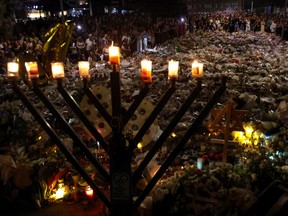
A recent anti-Jewish attack during a Hanukkah celebration in Sydney has renewed global focus on the urgent need to combat antisemitism. In Montreal, local leaders are advocating for a transformative approach to address this rising tide of hate, emphasizing the importance of education in fostering understanding and empathy.
The horrifying incident at Bondi Beach last year, which involved a targeted act of violence against Jewish individuals, serves as a stark reminder of the dangers posed by unchecked antisemitism. This attack has highlighted a troubling trend in Canada, where, according to Statistics Canada, 68.5 percent of police-reported religiously motivated hate crimes in 2024 were directed at Jews, despite Jews making up only about one percent of the population.
Understanding the Impact of Hate Crimes
The reality of antisemitism in Canada manifests in various forms, including harassment, vandalism of Jewish institutions, and violent attacks. Incidents such as gunfire aimed at Jewish schools and graffiti defacing Holocaust memorials illustrate the severity of the issue. Addressing these extreme expressions of hate cannot solely rely on legislative measures; a more profound cultural shift is necessary.
The Montreal Holocaust Museum is at the forefront of this initiative, championing Holocaust education as a means to challenge and dismantle deeply rooted prejudices. Survivors and their stories are central to this educational effort. The museum aims to convey the personal experiences of individuals like Paul Herczeg, who recalls the emotional toll of wearing a yellow star during the Holocaust, and Sonia Aronowicz Tencer, who endured forced labor. Understanding these narratives helps to humanize history and fosters empathy.
Research supports the effectiveness of Holocaust education in combating hate. A 2018 survey from the Azrieli Foundation indicated a clear correlation between knowledge of the Holocaust and a rejection of neo-Nazi sentiments among Canadians. Similarly, a 2020 study from U.S. Holocaust organizations found that students exposed to Holocaust education were more likely to challenge intolerance and biased information.
Bridging Historical Lessons with Contemporary Issues
To combat antisemitism effectively, it is crucial to connect historical events with present-day realities. Antisemitism has not vanished with the conclusion of the Holocaust; rather, it has evolved. The Montreal Holocaust Museum is actively working on this connection through workshops and educational programs that address contemporary manifestations of antisemitism.
One such initiative includes a new program designed for adults, featuring testimonies from the descendants of Holocaust survivors. This approach emphasizes that the struggle against antisemitism is ongoing and multifaceted. As the museum prepares for its relocation to downtown Montreal in 2027, it anticipates welcoming thousands of visitors eager to learn and engage with this vital history.
In an effort to promote learning and understanding, the museum will offer free admission every Sunday from January 25 to June 30, 2024. This initiative aims to encourage Montrealers to explore the complexities of Jewish history and the realities of antisemitism today.
As radicalization and extremism threaten democratic values, education emerges as a key strategy for fostering dialogue and building bridges between Jewish and non-Jewish communities. The emotional response to events like the Bondi Beach attack can serve as a catalyst for rejecting division and hate.
By prioritizing Holocaust education and sharing the stories of survivors, communities can work towards a more empathetic society where understanding triumphs over prejudice. The path forward requires a collective commitment to learning, growing, and standing against antisemitism in all its forms.













Morris Churches Unite for Annual Good Friday Walk With the Cross

Chloe Zhao’s ‘Buffy’ Reboot Cancelled: Sarah Michelle Gellar Speaks Out

Essential Ingredients for Life Found in Ryugu Asteroid Samples

Urgent Rescue: NSR Airlifts Injured Climber from Nanaimo

Riverside Heart Ball Achieves Record $815,000 for Mental Health

Cognizant Launches AI Factory to Enhance Enterprise AI Scalability

Samsung’s Galaxy Watch 9 to Feature Larger Battery Than Before

Toronto’s AIDS Memorial Faces Potential Redesign Amid Community Concerns

Bayern Munich Loses Luis Díaz Red Card Appeal Despite Referee’s Admission

Secwepemc First Nation Seeks Aboriginal Title Over Kamloops Area

Fatal Crash on Highway 11 Claims Three Lives, Major Closure Ongoing

Manitoba’s Burger Champion Shines Again Amid Dining Innovations

Canadian Curler E.J. Harnden Announces Retirement from Competition

Urgent Fire Erupts at Salvation Army on Christmas Evening

Scientists Unearth Ancient Antarctic Ice to Unlock Climate Secrets

Minister Faces Scrutiny Over Delayed Foreign Interference Watchdog Appointment

Trump and McCormick to Announce $70 Billion Energy Investments

Monika Hibbs Unveils Acres Market & Interiors in Major Rebrand
-
 Politics5 months ago
Secwepemc First Nation Seeks Aboriginal Title Over Kamloops Area
-
 Top Stories4 months ago
Fatal Crash on Highway 11 Claims Three Lives, Major Closure Ongoing
-
 Lifestyle7 months ago
Manitoba’s Burger Champion Shines Again Amid Dining Innovations
-
 Sports3 months ago
Canadian Curler E.J. Harnden Announces Retirement from Competition
-
 Top Stories4 months ago
Urgent Fire Erupts at Salvation Army on Christmas Evening
-
 World9 months ago
Scientists Unearth Ancient Antarctic Ice to Unlock Climate Secrets
-
 World5 months ago
Minister Faces Scrutiny Over Delayed Foreign Interference Watchdog Appointment
-
 Entertainment9 months ago
Trump and McCormick to Announce $70 Billion Energy Investments
-
 Lifestyle9 months ago
Monika Hibbs Unveils Acres Market & Interiors in Major Rebrand
-
 Science9 months ago
Four Astronauts Return to Earth After International Space Station Mission
-

 Lifestyle9 months ago
TransLink Launches Food Truck Program to Boost Revenue in Vancouver
-
 World1 month ago
Ranchman’s Cookhouse & Dancehall to Relocate by Early 2027