
Education
Ontario Premier Doug Ford Sparks Backlash Over Craft Education

The Ontario government has announced significant reductions to the Ontario Student Assistance Program (OSAP), slashing maximum funding from 85 per cent to 25 per cent. This change has drawn sharp criticism from students and educators alike. In response to growing discontent, Ontario Premier Doug Ford acknowledged he received “thousands of calls” from concerned students. His controversial suggestion for students? To pursue education in fields that lead to in-demand jobs, implying that craft programs, such as basket weaving, lack market value.
During a press conference in February addressing the OSAP funding cuts, Ford stated, “You’re picking basket-weaving courses, and there’s not too many baskets being sold out there.” His comments have sparked a broader conversation about the value of creative education and the cultural sector’s economic impact.
Understanding the Economic Value of Craft Education
Craft practitioners across Canada quickly refuted Ford’s claims, emphasizing the lucrative nature of their work and the transferable skills gained from craft education. For instance, Spencer Lunham Jr., a basket-maker from the Chippewas of Kettle and Stony Point First Nation, informed CBC that he sells hundreds of baskets annually, with prices ranging from $150 to $3,000 each.
Data from the Canadian Chamber of Commerce reinforces the significance of the cultural sector, revealing that its GDP has grown nearly 8 per cent, significantly surpassing the overall economic growth of 4 per cent. The report highlights that the arts and culture sector supports “13 jobs for every million in output,” outpacing industries like oil and gas, manufacturing, and agriculture. Notably, Ontario stands out as a province with a substantial economic impact derived from its cultural sector.
Ford’s dismissal of craft practices also faces challenges from recent winners of the prestigious Sobey Art Award, many of whom integrate craft techniques into their work. Ursula Johnson, the award’s 2017 recipient and an artist from the Eskasoni First Nation, exemplifies how basket-making can be both innovative and socially relevant. Her work not only showcases traditional techniques but also engages with contemporary issues related to colonialism and cultural identity.
The Broader Implications of Craft Education
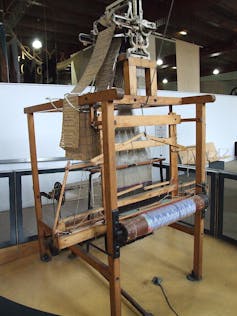
Craft practices have historically been at the forefront of technological innovation. Scholars argue that Charles Babbage, credited with inventing the computer, was inspired by the Jacquard loom, a pivotal development during the Industrial Revolution. Journalist Brian Merchant has pointed out that the early Luddite movement, which opposed industrialization, highlights the enduring connection between craft and technological advancement.
Members of the Toronto Guild of Spinners and Weavers further clarify that basket-weaving courses prioritize educational value over monetary gain. Craft education fosters critical thinking, problem-solving, and collaboration—skills essential in today’s workforce. As Johnson articulates, her grandmother taught her that the wood used in weaving guides the maker, emphasizing a relationship of respect and reciprocity in craft.
The issue extends beyond craft to question the purpose of education itself. Scott White, a college admissions expert, argues for an educational system that values critical thinking and emotional intelligence over rote memorization. Many advocates for reform in education systems believe that the current frameworks reflect outdated views of workforce requirements, focusing too heavily on traditional factory roles rather than nurturing creative thinkers.
Ford’s administration seems to echo these outdated perspectives by promoting a narrow view of higher education as a direct pipeline to job placement, often undermining programs that encourage creative and critical thinking. Reports indicate that funding for Ontario’s post-secondary institutions lags behind that of other provinces, further limiting opportunities for students pursuing diverse fields.
The historical and ongoing significance of craft practices cannot be overlooked. As author Ursula K. Le Guin posited in 1986, the basket—an embodiment of human creativity—was likely the first tool used for survival. Craft practices are essential for carrying culture and sustenance, and prioritizing economic gain over these fundamental aspects risks losing a vital part of our identity.
Engaging in hands-on craft education allows individuals to connect with their heritage, cultivate problem-solving skills, and foster a deeper understanding of their world. The backlash against Ford’s comments highlights a broader need to recognize and value the contributions of craft and creative education in shaping a more holistic and inclusive society.













Unveiling the Secrets of Animals That Adapt Their Body Temperature

Canadian Army Reservists to Conduct Fitness Marches in Ontario

Middle Eastern Nations Accelerate $40 Billion Clean Energy Transition

Community Rallies for Clothing Drive Honoring Stabbing Victim

Arsenal Triumphs Over Chelsea, Extends Premier League Lead

Ontario Premier Doug Ford Sparks Backlash Over Craft Education

Ontario Family Health Teams Sound Alarm Over Staffing Exodus

Austin Bar Shooting Claims Three Lives, Leaves 14 Injured

US Reports First Military Casualties as Iran’s Attacks Escalate

Secwepemc First Nation Seeks Aboriginal Title Over Kamloops Area

Fatal Crash on Highway 11 Claims Three Lives, Major Closure Ongoing

Manitoba’s Burger Champion Shines Again Amid Dining Innovations

Urgent Fire Erupts at Salvation Army on Christmas Evening

Scientists Unearth Ancient Antarctic Ice to Unlock Climate Secrets

Canadian Curler E.J. Harnden Announces Retirement from Competition

Trump and McCormick to Announce $70 Billion Energy Investments

Minister Faces Scrutiny Over Delayed Foreign Interference Watchdog Appointment

Four Astronauts Return to Earth After International Space Station Mission
-
 Politics4 months ago
Secwepemc First Nation Seeks Aboriginal Title Over Kamloops Area
-
 Top Stories2 months ago
Fatal Crash on Highway 11 Claims Three Lives, Major Closure Ongoing
-
 Lifestyle6 months ago
Manitoba’s Burger Champion Shines Again Amid Dining Innovations
-
 Top Stories2 months ago
Urgent Fire Erupts at Salvation Army on Christmas Evening
-
 World8 months ago
Scientists Unearth Ancient Antarctic Ice to Unlock Climate Secrets
-
 Sports2 months ago
Canadian Curler E.J. Harnden Announces Retirement from Competition
-
 Entertainment8 months ago
Trump and McCormick to Announce $70 Billion Energy Investments
-
 World4 months ago
Minister Faces Scrutiny Over Delayed Foreign Interference Watchdog Appointment
-
 Science8 months ago
Four Astronauts Return to Earth After International Space Station Mission
-

 Lifestyle8 months ago
TransLink Launches Food Truck Program to Boost Revenue in Vancouver
-

 Technology6 months ago
Apple Notes Enhances Functionality with Markdown Support in macOS 26
-

 Top Stories2 months ago
NHL Teams Inquire About Marc-André Fleury’s Potential Return