
Education
Parents Urged to Combat Learning Loss During Holiday Break

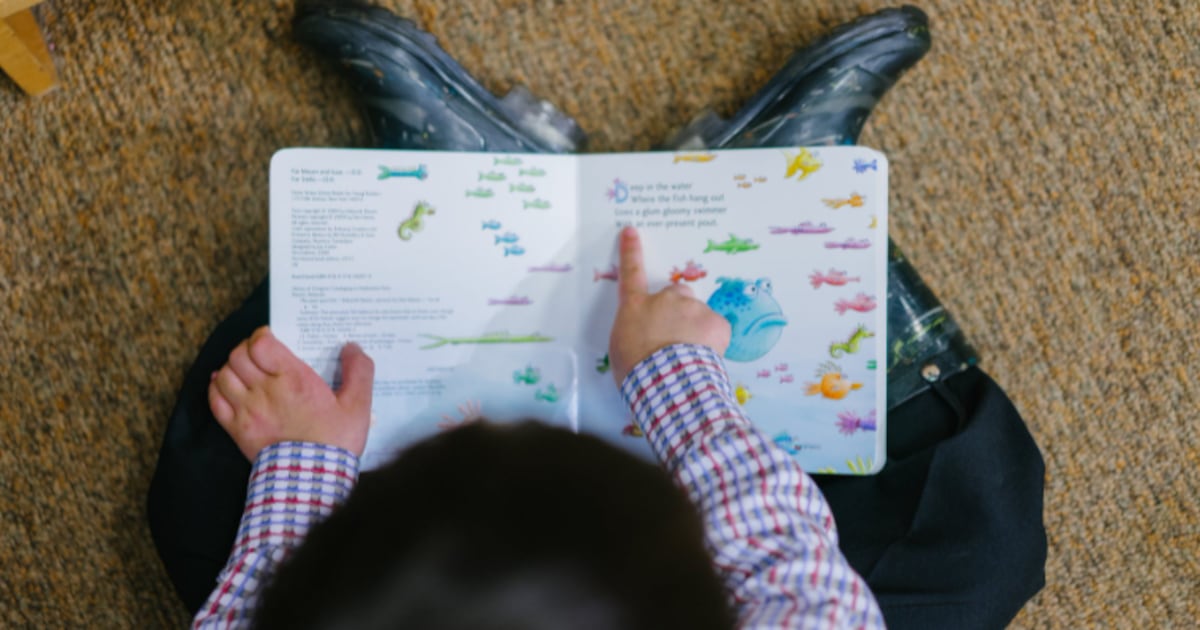
As the holiday break begins, families often relish the chance to unwind from busy schedules. Yet, education experts warn that this extended time away from school can lead to significant learning loss, commonly referred to as the “learning slide.” Research published in the American Education Research Journal indicates that students can lose up to 40 percent of their academic gains during summer breaks over a five-year period.
Dwayne Matthews, an education strategist, shared insights on CTV’s Your Morning about how families can mitigate this phenomenon. Fortunately, he asserts that preventing learning loss doesn’t necessarily require formal homework or worksheets; instead, it can be achieved through simple, intentional daily habits.
Encouraging Reading and Shared Learning
One of the easiest ways for families to support younger children’s literacy is by reading together regularly. Matthews emphasizes the importance of modeling this behavior, noting that creating a cozy reading routine can make learning enjoyable rather than forced. He suggests dedicating 20 to 30 minutes each evening to quiet reading, often accompanied by soft jazz music.
In addition to reading, Matthews advocates for the Richard Feynman technique, where children teach what they know to others. He recounted an example of his daughter guiding him through drawing cartoons, illustrating how teaching reinforces a child’s understanding of concepts. “We spend a lot of time talking at kids, and to have them say ‘I have something that’s really important that you need to learn’ is a great way to boost self-efficacy,” he explained.
Managing Screen Time and Encouraging New Skills
For older children and teenagers, Matthews acknowledged the challenges posed by increased screen time during the holidays. To counter this, he implements a phone-free zone during family gatherings, promoting engagement through board games, conversations, and problem-solving activities. “Slowly but surely, they go through that uncomfortable feeling of maybe speaking to someone else. This has been a radical and very welcomed activity in our house,” he shared.
Moreover, Matthews encourages teens to dedicate around one hour each day to learning something new, which doesn’t have to be school-related. He illustrated this with examples from his family, mentioning that his son is currently focused on cooking, while he himself is exploring quantum computing. He emphasizes that adults should also model this behavior by pursuing new skills or interests, which can greatly benefit long-term learning.
“Imagine five years, ten years, fifteen years, if you continue to do this, how much you would learn,” Matthews concluded. By fostering a culture of learning at home, families can effectively combat the learning slide and cultivate a lifelong love for education during the holiday season and beyond.












Morris Churches Unite for Annual Good Friday Walk With the Cross

Chloe Zhao’s ‘Buffy’ Reboot Cancelled: Sarah Michelle Gellar Speaks Out

Essential Ingredients for Life Found in Ryugu Asteroid Samples

Urgent Rescue: NSR Airlifts Injured Climber from Nanaimo

Riverside Heart Ball Achieves Record $815,000 for Mental Health

Cognizant Launches AI Factory to Enhance Enterprise AI Scalability

Samsung’s Galaxy Watch 9 to Feature Larger Battery Than Before

Toronto’s AIDS Memorial Faces Potential Redesign Amid Community Concerns

Bayern Munich Loses Luis Díaz Red Card Appeal Despite Referee’s Admission

Secwepemc First Nation Seeks Aboriginal Title Over Kamloops Area

Fatal Crash on Highway 11 Claims Three Lives, Major Closure Ongoing

Manitoba’s Burger Champion Shines Again Amid Dining Innovations

Canadian Curler E.J. Harnden Announces Retirement from Competition

Urgent Fire Erupts at Salvation Army on Christmas Evening

Scientists Unearth Ancient Antarctic Ice to Unlock Climate Secrets

Minister Faces Scrutiny Over Delayed Foreign Interference Watchdog Appointment

Trump and McCormick to Announce $70 Billion Energy Investments

Monika Hibbs Unveils Acres Market & Interiors in Major Rebrand
-
 Politics5 months ago
Secwepemc First Nation Seeks Aboriginal Title Over Kamloops Area
-
 Top Stories4 months ago
Fatal Crash on Highway 11 Claims Three Lives, Major Closure Ongoing
-
 Lifestyle7 months ago
Manitoba’s Burger Champion Shines Again Amid Dining Innovations
-
 Sports3 months ago
Canadian Curler E.J. Harnden Announces Retirement from Competition
-
 Top Stories4 months ago
Urgent Fire Erupts at Salvation Army on Christmas Evening
-
 World9 months ago
Scientists Unearth Ancient Antarctic Ice to Unlock Climate Secrets
-
 World5 months ago
Minister Faces Scrutiny Over Delayed Foreign Interference Watchdog Appointment
-
 Entertainment9 months ago
Trump and McCormick to Announce $70 Billion Energy Investments
-
 Lifestyle9 months ago
Monika Hibbs Unveils Acres Market & Interiors in Major Rebrand
-

 Science9 months ago
Four Astronauts Return to Earth After International Space Station Mission
-

 Lifestyle9 months ago
TransLink Launches Food Truck Program to Boost Revenue in Vancouver
-

 World1 month ago
Ranchman’s Cookhouse & Dancehall to Relocate by Early 2027