
Education
Tk’emlúps te Secwépemc Launches Healing House for Survivors

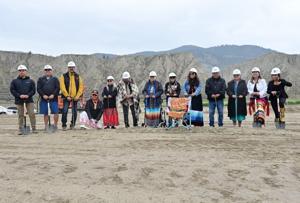
A new healing centre is under construction at the Tk’emlúps te Secwépemc Nation in British Columbia, aimed at supporting residential “school” survivors and their descendants. The Healing House project, which broke ground in late July 2023, focuses on providing a safe space for healing and cultural revitalization. This initiative comes in response to the discovery of 215 unmarked graves near the Kamloops Indian Residential School (KIRS), a finding that has deeply impacted the community.
Chief Rosanne Casimir envisions the Healing House as a place for the Secwépemc people to reclaim their heritage and pass on traditional knowledge to future generations. “It’s about reclamation, resilience and self-determination,” she said in an interview. The construction of the facility is seen as a historic milestone in the community’s long quest for justice and healing, following years of pain and trauma linked to the residential school system.
In September 2023, a job fair was held for community members to find work on the Healing House project. The centre aims to incorporate Secwépemc values and practices, ensuring that it serves as a culturally safe space for all who visit. The project emerged in the wake of the shocking revelation regarding the unmarked graves, which were identified through ground-penetrating radar technology. This technology, used by expert Sarah Beaulieu, has led to a growing understanding of the impact of the residential school system on Indigenous communities.
Community Healing and Cultural Revitalization
The Healing House is intended not only to serve KIRS survivors but also to honor the experiences of those from other Indigenous nations. Chief Casimir emphasizes the importance of recognizing and incorporating diverse cultural practices into the facility. The project will feature various workshops, traditional medicine preparations, and spaces for personal reflection and community gatherings.
Community consultations have played a vital role in shaping the vision for the Healing House. Through engagement sessions, planners have sought input to define what healing means for the Secwépemc people. As part of the design, the facility will include traditional sweat lodges and modern saunas, as well as spaces that reflect the natural landscape, including proximity to water, which holds significant cultural meaning.
The initiative received a notable boost when the federal government pledged $12.5 million to support the Healing House proposal. This funding, however, is being administered through the First Nations Health Authority rather than directly to the Tk’emlúps Nation, which has led to some frustration regarding bureaucratic processes. Chief Casimir has expressed concerns about the added complexities this creates for the community’s healing efforts.
Building a Legacy of Hope
The Healing House is envisioned as a long-term solution for fostering healthy families and communities. Chief Casimir believes that healing from past traumas is essential to building a foundation for future generations. She has highlighted the importance of supporting youth and ensuring they can learn their cultural values and language.
The project will also facilitate the revitalization of the Secwépemctsin language, which was severely impacted by the residential school system. Chief Casimir notes that language is a crucial aspect of cultural identity and knowledge transmission. “When a language becomes extinct, it erases a people’s unique philosophy, history and way of knowing,” she stated.
As the Tk’emlúps Nation continues its work towards the Healing House, Chief Casimir remains optimistic about the possibilities it will create. “We are reclaiming our future,” she said, emphasizing the project’s role in fostering cultural pride and resilience within the community. By closely involving Elders, knowledge keepers, and families in the process, the Healing House aims to bridge generational gaps and support collective healing.
The future of the Healing House represents not only a response to the traumas of the past but also a commitment to nurturing a vibrant and resilient community for years to come. Chief Casimir’s vision is clear: “It’s going to be an incredible place that’s going to incorporate all of that.”












Morris Churches Unite for Annual Good Friday Walk With the Cross

Chloe Zhao’s ‘Buffy’ Reboot Cancelled: Sarah Michelle Gellar Speaks Out

Essential Ingredients for Life Found in Ryugu Asteroid Samples

Urgent Rescue: NSR Airlifts Injured Climber from Nanaimo

Riverside Heart Ball Achieves Record $815,000 for Mental Health

Cognizant Launches AI Factory to Enhance Enterprise AI Scalability

Samsung’s Galaxy Watch 9 to Feature Larger Battery Than Before

Toronto’s AIDS Memorial Faces Potential Redesign Amid Community Concerns

Bayern Munich Loses Luis Díaz Red Card Appeal Despite Referee’s Admission

Secwepemc First Nation Seeks Aboriginal Title Over Kamloops Area

Fatal Crash on Highway 11 Claims Three Lives, Major Closure Ongoing

Manitoba’s Burger Champion Shines Again Amid Dining Innovations

Canadian Curler E.J. Harnden Announces Retirement from Competition

Urgent Fire Erupts at Salvation Army on Christmas Evening

Scientists Unearth Ancient Antarctic Ice to Unlock Climate Secrets

Minister Faces Scrutiny Over Delayed Foreign Interference Watchdog Appointment

Trump and McCormick to Announce $70 Billion Energy Investments

Monika Hibbs Unveils Acres Market & Interiors in Major Rebrand
-
 Politics5 months ago
Secwepemc First Nation Seeks Aboriginal Title Over Kamloops Area
-
 Top Stories4 months ago
Fatal Crash on Highway 11 Claims Three Lives, Major Closure Ongoing
-
 Lifestyle7 months ago
Manitoba’s Burger Champion Shines Again Amid Dining Innovations
-
 Sports3 months ago
Canadian Curler E.J. Harnden Announces Retirement from Competition
-
 Top Stories4 months ago
Urgent Fire Erupts at Salvation Army on Christmas Evening
-
 World9 months ago
Scientists Unearth Ancient Antarctic Ice to Unlock Climate Secrets
-
 World5 months ago
Minister Faces Scrutiny Over Delayed Foreign Interference Watchdog Appointment
-
 Entertainment9 months ago
Trump and McCormick to Announce $70 Billion Energy Investments
-
 Lifestyle9 months ago
Monika Hibbs Unveils Acres Market & Interiors in Major Rebrand
-

 Science9 months ago
Four Astronauts Return to Earth After International Space Station Mission
-

 Lifestyle9 months ago
TransLink Launches Food Truck Program to Boost Revenue in Vancouver
-

 World1 month ago
Ranchman’s Cookhouse & Dancehall to Relocate by Early 2027