
Education
Western Establishes New Centre for Bioethics to Address Ethical Issues

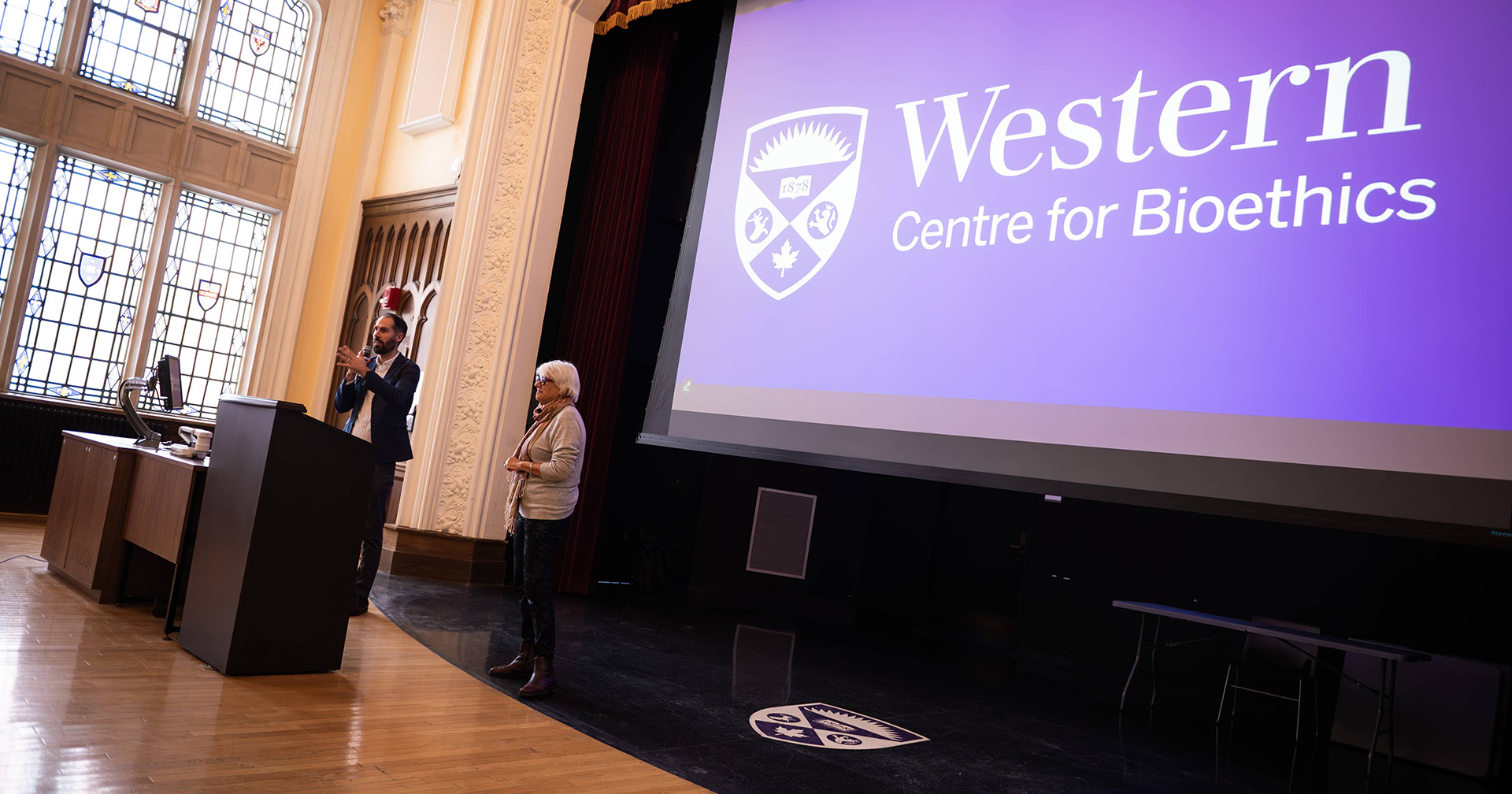
Western University has officially launched its new Centre for Bioethics, aimed at addressing critical ethical challenges faced by health-care providers, policy-makers, and health systems. The announcement was made on December 4, 2023, marking a significant milestone in the institution’s commitment to bioethics, a field that has been part of its academic fabric since the establishment of the Westminster Institute for Ethics and Human Values in 1978.
The inaugural chair of the Centre for Bioethics is Maxwell Smith, a professor from the School of Health Studies and a recognized bioethicist. He holds the position of Canadian Institutes of Health Research Applied Public Health Chair in Ethics and Health Emergencies. Under his leadership, the centre has already gathered a diverse group of 35 members from various disciplines, including faculty, staff, and students across five faculties and 11 departments. Collaborations extend to Western’s Office of Research Ethics, the London Health Sciences Centre, St. Joseph’s Health Care London, and the Middlesex-London Health Unit.
The Centre aims to consolidate and enhance research in bioethics by fostering interdisciplinary collaboration among bioethicists and those who encounter ethical dilemmas in their work. Smith emphasized the need to unify experts from fields such as health sciences, medicine, philosophy, law, and social sciences under one umbrella to advance research and discussion on ethical issues in health care.
During the launch event, guest speaker Françoise Baylis, an internationally acclaimed bioethicist and member of both the Order of Canada and the Order of Nova Scotia, reflected on her experiences at Western. Baylis, who served as a student at the Westminster Institute, shared insights into her pioneering work at the intersection of health-care ethics, practice, and policy.
Understanding Bioethics and Its Importance
Bioethics, as defined by Smith, encompasses the study of moral questions related to health and health care. It serves as a framework for making informed decisions that affect clinicians, researchers, patients, health authorities, and governments. The objective is not only to interrogate the evidence that informs such decisions but also to consider how personal values and moral reasoning influence them.
Common bioethical issues include termination of pregnancy, medical assistance in dying, and vaccine mandates. These topics often evoke strong opinions, underscoring the necessity for systematic study and debate. Smith noted that while controversial issues capture public attention, bioethics also encompasses complex questions that arise in everyday health-care situations, which may not make headlines but are equally significant.
The Centre for Bioethics aims to provide students with opportunities to engage with health-care settings, allowing them to witness how ethical issues are navigated in real-world scenarios. This hands-on experience is intended to inspire students from various departments to explore careers in bioethics and related fields.
The Evolution of Bioethics and Current Challenges
The modern field of bioethics gained momentum in the 1960s and 1970s alongside the civil rights movement, as discussions about patient rights began to emerge. With rapid advancements in technology, such as the mapping of the human genome, the relevance of bioethics has only grown. Smith highlighted that the COVID-19 pandemic introduced new ethical dilemmas, making the need for dedicated focus on these issues more urgent than ever.
Health-care professionals frequently encounter moral distress as they navigate a system strained by resource limitations. For instance, overcrowded emergency departments often lead to difficult decisions about patient admissions and discharges. Smith pointed out that these situations require careful ethical consideration, particularly in a universal health-care system that promises equitable access to care.
Smith expressed concern that ongoing ethical challenges could contribute to burnout among health-care providers, who may feel conflicted when forced to make tough choices under pressure. The Centre for Bioethics aims to address this by fostering an environment where ethical discussions can take place, ultimately supporting health-care workers in their decision-making processes.
In conclusion, Western University’s new Centre for Bioethics represents a proactive step towards addressing the multifaceted ethical issues within health care. By bringing together experts and engaging students, the centre seeks to cultivate a deeper understanding of bioethics, ensuring that ethical considerations remain at the forefront of health-care practices.













Urgent Search for Missing Teen Elijah in Kingston Area

Gun Seized in Belleville Traffic Stop; Three Arrested Urgently

Mike Soroka Signs One-Year Deal with Arizona Diamondbacks

Western Establishes New Centre for Bioethics to Address Ethical Issues

Strong 7.2 Magnitude Earthquake Hits Northern Japan, Tsunami Alert Issued

Queen’s Faculty Grievance Wins Partial Ruling on Security Software

Dr. Tony Ashworth’s $85,000 Gift Strengthens Lionhearts’ Mission

Banff Centre Mountain Film Festival World Tour Arrives in Sault Ste. Marie

Paramount Launches Hostile $30B Bid for Warner Bros. Discovery

Secwepemc First Nation Seeks Aboriginal Title Over Kamloops Area

Scientists Unearth Ancient Antarctic Ice to Unlock Climate Secrets

Trump and McCormick to Announce $70 Billion Energy Investments

Four Astronauts Return to Earth After International Space Station Mission

TransLink Launches Food Truck Program to Boost Revenue in Vancouver

Apple Notes Enhances Functionality with Markdown Support in macOS 26

Manitoba’s Burger Champion Shines Again Amid Dining Innovations

Urgent Update: Fatal Crash on Highway 99 Claims Life of Pitt Meadows Man

Homemade Houseboat ‘Neverlanding’ Captivates Lake Huron Voyagers
-
 Politics1 month ago
Secwepemc First Nation Seeks Aboriginal Title Over Kamloops Area
-
 World5 months ago
Scientists Unearth Ancient Antarctic Ice to Unlock Climate Secrets
-
 Entertainment5 months ago
Trump and McCormick to Announce $70 Billion Energy Investments
-
 Science5 months ago
Four Astronauts Return to Earth After International Space Station Mission
-
 Lifestyle5 months ago
TransLink Launches Food Truck Program to Boost Revenue in Vancouver
-
 Technology3 months ago
Apple Notes Enhances Functionality with Markdown Support in macOS 26
-
 Lifestyle3 months ago
Manitoba’s Burger Champion Shines Again Amid Dining Innovations
-
 Top Stories2 months ago
Urgent Update: Fatal Crash on Highway 99 Claims Life of Pitt Meadows Man
-
 Top Stories1 week ago
Homemade Houseboat ‘Neverlanding’ Captivates Lake Huron Voyagers
-

 Politics4 months ago
Ukrainian Tennis Star Elina Svitolina Faces Death Threats Online
-

 Sports5 months ago
Search Underway for Missing Hunter Amid Hokkaido Bear Emergency
-

 Politics5 months ago
Carney Engages First Nations Leaders at Development Law Summit