
Entertainment
Atlantic Ballet Launches Youth Program for Indigenous Dancers

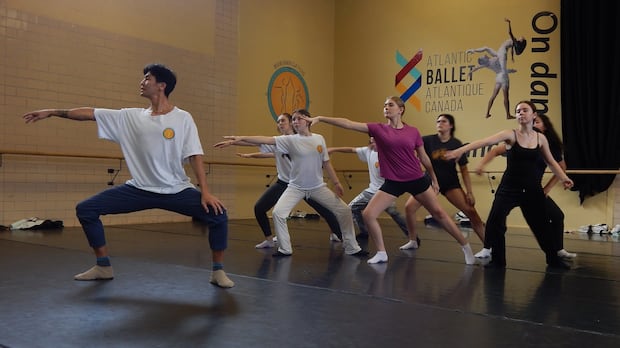
A new dance initiative in Canada aims to address the shortage of professionally trained Indigenous dancers. The program, titled Mawiamalga’tijig / Mawokahtine, was co-created by Possesom Paul, the director of Atlantic Ballet Indigenous, and is designed for students in Grades 9 and 10. It combines contemporary dance with elements of Indigenous traditions, providing a platform for young dancers to develop their skills and share their cultural stories.
When Paul co-directed the first Wolastoqey ballet for the Atlantic Ballet Theatre, he faced a significant challenge. He noted, “We wanted to have a full Indigenous cast,” but a survey revealed only five male-identifying Indigenous dancers across Canada at the time. This alarming statistic highlighted the lack of training opportunities for Indigenous dancers, prompting Paul to establish a dedicated program focused on nurturing their talents.
The Mawiamalga’tijig / Mawokahtine program officially welcomed its first cohort of eight students to Moncton in September 2023. These students will dedicate one week each month to intensive training with professional instructors while continuing their academic studies. The program aims to equip participants with high school credits and a professional dissertation in dance, allowing them to graduate as recognized dancers in Canada.
The curriculum incorporates a variety of musical styles, including traditional Powwow music, contemporary artists like Jeremy Dutcher, and classical ballet scores. Paul described the approach as one that “borrows concepts from our dance” while presenting them in a contemporary format that allows for greater expression.
Among the inaugural students is Saydee Vicaire, a 16-year-old from Listuguj, Quebec. Vicaire, who has been dancing since the age of three, expressed excitement about expanding her skills into ballet and contemporary styles. “It’s kind of hard sometimes, but it’s interesting,” she noted.
Another student, Zoey Clement, also from Listuguj, acknowledged her background in contemporary dance but admitted that Indigenous dance was new to her. Living together in a downtown house, the students share their experiences, often attending outings and studying together after rigorous dance classes.
The program is not just a training opportunity; it’s part of a larger commitment to reconciliation within the arts community. Susan Chalmers-Gauvin, CEO of Atlantic Ballet Theatre, emphasized the importance of inclusion. “We didn’t want the voices of Indigenous people to be on the periphery,” she stated, explaining that the organization has hired 46 Indigenous artists, elders, and knowledge-keepers over the past three years to foster a more equitable environment.
Paul highlighted the significance of collaboration with a well-established organization like Atlantic Ballet. He remarked that in the past, Indigenous dancers were not seen as professionals, but this program aims to change that perception. “I want to see these kids get to a point where they’re well supported, have great careers,” he said, expressing his desire to witness their performances in the future.
As the students progress through the program, they are preparing for a performance on the main stage of Atlantic Ballet upon their graduation in June 2027. Both Vicaire and Clement have aspirations for their dancing careers, with Vicaire noting that this program opens many opportunities for further dance training.
With the support of Indigenous dance schools across Canada, and even interest from one in Australia, the Mawiamalga’tijig / Mawokahtine program represents a vital step in cultivating professional pathways for Indigenous dancers. Paul believes this initiative will significantly impact the future of Indigenous representation in dance, paving the way for the next generation to thrive in both their art and their communities.













Morris Churches Unite for Annual Good Friday Walk With the Cross

Chloe Zhao’s ‘Buffy’ Reboot Cancelled: Sarah Michelle Gellar Speaks Out

Essential Ingredients for Life Found in Ryugu Asteroid Samples

Urgent Rescue: NSR Airlifts Injured Climber from Nanaimo

Riverside Heart Ball Achieves Record $815,000 for Mental Health

Cognizant Launches AI Factory to Enhance Enterprise AI Scalability

Samsung’s Galaxy Watch 9 to Feature Larger Battery Than Before

Toronto’s AIDS Memorial Faces Potential Redesign Amid Community Concerns

Bayern Munich Loses Luis Díaz Red Card Appeal Despite Referee’s Admission

Secwepemc First Nation Seeks Aboriginal Title Over Kamloops Area

Fatal Crash on Highway 11 Claims Three Lives, Major Closure Ongoing

Manitoba’s Burger Champion Shines Again Amid Dining Innovations

Canadian Curler E.J. Harnden Announces Retirement from Competition

Urgent Fire Erupts at Salvation Army on Christmas Evening

Scientists Unearth Ancient Antarctic Ice to Unlock Climate Secrets

Minister Faces Scrutiny Over Delayed Foreign Interference Watchdog Appointment

Trump and McCormick to Announce $70 Billion Energy Investments

Four Astronauts Return to Earth After International Space Station Mission
-
 Politics5 months ago
Secwepemc First Nation Seeks Aboriginal Title Over Kamloops Area
-
 Top Stories4 months ago
Fatal Crash on Highway 11 Claims Three Lives, Major Closure Ongoing
-
 Lifestyle7 months ago
Manitoba’s Burger Champion Shines Again Amid Dining Innovations
-
 Sports3 months ago
Canadian Curler E.J. Harnden Announces Retirement from Competition
-
 Top Stories3 months ago
Urgent Fire Erupts at Salvation Army on Christmas Evening
-
 World9 months ago
Scientists Unearth Ancient Antarctic Ice to Unlock Climate Secrets
-
 World5 months ago
Minister Faces Scrutiny Over Delayed Foreign Interference Watchdog Appointment
-
 Entertainment9 months ago
Trump and McCormick to Announce $70 Billion Energy Investments
-
 Science9 months ago
Four Astronauts Return to Earth After International Space Station Mission
-

 Lifestyle9 months ago
TransLink Launches Food Truck Program to Boost Revenue in Vancouver
-

 Lifestyle9 months ago
Monika Hibbs Unveils Acres Market & Interiors in Major Rebrand
-

 World1 month ago
Ranchman’s Cookhouse & Dancehall to Relocate by Early 2027