
Entertainment
Iraqi Political Landscape Shifts as Factions Compete for Power

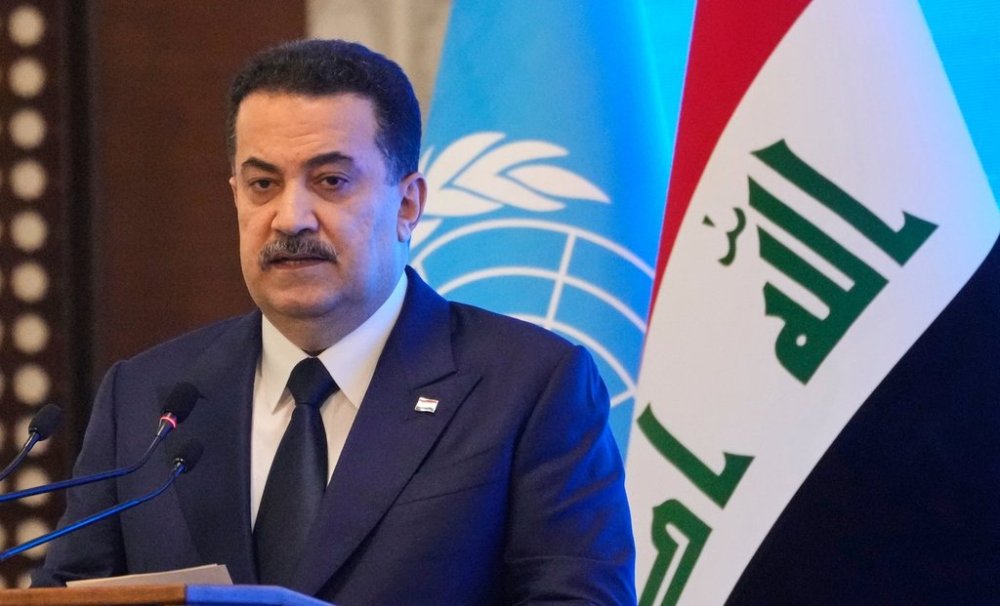
Political factions in Iraq are engaged in intense negotiations to form a government following the parliamentary election held over a month ago. The election did not yield a clear majority, leaving the political landscape fragmented and uncertain as different groups strive to secure power.
The election results revealed a significant division among political factions. Shiite alliances, primarily dominated by the Coordination Framework, secured a total of 187 seats in parliament, while Sunni groups garnered 77 seats and Kurdish groups obtained 56 seats. Additionally, nine seats were reserved for minority groups. The largest number of seats was won by Prime Minister Mohammed Shia al-Sudani, whose party, the Reconstruction and Development Coalition, achieved 46 seats in Baghdad and several provinces. Despite this success, al-Sudani will need to form a coalition to govern effectively.
The current political environment is complicated by various challenges. The next government will inherit a fragile economy, a fragmented parliament, and a security situation that, while stabilized in recent years, remains influenced by armed factions. Observers highlight the significant role of Iranian-backed groups in shaping Iraq’s future, particularly with regard to the Popular Mobilization Forces.
Challenges Ahead for the New Government
Al-Sudani’s administration has positioned itself as pragmatic, focusing on improving public services and maintaining Iraq’s neutrality in regional conflicts. However, his relationship with the Coordination Framework, which initially supported his rise to power, appears strained. According to political analyst Sajad Jiyad, the coalition is unlikely to endorse al-Sudani for a second term due to his growing influence: “The choice for prime minister has to be someone the Framework believes they can control and doesn’t have his own political ambitions.”
The lessons from previous administrations are evident. Nouri al-Maliki remains the only Iraqi prime minister to serve a second term since 2003, and his bid for a third term ultimately failed due to accusations of monopolizing power. The Coordination Framework seems determined to avoid a repeat of that scenario, leading to a cautious approach in selecting the next prime minister.
The upcoming government will also need to address pressing economic issues, including a public debt exceeding 90 trillion Iraqi dinars (approximately $69 billion) and a budget heavily reliant on oil revenues. Despite efforts to diversify, oil continues to account for around 90% of Iraq’s income.
Impacts of Muqtada Sadr’s Absence
The political landscape has been notably impacted by the absence of the powerful Sadrist movement, led by Shiite cleric Muqtada Sadr. Sadr has boycotted the political process since failing to form a government after the 2021 elections. His withdrawal has created an electoral vacuum in traditionally Sadr-supporting regions, which has been exploited by rival militia groups within the Coordination Framework.
Political activist Hamed Al-Sayed emphasized the significance of Sadr’s absence, stating that it “reduced participation in areas traditionally within his sphere of influence, such as Baghdad and the southern governorates.” This shift has allowed factions with armed wings to gain more than 100 parliamentary seats, marking their strongest showing since 2003.
The Sunni political landscape is also evolving, with new coalitions like the National Political Council emerging to regain influence lost in previous elections. Meanwhile, the Kurdish political scene continues to be characterized by the traditional rivalry between the Kurdistan Democratic Party and the Patriotic Union of Kurdistan, particularly in negotiations over the presidency.
As parliament convenes, it is mandated to elect a speaker within 15 days of the Federal Supreme Court’s ratification of the election results, which occurred on December 14, 2023. Following this, a president must be elected within 30 days, and a prime minister should be appointed within 15 days of the president’s election.
The next government will face not only economic challenges but also the delicate issue of managing armed factions within the Popular Mobilization Forces. These groups, which formed to combat the Islamic State, operate with varying degrees of autonomy despite being nominally under the Iraqi military’s control.
The recent conflict in Gaza has further complicated the situation, as some factions within the PMF have launched attacks on U.S. bases in the region in retaliation for American support of Israel. The U.S. has expressed concerns regarding the influence of Iran-backed groups in Iraq, advocating for the disarmament of such factions, a task that remains fraught with challenges.
In conclusion, Iraq stands at a critical juncture. The interplay of political ambitions, economic realities, and regional influences will significantly shape the country’s trajectory in the coming months. As factions continue to vie for power, the path ahead remains uncertain, underscoring the complexities of Iraqi governance.









UPEI’s High-Tech Simulation Centre Enhances Future Healthcare Skills

Canadian Astronaut Chris Hadfield Advocates for Eye Health

GPIQ and QYLD: Evaluating Strategies Amid Market Stagnation

Norovirus Outbreak Forces Canada’s Hockey Game Postponement

Fauna Robotics Unveils Sprout: A Humanoid Robot for Home Use

Team Canada Faces Goaltending Concerns Ahead of Olympics

Celebrating the Life of Irena Peritz: A Legacy of Love and Resilience

India, U.S. Announce Urgent Trade Deal to Slash Tariffs Now

American Airlines Pilots Challenge Management After Poor Results

Secwepemc First Nation Seeks Aboriginal Title Over Kamloops Area

Scientists Unearth Ancient Antarctic Ice to Unlock Climate Secrets

Urgent Fire Erupts at Salvation Army on Christmas Evening

Canadian Curler E.J. Harnden Announces Retirement from Competition

Manitoba’s Burger Champion Shines Again Amid Dining Innovations

Fatal Crash on Highway 11 Claims Three Lives, Major Closure Ongoing

Trump and McCormick to Announce $70 Billion Energy Investments

Four Astronauts Return to Earth After International Space Station Mission

TransLink Launches Food Truck Program to Boost Revenue in Vancouver
-
 Politics3 months ago
Secwepemc First Nation Seeks Aboriginal Title Over Kamloops Area
-
 World7 months ago
Scientists Unearth Ancient Antarctic Ice to Unlock Climate Secrets
-
 Top Stories1 month ago
Urgent Fire Erupts at Salvation Army on Christmas Evening
-
 Sports1 month ago
Canadian Curler E.J. Harnden Announces Retirement from Competition
-
 Lifestyle5 months ago
Manitoba’s Burger Champion Shines Again Amid Dining Innovations
-
 Top Stories2 months ago
Fatal Crash on Highway 11 Claims Three Lives, Major Closure Ongoing
-
 Entertainment7 months ago
Trump and McCormick to Announce $70 Billion Energy Investments
-
 Science7 months ago
Four Astronauts Return to Earth After International Space Station Mission
-
 Lifestyle7 months ago
TransLink Launches Food Truck Program to Boost Revenue in Vancouver
-

 Technology5 months ago
Apple Notes Enhances Functionality with Markdown Support in macOS 26
-

 Top Stories1 month ago
Blue Jays Sign Kazuma Okamoto: Impact on Bo Bichette’s Future
-

 Top Stories2 months ago
NHL Teams Inquire About Marc-André Fleury’s Potential Return