
Health
Alberta’s Bill 11 Sparks Debate on Dual-Practice Health Care

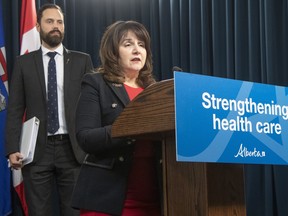
The introduction of Bill 11 in Alberta has ignited a significant debate about the future of health care in Canada. Critics express concern that allowing dual billing for physicians and expanding private-pay services could undermine the principles of universal health care, leading to a two-tier system. In this model, wealthier individuals might access quicker care, while those without financial means face longer waits or inadequate services.
Access to health care in Canada is already a pressing issue. Many Canadians experience lengthy delays for medically necessary treatments. According to the 2025 Organization for Economic Co-operation and Development (OECD) world health report, approximately 50 percent of Canadians are dissatisfied with their access to health services. The current single-payer model does not fully meet the population’s needs. As such, the question arises: should private providers be embraced to alleviate capacity challenges, or do we risk compromising equitable access by doing so?
One of the main issues at stake is profitability in health care. While profit is not inherently negative, understanding who benefits, how, and at what cost is crucial. For years, Canadians have had the option of accessing private surgeries, including some deemed medically necessary. Individuals with the means to pay can bypass lengthy public queues by seeking care in other provinces.
Private clinics across Canada often offer orthopedic procedures, such as hip and knee replacements, at prices that can be 50 percent higher than those in the public system, all while promising minimal or no wait times. These private facilities operate as businesses, prioritizing profitability through high turnover rates and strict efficiency standards. This focus can lead to a disregard for the complexities of patient care, as not all patients fit a model of efficiency.
When complications arise, patients frequently find themselves transferred to public hospitals, as private facilities often lack the resources and mandate to manage unpredictable, costly care. The emphasis on efficiency can overshadow the quality of care, particularly in clinics that self-regulate. The financial strain of complex cases is significant; for instance, an intensive-care bed can cost between $5,000 and $10,000 per day, while treating a post-operative hip-replacement infection may exceed $20,000. These costs ultimately burden the public system, which is already grappling with existing flaws and underfunding.
The question remains: who will bear the costs in a dual system? The burden will likely fall on the public health system, which will become the default destination for the most challenging and less profitable patients. As blame shifts toward the public sector for perceived inefficiencies, those who require the most care—complex patients—will suffer the consequences.
With profit motives increasingly influencing health care decisions, serious questions arise regarding the sustainability of the public system. Can it effectively care for everyone that private providers choose not to treat? Furthermore, what implications does this have for equity, justice, and the foundational Canadian promise of health care for all?
As the debate over Bill 11 continues, voices like that of Stacey Litvinchuk, former senior program officer at Surgery Alberta Health Services, highlight the critical nature of these discussions. The future of health care in Canada hangs in the balance as stakeholders grapple with the challenge of maintaining a system that serves all citizens equitably.












Morris Churches Unite for Annual Good Friday Walk With the Cross

Chloe Zhao’s ‘Buffy’ Reboot Cancelled: Sarah Michelle Gellar Speaks Out

Essential Ingredients for Life Found in Ryugu Asteroid Samples

Urgent Rescue: NSR Airlifts Injured Climber from Nanaimo

Riverside Heart Ball Achieves Record $815,000 for Mental Health

Cognizant Launches AI Factory to Enhance Enterprise AI Scalability

Samsung’s Galaxy Watch 9 to Feature Larger Battery Than Before

Toronto’s AIDS Memorial Faces Potential Redesign Amid Community Concerns

Bayern Munich Loses Luis Díaz Red Card Appeal Despite Referee’s Admission

Secwepemc First Nation Seeks Aboriginal Title Over Kamloops Area

Fatal Crash on Highway 11 Claims Three Lives, Major Closure Ongoing

Manitoba’s Burger Champion Shines Again Amid Dining Innovations

Canadian Curler E.J. Harnden Announces Retirement from Competition

Urgent Fire Erupts at Salvation Army on Christmas Evening

Scientists Unearth Ancient Antarctic Ice to Unlock Climate Secrets

Minister Faces Scrutiny Over Delayed Foreign Interference Watchdog Appointment

Trump and McCormick to Announce $70 Billion Energy Investments

Monika Hibbs Unveils Acres Market & Interiors in Major Rebrand
-
 Politics5 months ago
Secwepemc First Nation Seeks Aboriginal Title Over Kamloops Area
-
 Top Stories4 months ago
Fatal Crash on Highway 11 Claims Three Lives, Major Closure Ongoing
-
 Lifestyle7 months ago
Manitoba’s Burger Champion Shines Again Amid Dining Innovations
-
 Sports3 months ago
Canadian Curler E.J. Harnden Announces Retirement from Competition
-
 Top Stories3 months ago
Urgent Fire Erupts at Salvation Army on Christmas Evening
-
 World9 months ago
Scientists Unearth Ancient Antarctic Ice to Unlock Climate Secrets
-
 World5 months ago
Minister Faces Scrutiny Over Delayed Foreign Interference Watchdog Appointment
-
 Entertainment9 months ago
Trump and McCormick to Announce $70 Billion Energy Investments
-
 Lifestyle9 months ago
Monika Hibbs Unveils Acres Market & Interiors in Major Rebrand
-

 Science9 months ago
Four Astronauts Return to Earth After International Space Station Mission
-

 Lifestyle9 months ago
TransLink Launches Food Truck Program to Boost Revenue in Vancouver
-

 World1 month ago
Ranchman’s Cookhouse & Dancehall to Relocate by Early 2027