
Health
Extreme Cold Challenges Whitehorse Chicken Farmer’s Operations

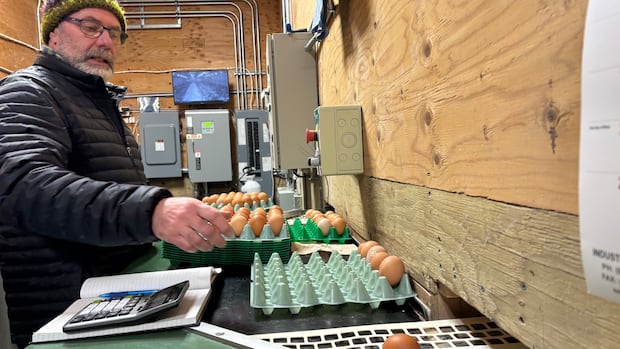
The extreme cold sweeping through Yukon has made recent weeks particularly challenging for chicken farmer Alan Stannard. As co-owner of Mandalay Farms and Little Red Hen Eggs in Whitehorse, he has been on high alert, monitoring his flock of 4,400 chickens amid temperatures plunging to as low as –50°C.
Stannard describes the experience as akin to checking a home for drafts during a cold night. “You’re wondering where the cold air is blowing in or if the water has frozen,” he said. His cellphone is connected to a computer system in the barn, alerting him to any issues such as frozen ventilation or malfunctioning heaters.
The frigid conditions present serious risks to both the health of the chickens and their egg production. Low temperatures can lead to humidity in the barn, increasing the likelihood of respiratory diseases like pneumonia. Stannard’s barn is equipped with automatic heaters and ventilators, but he still must manually adjust the ventilation to maintain a stable environment for the birds. “It’s a dance,” he remarked, emphasizing the necessity of balancing warmth and humidity to keep the hens comfortable.
Cold Snap Complicates Farming
The cold snap that hit Yukon in early December has introduced numerous complications for farmers like Stannard. Typically, he has time to prepare for cold weather, allowing his equipment to acclimate gradually. But this sudden drop in temperature has created unexpected challenges.
“Sudden happenings, the barns don’t like it. You get a buildup of humidity, so you’re burning more propane to keep the barn warm,” Stannard explained. Power outages compound the issue; without electricity, the heating systems fail, and critical operations like egg extraction become impossible. Currently, Stannard has two backup generators in place to mitigate this risk.
Laying conditions can deteriorate when the barn environment is not optimal. According to Stannard, hens are kept indoors unless temperatures reach at least –10°C. “If it’s too cold and they go outside, their crowns will get frozen,” he noted, humorously comparing the situation to a “Fight Club” scenario among the hens. Fortunately, none of his chickens have succumbed to the cold so far.
Health Risks and Support Services
The health of livestock becomes a greater concern during extreme weather conditions. Amber Elliot, a livestock technician with the Yukon Government, stated that while animals typically do not die from cold alone, the stress caused by harsh conditions can exacerbate underlying health issues. “As soon as the body becomes stressed, that’s when you’re going to see that become prevalent,” she said.
Farmers in Yukon face challenges accessing veterinary care, particularly those located in remote areas. The Yukon Government provides a veterinary services program through its animal health unit in Whitehorse, along with a telehealth service called VETson for those farther from urban centers. Elliot emphasized the importance of ensuring that livestock are adequately sheltered, fed, and hydrated, noting that these tasks become increasingly difficult in severe weather.
As Stannard navigates this challenging winter, he remains committed to the welfare of his chickens and the sustainability of his farm. He reflects on the unique demands of farming in such extreme conditions and the resilience required to ensure the health and productivity of his flock.












Morris Churches Unite for Annual Good Friday Walk With the Cross

Chloe Zhao’s ‘Buffy’ Reboot Cancelled: Sarah Michelle Gellar Speaks Out

Essential Ingredients for Life Found in Ryugu Asteroid Samples

Urgent Rescue: NSR Airlifts Injured Climber from Nanaimo

Riverside Heart Ball Achieves Record $815,000 for Mental Health

Cognizant Launches AI Factory to Enhance Enterprise AI Scalability

Samsung’s Galaxy Watch 9 to Feature Larger Battery Than Before

Toronto’s AIDS Memorial Faces Potential Redesign Amid Community Concerns

Bayern Munich Loses Luis Díaz Red Card Appeal Despite Referee’s Admission

Secwepemc First Nation Seeks Aboriginal Title Over Kamloops Area

Fatal Crash on Highway 11 Claims Three Lives, Major Closure Ongoing

Manitoba’s Burger Champion Shines Again Amid Dining Innovations

Canadian Curler E.J. Harnden Announces Retirement from Competition

Urgent Fire Erupts at Salvation Army on Christmas Evening

Scientists Unearth Ancient Antarctic Ice to Unlock Climate Secrets

Minister Faces Scrutiny Over Delayed Foreign Interference Watchdog Appointment

Trump and McCormick to Announce $70 Billion Energy Investments

Monika Hibbs Unveils Acres Market & Interiors in Major Rebrand
-
 Politics5 months ago
Secwepemc First Nation Seeks Aboriginal Title Over Kamloops Area
-
 Top Stories4 months ago
Fatal Crash on Highway 11 Claims Three Lives, Major Closure Ongoing
-
 Lifestyle7 months ago
Manitoba’s Burger Champion Shines Again Amid Dining Innovations
-
 Sports3 months ago
Canadian Curler E.J. Harnden Announces Retirement from Competition
-
 Top Stories4 months ago
Urgent Fire Erupts at Salvation Army on Christmas Evening
-
 World9 months ago
Scientists Unearth Ancient Antarctic Ice to Unlock Climate Secrets
-
 World5 months ago
Minister Faces Scrutiny Over Delayed Foreign Interference Watchdog Appointment
-
 Entertainment9 months ago
Trump and McCormick to Announce $70 Billion Energy Investments
-
 Lifestyle9 months ago
Monika Hibbs Unveils Acres Market & Interiors in Major Rebrand
-

 Science9 months ago
Four Astronauts Return to Earth After International Space Station Mission
-

 Lifestyle9 months ago
TransLink Launches Food Truck Program to Boost Revenue in Vancouver
-

 World1 month ago
Ranchman’s Cookhouse & Dancehall to Relocate by Early 2027