
Health
Funding Delays Threaten Lyme Disease Research at Johns Hopkins

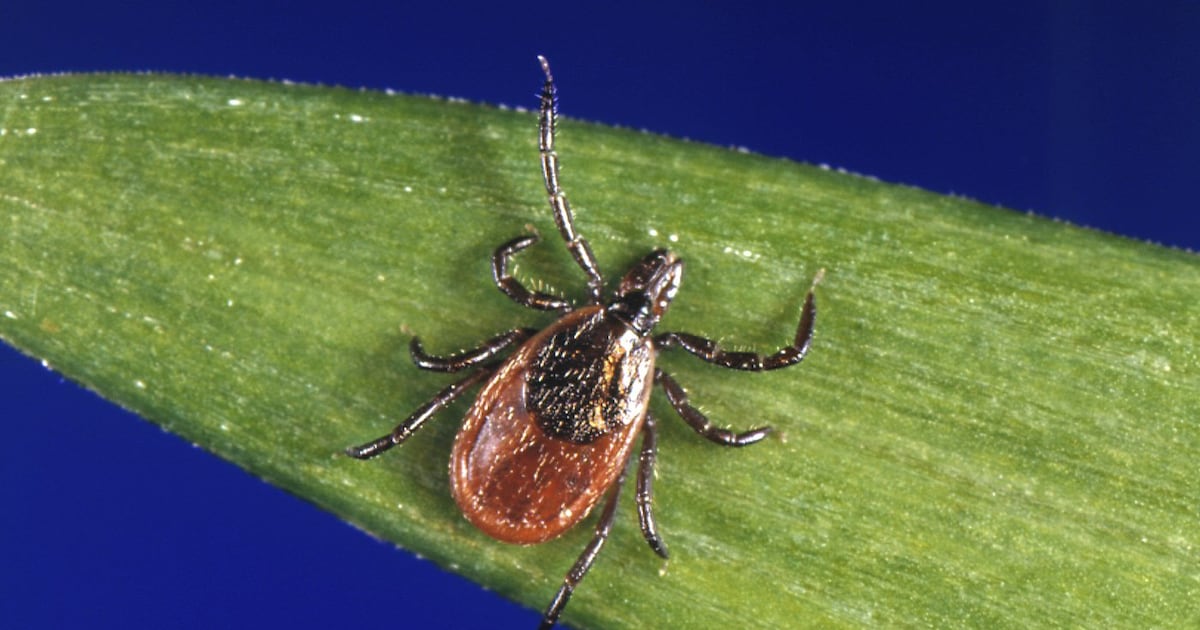
Research into Lyme disease at Johns Hopkins University faces significant disruption due to delays in federal funding. Despite Maryland’s status as one of the states with the highest incidence of Lyme disease, financial resources for critical research initiatives are at risk. According to the Centers for Disease Control and Prevention (CDC), Lyme disease is the most prevalent and rapidly growing vector-borne illness in the United States, impacting approximately 476,000 Americans annually. In Maryland alone, reported cases of Lyme disease have nearly doubled since 2020, as per the latest figures from the Maryland Department of Health.
The infection, primarily transmitted through the bites of black-legged ticks, can lead to serious long-term health issues if not treated. Symptoms often begin with flu-like signs but may escalate to affect the joints, heart, and nervous system. Nicole Baumgarth, director of the Lyme and Tickborne Diseases Research and Education Institute at Johns Hopkins, emphasizes the serious implications of the disease, stating, “These long ongoing symptoms can really change some person’s life.”
Funding Challenges and Legislative Efforts
Historically, the Kay Hagan Tick Act has been a vital source of funding for Lyme disease research, allocating $30 million annually from 2021 to 2025 for prevention, early detection, and treatment of tick-borne diseases. This funding has facilitated groundbreaking initiatives, including the first clinical trial for a Lyme disease vaccine, currently being conducted at the MaineHealth Institute for Research. In light of recent funding challenges, lawmakers are urging the renewal of the Kay Hagan Tick Act. The proposed reauthorization could provide over $27 million annually through 2030 and honors the legacy of former North Carolina Senator Kay Hagan, who passed away from a tick-borne disease in 2019.
Democratic Representative Jamie Raskin of Maryland is a co-sponsor of the House bill seeking to reauthorize this crucial funding. As of now, a date for a full Senate vote has yet to be determined.
The landscape for research funding has shifted dramatically. In 2025, many researchers, including those studying tick-borne diseases, are grappling with federal funding cuts. Notably, funding from the Department of Defense for Lyme disease research was eliminated after receiving $7 million in Fiscal Year 2024. The March 2025 continuing resolution to fund the government included a staggering 57 percent cut to the Department of Defense’s Congressionally Directed Medical Research Programs (CDMRP), which encompasses the Tick-Borne Disease Research Program (TBDRP).
In response to these funding cuts, Johns Hopkins University joined a federal lawsuit aimed at blocking reductions in research funding by the Department of Defense. The university currently holds active grants from the Department of Defense totaling approximately $375 million over multiple years.
Impacts of Funding Delays on Research
Baumgarth and her colleagues have applied for additional grant funding through CDMRP, but they face uncertainty. “We spent weeks and months writing, and it’s just not being considered,” she said, referring to their efforts to identify biomarkers for patients who may develop Post-Treatment Lyme Disease Syndrome, often termed as “long Lyme.” This condition can lead to prolonged symptoms that severely impact quality of life.
Another significant source of funding, the National Institutes of Health (NIH), is also experiencing delays. “The NIH has massive funding delays currently,” Baumgarth noted. “That affects, of course, everybody, not just tick-borne illnesses, but that is still our biggest source of funding.” She has submitted a grant proposal focusing on the effects of Borrelia burgdorferi, the bacterium that causes Lyme disease, on gastrointestinal health and immune dysfunction. Although this proposal has passed peer review and NIH council review, Baumgarth is still awaiting a decision on funding.
Compounding these challenges, Baumgarth is also developing a predictive model to evaluate the types of ticks present in specific locations, the diseases they may transmit, and the likelihood of transmission. A peer review for this project is scheduled for early January.
The uncertain funding landscape affects not only research but also the operational aspects of running a lab. “Every researcher that runs a lab is running, in a way, a small business,” Baumgarth explained. “We hire people; we have to lay people off if the funding runs out.” While her lab has not yet faced layoffs, she acknowledges that this situation may change.
Johns Hopkins consistently ranks as the leading recipient of NIH funding among U.S. institutions. In fiscal year 2024, it received approximately $1,022,300,000 in research funding from the NIH. In February, the university joined a federal lawsuit against the NIH regarding cuts in medical research funding.
The incidence of Lyme disease is particularly high in states such as Maryland, New York, Pennsylvania, Massachusetts, and New Jersey. Baumgarth attributes part of this increase to climate change. “Ticks like it warm, and they like it moist,” she said. As temperatures rise in the northern hemisphere, conditions become increasingly favorable for tick populations. The CDC notes that climate change is exacerbating the spread of ticks that carry the bacteria responsible for Lyme disease. As of 2023, Wisconsin has also emerged as a state with a significant increase in Lyme disease cases, now ranking fifth in the nation.
The ongoing research and funding challenges highlight a critical need for renewed legislative support to combat Lyme disease and protect public health.













Morris Churches Unite for Annual Good Friday Walk With the Cross

Chloe Zhao’s ‘Buffy’ Reboot Cancelled: Sarah Michelle Gellar Speaks Out

Essential Ingredients for Life Found in Ryugu Asteroid Samples

Urgent Rescue: NSR Airlifts Injured Climber from Nanaimo

Riverside Heart Ball Achieves Record $815,000 for Mental Health

Cognizant Launches AI Factory to Enhance Enterprise AI Scalability

Samsung’s Galaxy Watch 9 to Feature Larger Battery Than Before

Toronto’s AIDS Memorial Faces Potential Redesign Amid Community Concerns

Bayern Munich Loses Luis Díaz Red Card Appeal Despite Referee’s Admission

Secwepemc First Nation Seeks Aboriginal Title Over Kamloops Area

Fatal Crash on Highway 11 Claims Three Lives, Major Closure Ongoing

Manitoba’s Burger Champion Shines Again Amid Dining Innovations

Canadian Curler E.J. Harnden Announces Retirement from Competition

Urgent Fire Erupts at Salvation Army on Christmas Evening

Scientists Unearth Ancient Antarctic Ice to Unlock Climate Secrets

Minister Faces Scrutiny Over Delayed Foreign Interference Watchdog Appointment

Trump and McCormick to Announce $70 Billion Energy Investments

Monika Hibbs Unveils Acres Market & Interiors in Major Rebrand
-
 Politics5 months ago
Secwepemc First Nation Seeks Aboriginal Title Over Kamloops Area
-
 Top Stories4 months ago
Fatal Crash on Highway 11 Claims Three Lives, Major Closure Ongoing
-
 Lifestyle7 months ago
Manitoba’s Burger Champion Shines Again Amid Dining Innovations
-
 Sports3 months ago
Canadian Curler E.J. Harnden Announces Retirement from Competition
-
 Top Stories4 months ago
Urgent Fire Erupts at Salvation Army on Christmas Evening
-
 World9 months ago
Scientists Unearth Ancient Antarctic Ice to Unlock Climate Secrets
-
 World5 months ago
Minister Faces Scrutiny Over Delayed Foreign Interference Watchdog Appointment
-
 Entertainment9 months ago
Trump and McCormick to Announce $70 Billion Energy Investments
-
 Lifestyle9 months ago
Monika Hibbs Unveils Acres Market & Interiors in Major Rebrand
-

 Science9 months ago
Four Astronauts Return to Earth After International Space Station Mission
-

 Lifestyle9 months ago
TransLink Launches Food Truck Program to Boost Revenue in Vancouver
-

 World1 month ago
Ranchman’s Cookhouse & Dancehall to Relocate by Early 2027