
Health
Lawmakers Initiate Study to Protect Home Health Workers’ Parking Rights

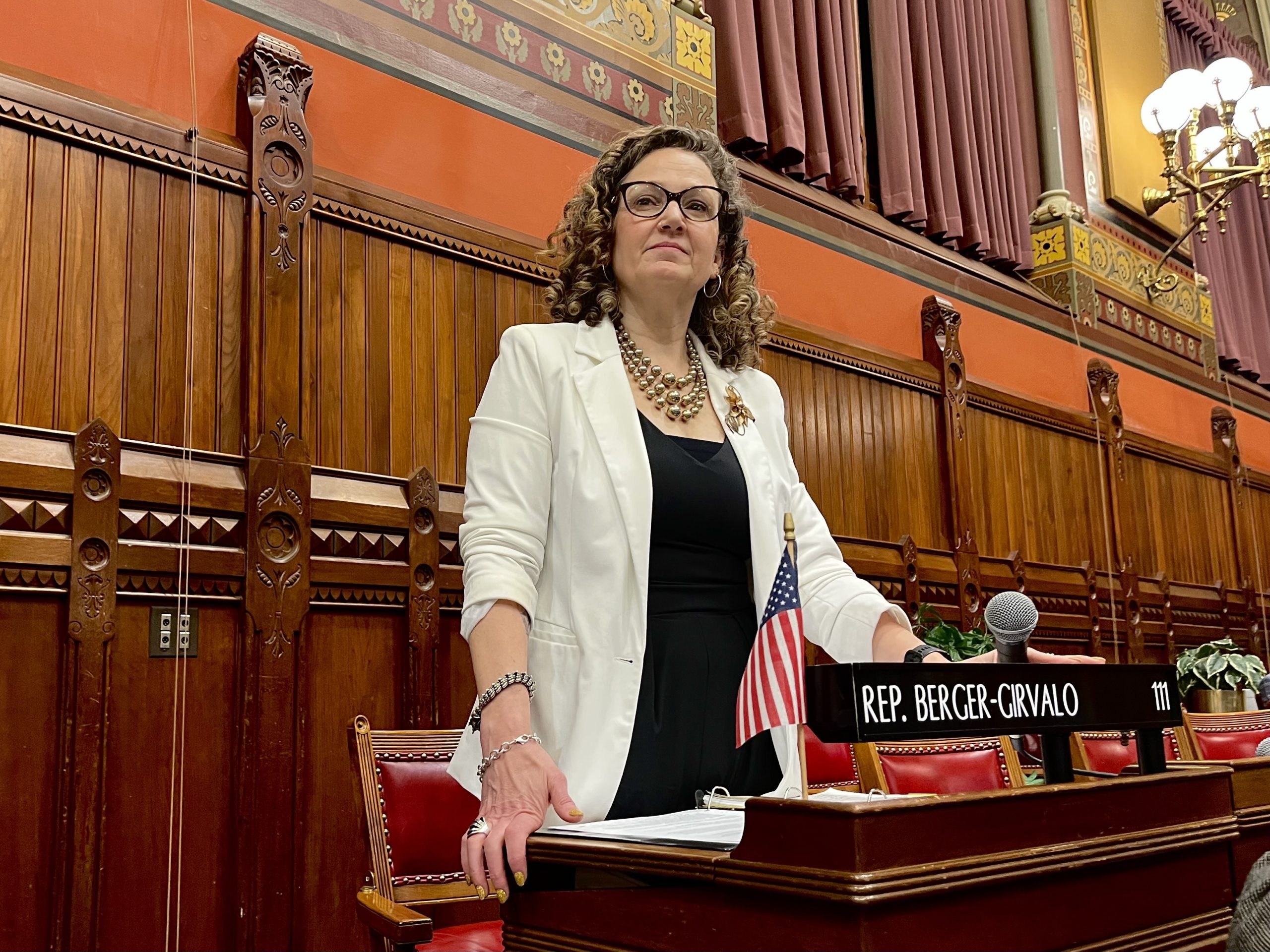
State lawmakers in Connecticut are addressing significant parking challenges faced by home health care workers. A proposed bill aims to initiate a nine-month study to explore solutions for parking issues that often result in workers receiving tickets or having their vehicles towed while attending to patients.
During a public hearing on the bill held on Monday, the state Transportation Committee discussed the proposal, which mandates that the Department of Emergency Services and Public Protection lead a study. The findings are expected to be presented to the legislature by January 2025. The study will evaluate various parking restrictions, time limits, permit requirements, and enforcement practices affecting home health care service providers. Additionally, it will review parking accommodation programs implemented in other states.
State Representative Rebecca Martinez, a Democrat from Plainville and a home health care worker with 26 years of experience, highlighted the difficulties workers face in accessing safe parking. “One of the most significant and overlooked barriers to safety is parking because it is often extremely difficult to find legal parking anywhere near a patient’s home,” Martinez stated. This issue can lead to parking tickets, even while workers are providing essential medical care.
Martinez’s concerns were further amplified by the tragic case of Joyce Grayson, a visiting nurse who was murdered by a patient in Willimantic in 2023. While the circumstances of Grayson’s death were unrelated to parking, it raised awareness of the dangers home care workers encounter.
Support for the bill has been strong, with over 15 nurses, advocates, and lawmakers submitting written testimony in favor, and six individuals testifying at the hearing. Advocates suggested the study should also encompass social workers, occupational and physical therapists, personal care aides, and mental health providers, reflecting the broader scope of challenges faced by various professionals in the field.
The proposed study responds to a report by The Connecticut Mirror and ProPublica that revealed ongoing issues surrounding the state’s towing laws. The report detailed a home health care worker in Hartford who had her car towed while helping a patient. Following the incident, the state passed a significant overhaul of its towing laws in 2025, which previously allowed towing companies to take possession of vehicles after just 15 days—a timeframe among the shortest in the nation.
Marlene Chickerella, chairwoman of the Home Care Association of America’s Connecticut chapter, emphasized the need for designated parking spots for home care workers. “Many assisted living complexes and condominium communities have very limited guest parking spaces available,” she noted. As the state shifts funding from long-term care facilities towards home health care services, ensuring the safety of these workers is critical.
Tracy Wodatch, president and CEO of the Connecticut Association for Healthcare at Home, added that parking remains a pressing concern, particularly in urban environments. “In cities, they face limited street parking, resident-only zones, strict meter limits, and high-risk ticketing areas,” Wodatch explained, highlighting the lack of reasonable legal parking options near patients’ homes.
To address these challenges, both Martinez and Kimberly Sandor, executive director of the Connecticut Nurses Association, proposed a statewide placard program, which would be administered by the state Department of Public Health. This program would allow home health care workers to display a placard on their dashboard, indicating they are providing medical assistance and helping to prevent their vehicles from being towed.
While some lawmakers expressed concerns about the visibility of such placards—especially for workers transporting controlled substances—Transportation Committee co-chair Aimee Berger-Girvalo suggested looking into existing programs in other states. She pointed to the possibility of allowing medical providers to utilize free parking at nearby universities, a practice already in place in certain jurisdictions.
The hearing saw no opposition to the bill, and among the 17 written statements submitted, only one individual expressed dissent, arguing that the bill does not address the core issues. Towing companies maintain that enforcing parking regulations is essential for ensuring safety, particularly in residential areas where access may be limited.
As this initiative progresses, it underscores the crucial need for effective policies that support the safety and accessibility of home health care workers, ensuring they can focus on their vital role in providing care without the added stress of parking-related challenges.












Morris Churches Unite for Annual Good Friday Walk With the Cross

Chloe Zhao’s ‘Buffy’ Reboot Cancelled: Sarah Michelle Gellar Speaks Out

Essential Ingredients for Life Found in Ryugu Asteroid Samples

Urgent Rescue: NSR Airlifts Injured Climber from Nanaimo

Riverside Heart Ball Achieves Record $815,000 for Mental Health

Cognizant Launches AI Factory to Enhance Enterprise AI Scalability

Samsung’s Galaxy Watch 9 to Feature Larger Battery Than Before

Toronto’s AIDS Memorial Faces Potential Redesign Amid Community Concerns

Bayern Munich Loses Luis Díaz Red Card Appeal Despite Referee’s Admission

Secwepemc First Nation Seeks Aboriginal Title Over Kamloops Area

Fatal Crash on Highway 11 Claims Three Lives, Major Closure Ongoing

Manitoba’s Burger Champion Shines Again Amid Dining Innovations

Canadian Curler E.J. Harnden Announces Retirement from Competition

Urgent Fire Erupts at Salvation Army on Christmas Evening

Scientists Unearth Ancient Antarctic Ice to Unlock Climate Secrets

Minister Faces Scrutiny Over Delayed Foreign Interference Watchdog Appointment

Trump and McCormick to Announce $70 Billion Energy Investments

Four Astronauts Return to Earth After International Space Station Mission
-
 Politics5 months ago
Secwepemc First Nation Seeks Aboriginal Title Over Kamloops Area
-
 Top Stories4 months ago
Fatal Crash on Highway 11 Claims Three Lives, Major Closure Ongoing
-
 Lifestyle7 months ago
Manitoba’s Burger Champion Shines Again Amid Dining Innovations
-
 Sports3 months ago
Canadian Curler E.J. Harnden Announces Retirement from Competition
-
 Top Stories3 months ago
Urgent Fire Erupts at Salvation Army on Christmas Evening
-
 World9 months ago
Scientists Unearth Ancient Antarctic Ice to Unlock Climate Secrets
-
 World5 months ago
Minister Faces Scrutiny Over Delayed Foreign Interference Watchdog Appointment
-
 Entertainment9 months ago
Trump and McCormick to Announce $70 Billion Energy Investments
-
 Science9 months ago
Four Astronauts Return to Earth After International Space Station Mission
-

 Lifestyle9 months ago
TransLink Launches Food Truck Program to Boost Revenue in Vancouver
-

 Lifestyle9 months ago
Monika Hibbs Unveils Acres Market & Interiors in Major Rebrand
-

 World1 month ago
Ranchman’s Cookhouse & Dancehall to Relocate by Early 2027