
Health
Local Cook Inspires Brain-Healthy Cuisine at Western Lab

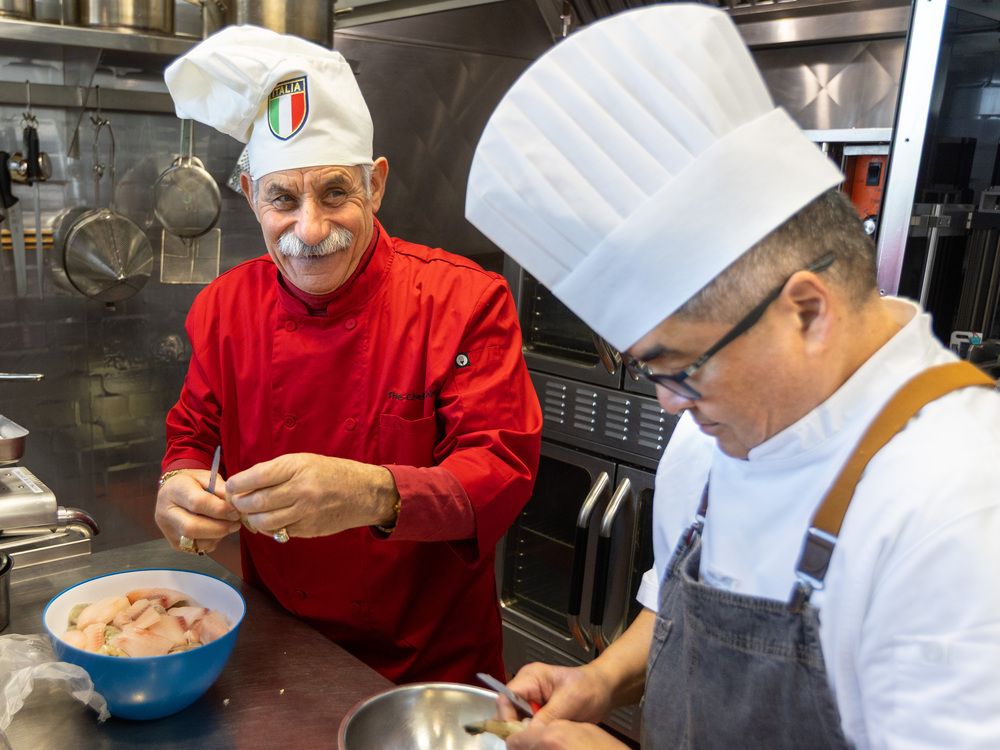
Sal Cambria, a 71-year-old food enthusiast from Lambeth, Canada, recently collaborated with a lab at Western University focused on developing brain-healthy recipes. The initiative aims to explore how delicious food can also enhance cognitive health, particularly in light of challenges many faced during the COVID-19 pandemic, such as brain fog.
Combining Culinary Skills with Science
During a recent cooking session, Cambria showcased his culinary talents by preparing a platter featuring fried shrimp and fish in tomato sauce. This event was part of a broader effort by the university’s nootropics food lab, led by Tim D’Souza, who serves as the executive chef. “We are interested in cognitive health and want to create foods and recipes that have health benefits,” D’Souza explained, emphasizing the lab’s goal to validate these health claims through scientific research.
The nootropics lab, which has been operational for about a year, invites community cooks each month to share their knowledge and culinary traditions. Previous guests have included chefs from Peruvian and Indigenous communities, reflecting a diverse approach to exploring brain health through diet. Raymond Thomas, a professor in physiology and biochemistry at Western, noted, “Diet remains the number one factor to improve health, including brain health.”
Highlighting Nutritional Benefits
Research conducted in the lab has identified specific foods that can positively impact brain health. Among these are what they refer to as “purple power” foods. Items like blueberries, beets, yams, and purple corn are highlighted for their cognitive benefits. Deep red foods, particularly bell peppers, also rank high on the list of recommended ingredients.
Cambria took pride in sharing his home-cooked creations, stating, “You eat these and you will say, ‘What the heck?’ You don’t buy this anywhere.” His home kitchen, adorned with the phrase “the chef the machine” engraved on the marble counter, reflects both his passion for cooking and his background as a bricklayer. In his prime, he was known for laying up to 3,000 bricks a day, earning him the nickname “the machine.” Today, he continues to work on construction, albeit at a slightly slower pace.
At the end of the meal, Cambria surprised everyone with a tray of handmade cannoli, a traditional Italian dessert. “It may not be good for you, but it feels good,” he remarked, adding a touch of indulgence to the brain-healthy menu endorsed by D’Souza.
This collaboration between local cooks and academic researchers represents a significant step towards merging culinary arts with scientific inquiry, aiming to create enjoyable, health-promoting foods for consumers. As the nootropics lab continues its research, it hopes to eventually bring brain-healthy products to market, making a positive impact on public health.










Unveiling the Secrets of Animals That Adapt Their Body Temperature

Canadian Army Reservists to Conduct Fitness Marches in Ontario

Middle Eastern Nations Accelerate $40 Billion Clean Energy Transition

Community Rallies for Clothing Drive Honoring Stabbing Victim

Arsenal Triumphs Over Chelsea, Extends Premier League Lead

Ontario Premier Doug Ford Sparks Backlash Over Craft Education

Ontario Family Health Teams Sound Alarm Over Staffing Exodus

Austin Bar Shooting Claims Three Lives, Leaves 14 Injured

US Reports First Military Casualties as Iran’s Attacks Escalate

Secwepemc First Nation Seeks Aboriginal Title Over Kamloops Area

Fatal Crash on Highway 11 Claims Three Lives, Major Closure Ongoing

Manitoba’s Burger Champion Shines Again Amid Dining Innovations

Urgent Fire Erupts at Salvation Army on Christmas Evening

Scientists Unearth Ancient Antarctic Ice to Unlock Climate Secrets

Canadian Curler E.J. Harnden Announces Retirement from Competition

Trump and McCormick to Announce $70 Billion Energy Investments

Minister Faces Scrutiny Over Delayed Foreign Interference Watchdog Appointment

Four Astronauts Return to Earth After International Space Station Mission
-
 Politics4 months ago
Secwepemc First Nation Seeks Aboriginal Title Over Kamloops Area
-
 Top Stories2 months ago
Fatal Crash on Highway 11 Claims Three Lives, Major Closure Ongoing
-
 Lifestyle6 months ago
Manitoba’s Burger Champion Shines Again Amid Dining Innovations
-
 Top Stories2 months ago
Urgent Fire Erupts at Salvation Army on Christmas Evening
-
 World8 months ago
Scientists Unearth Ancient Antarctic Ice to Unlock Climate Secrets
-
 Sports2 months ago
Canadian Curler E.J. Harnden Announces Retirement from Competition
-
 Entertainment8 months ago
Trump and McCormick to Announce $70 Billion Energy Investments
-
 World4 months ago
Minister Faces Scrutiny Over Delayed Foreign Interference Watchdog Appointment
-
 Science8 months ago
Four Astronauts Return to Earth After International Space Station Mission
-
 Lifestyle8 months ago
TransLink Launches Food Truck Program to Boost Revenue in Vancouver
-

 Technology6 months ago
Apple Notes Enhances Functionality with Markdown Support in macOS 26
-

 Top Stories2 months ago
NHL Teams Inquire About Marc-André Fleury’s Potential Return