
Health
Nanaimo Community Safety Officers Enhance Overdose Response with New Tools

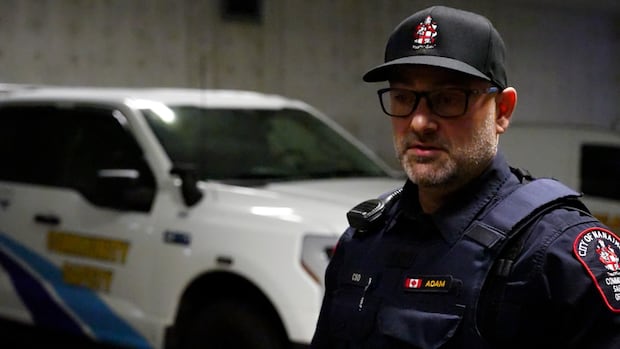
The City of Nanaimo has equipped its community safety officers (CSOs) with new vehicles aimed at improving the response to drug overdoses. This initiative is made possible by over $440,000 in funding from the federal government, reflecting a growing commitment to address the toxic drug crisis impacting many communities. The CSOs have been active in Nanaimo’s downtown area since the summer of 2022, focusing on social disorder and assisting individuals experiencing homelessness.
According to Adam Coleshaw, a community safety officer in Nanaimo, the role has evolved significantly in recent years. Responding to overdoses has become almost routine as the crisis deepens. “Anytime you have extra training, extra equipment, it allows you that much more confidence,” Coleshaw said, referring to the benefits of the new trucks equipped with automated external defibrillators (AEDs), naloxone, and oxygen supplies. The vehicles also feature red and white lights to signal to other emergency responders when a CSO is addressing an overdose situation.
In 2024, the CSOs administered more than 1,200 doses of naloxone, a medication used to reverse opioid overdoses. Coleshaw believes this statistic highlights the necessity for further investments in overdose response capabilities. He stated, “The federal government has seen our data and seen the amount of overdoses we were having to respond to. I think they thought it was a worthwhile investment to take that extra step to make sure that life is preserved.”
Mixed Reactions to the Initiative
While the introduction of these new tools has been welcomed by some, it has also sparked debate within the community. Critics argue that the funds could be better allocated to outreach programs rather than increasing policing of vulnerable populations. James Booker, who has experienced homelessness for nearly nine years, expressed concerns about the relationship between the CSOs and those they serve. “I definitely think it would be better used in the shelters because they have better relationships with the people,” Booker said.
The local non-profit organization, Risebridge, which operates a shelter near downtown Nanaimo, was not eligible to apply for the federal funding. Executive director Jovonne Johnson voiced frustration over the decision, suggesting that the funding would have been better spent on increasing shelter space and support services. “We need more spaces open. We need more support services. We need cooling centres and warming centres,” Johnson stated.
Despite the criticism, Coleshaw maintains that the work being done by the CSOs is vital. He emphasized the importance of building relationships with individuals in crisis, noting that saving even one life can be a turning point for someone struggling with addiction. “When you save a life, that might be an opportunity for change, for that person to maybe get out of addiction and move forward,” he said.
As Nanaimo continues to grapple with the challenges of the ongoing drug crisis, the community safety officers and their newly acquired tools represent both a response to immediate needs and a spark for broader conversations about how best to support those affected by addiction.












Morris Churches Unite for Annual Good Friday Walk With the Cross

Chloe Zhao’s ‘Buffy’ Reboot Cancelled: Sarah Michelle Gellar Speaks Out

Essential Ingredients for Life Found in Ryugu Asteroid Samples

Urgent Rescue: NSR Airlifts Injured Climber from Nanaimo

Riverside Heart Ball Achieves Record $815,000 for Mental Health

Cognizant Launches AI Factory to Enhance Enterprise AI Scalability

Samsung’s Galaxy Watch 9 to Feature Larger Battery Than Before

Toronto’s AIDS Memorial Faces Potential Redesign Amid Community Concerns

Bayern Munich Loses Luis Díaz Red Card Appeal Despite Referee’s Admission

Secwepemc First Nation Seeks Aboriginal Title Over Kamloops Area

Fatal Crash on Highway 11 Claims Three Lives, Major Closure Ongoing

Manitoba’s Burger Champion Shines Again Amid Dining Innovations

Canadian Curler E.J. Harnden Announces Retirement from Competition

Urgent Fire Erupts at Salvation Army on Christmas Evening

Scientists Unearth Ancient Antarctic Ice to Unlock Climate Secrets

Minister Faces Scrutiny Over Delayed Foreign Interference Watchdog Appointment

Trump and McCormick to Announce $70 Billion Energy Investments

Monika Hibbs Unveils Acres Market & Interiors in Major Rebrand
-
 Politics5 months ago
Secwepemc First Nation Seeks Aboriginal Title Over Kamloops Area
-
 Top Stories4 months ago
Fatal Crash on Highway 11 Claims Three Lives, Major Closure Ongoing
-
 Lifestyle7 months ago
Manitoba’s Burger Champion Shines Again Amid Dining Innovations
-
 Sports3 months ago
Canadian Curler E.J. Harnden Announces Retirement from Competition
-
 Top Stories3 months ago
Urgent Fire Erupts at Salvation Army on Christmas Evening
-
 World9 months ago
Scientists Unearth Ancient Antarctic Ice to Unlock Climate Secrets
-
 World5 months ago
Minister Faces Scrutiny Over Delayed Foreign Interference Watchdog Appointment
-
 Entertainment9 months ago
Trump and McCormick to Announce $70 Billion Energy Investments
-
 Lifestyle9 months ago
Monika Hibbs Unveils Acres Market & Interiors in Major Rebrand
-

 Science9 months ago
Four Astronauts Return to Earth After International Space Station Mission
-

 Lifestyle9 months ago
TransLink Launches Food Truck Program to Boost Revenue in Vancouver
-

 World1 month ago
Ranchman’s Cookhouse & Dancehall to Relocate by Early 2027