
Health
Researchers Test Birth Control to Tame Chicago’s Rat Population

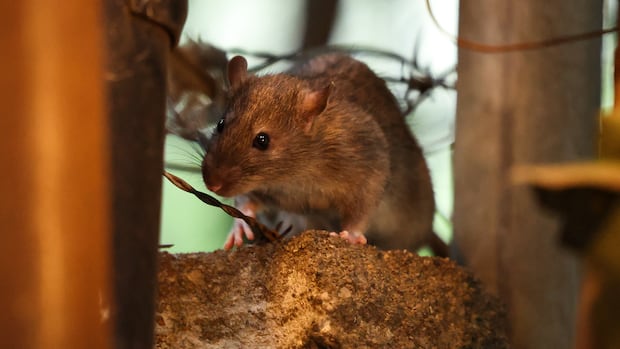
In an innovative approach to urban pest control, researchers in Chicago are testing a new form of birth control aimed at managing the city’s growing rat population. Climate change, urbanization, and increased density have contributed to a surge in rat numbers, prompting scientists to explore alternative methods for controlling these vermin.
Researchers from the Lincoln Park Zoo are conducting a study in Chicago’s Lincoln Park neighbourhood, where hidden cameras monitor rat activity. The team is evaluating whether peanut butter pellets laced with a non-hormonal contraceptive, called Wisdom Good Bites, can effectively reduce rat reproduction. The research is led by Maureen Murray, the assistant director at the Urban Wildlife Institute, who emphasizes the importance of finding safer pest control solutions.
Traditional methods of rat control, such as anticoagulant rodenticides, have raised significant environmental concerns. These poisons have had detrimental effects on non-target species, including incidents where they have killed owls in urban areas. As a result, researchers and municipal governments are increasingly interested in less harmful alternatives.
Climate change is cited as a key factor contributing to the rat population boom. Bobby Corrigan, a rodentologist based in New York City, notes that milder winters allow rats to reproduce longer, creating a “ticking time bomb” for disease transmission. The bacteria that cause leptospirosis, which can be spread through rat urine, have been detected in urban areas previously not associated with the disease. In Chicago, health alerts have been issued regarding this illness, indicating a rising concern for public health.
Testing the effectiveness of rat birth control presents unique challenges. The non-hormonal product being tested contains extracts from the Thunder God vine, a traditional Chinese medicinal plant. This compound is believed to reduce fertility by impacting sperm production and egg release without sterilizing the rodents. To achieve a significant reduction in the rat population, a large portion of the local rat community would need to consume the bait consistently.
In Chicago, the study involves distributing the contraceptive-laced bait in selected alleys while monitoring rat activity through cameras. Control alleys receive placebo bait, allowing researchers to compare results and determine the impact of the contraceptive on rat populations.
While some cities, such as New York City, are experimenting with similar methods, others like Toronto and Ottawa have yet to apply for exemptions to use such products legally. New York is currently conducting a pilot project using non-hormonal contraceptives, while Boston previously discontinued its birth control efforts following a trial.
Skepticism exists regarding the efficacy of these contraceptive methods in urban environments. Steven Belmain, a professor at the University of Greenwich, points out that while some products show promise in laboratory settings, there is insufficient evidence to support their effectiveness in larger cities. He cautions that commercial interests may overshadow rigorous scientific evaluation of these products.
Despite the challenges, Murray and her team remain committed to their research. They believe that if successful, this method could lead to a significant reduction in rat populations without harming other wildlife. Ultimately, experts agree that a multifaceted approach, including improved waste management and public education, is essential for long-term success in controlling urban rat populations.
As cities worldwide grapple with increasing rodent numbers, the outcome of this study could have significant implications for urban pest control strategies, potentially transforming how cities manage their rat populations in a changing climate.













Morris Churches Unite for Annual Good Friday Walk With the Cross

Chloe Zhao’s ‘Buffy’ Reboot Cancelled: Sarah Michelle Gellar Speaks Out

Essential Ingredients for Life Found in Ryugu Asteroid Samples

Urgent Rescue: NSR Airlifts Injured Climber from Nanaimo

Riverside Heart Ball Achieves Record $815,000 for Mental Health

Cognizant Launches AI Factory to Enhance Enterprise AI Scalability

Samsung’s Galaxy Watch 9 to Feature Larger Battery Than Before

Toronto’s AIDS Memorial Faces Potential Redesign Amid Community Concerns

Bayern Munich Loses Luis Díaz Red Card Appeal Despite Referee’s Admission

Secwepemc First Nation Seeks Aboriginal Title Over Kamloops Area

Fatal Crash on Highway 11 Claims Three Lives, Major Closure Ongoing

Manitoba’s Burger Champion Shines Again Amid Dining Innovations

Canadian Curler E.J. Harnden Announces Retirement from Competition

Urgent Fire Erupts at Salvation Army on Christmas Evening

Scientists Unearth Ancient Antarctic Ice to Unlock Climate Secrets

Minister Faces Scrutiny Over Delayed Foreign Interference Watchdog Appointment

Trump and McCormick to Announce $70 Billion Energy Investments

Monika Hibbs Unveils Acres Market & Interiors in Major Rebrand
-
 Politics5 months ago
Secwepemc First Nation Seeks Aboriginal Title Over Kamloops Area
-
 Top Stories4 months ago
Fatal Crash on Highway 11 Claims Three Lives, Major Closure Ongoing
-
 Lifestyle7 months ago
Manitoba’s Burger Champion Shines Again Amid Dining Innovations
-
 Sports3 months ago
Canadian Curler E.J. Harnden Announces Retirement from Competition
-
 Top Stories3 months ago
Urgent Fire Erupts at Salvation Army on Christmas Evening
-
 World9 months ago
Scientists Unearth Ancient Antarctic Ice to Unlock Climate Secrets
-
 World5 months ago
Minister Faces Scrutiny Over Delayed Foreign Interference Watchdog Appointment
-
 Entertainment9 months ago
Trump and McCormick to Announce $70 Billion Energy Investments
-
 Lifestyle9 months ago
Monika Hibbs Unveils Acres Market & Interiors in Major Rebrand
-

 Science9 months ago
Four Astronauts Return to Earth After International Space Station Mission
-

 Lifestyle9 months ago
TransLink Launches Food Truck Program to Boost Revenue in Vancouver
-

 World1 month ago
Ranchman’s Cookhouse & Dancehall to Relocate by Early 2027