
Health
UCP Faces Scrutiny Over Alberta’s Health Care Crisis

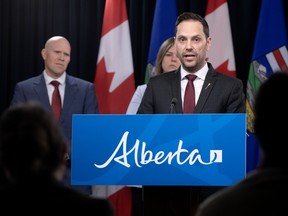
Concerns about Alberta’s health care system have intensified as criticisms are directed towards the United Conservative Party (UCP) government for its handling of hospital overcrowding and emergency care. In a recent letter to the editor published on January 17, 2024, Keith Gerein highlighted that the hospital crisis has been developing over several years, suggesting that the UCP’s decisions have contributed significantly to the current state of emergency services.
Gerein pointed out that had the UCP adhered to its original plan of constructing a new hospital in the south, it might have been operational by now. His remarks bring attention to the alarming situation where inadequate emergency care has reportedly led to numerous preventable deaths. The letter argues for a thorough investigation into the UCP’s management of health services, particularly the overcrowded emergency departments, which have become a pressing issue for many residents.
In the same letter, the author also noted that while the UCP government has attempted to shift blame towards opposition figures, such as Naheed Nenshi, the focus should instead be on accountability for the health care system’s failures. The call for an investigation extends beyond the current crisis, encompassing issues such as vaccination misinformation and ongoing public health challenges, including measles outbreaks.
Public Response to Health Care Challenges
The letters section of the local newspaper also featured various opinions from Edmonton residents regarding unrelated city services. Lloyd Lovatt expressed gratitude towards the city’s snow-clearing crews, praising their efforts in clearing streets effectively during recent winter weather. Similarly, Stephen Luck thanked the crews for their timely work, which allowed him to access his vehicle early in the morning.
Conversely, R.T. McKay criticized local leadership for inconsistent messaging regarding parking bans during inclement weather. He highlighted the struggles faced by residents, particularly those with disabilities or families, when parking restrictions are enforced without adequate alternatives.
Another resident, Una Murowanyj, voiced surprise at Pierre Poilievre’s stance on the Canada-China trade agreement, which allows for the importation of Canadian canola. Murowanyj questioned whether Poilievre was fully aware of the implications of his statements, considering he represents an area where canola is a significant crop.
While the local community remains engaged in various discussions—from city services to health care—there is a clear demand for accountability and improvement in the province’s health systems. As the situation evolves, citizens continue to advocate for solutions that address their concerns and prioritize public health.












UPEI’s High-Tech Simulation Centre Enhances Future Healthcare Skills

Canadian Astronaut Chris Hadfield Advocates for Eye Health

GPIQ and QYLD: Evaluating Strategies Amid Market Stagnation

Norovirus Outbreak Forces Canada’s Hockey Game Postponement

Fauna Robotics Unveils Sprout: A Humanoid Robot for Home Use

Team Canada Faces Goaltending Concerns Ahead of Olympics

Celebrating the Life of Irena Peritz: A Legacy of Love and Resilience

India, U.S. Announce Urgent Trade Deal to Slash Tariffs Now

American Airlines Pilots Challenge Management After Poor Results

Secwepemc First Nation Seeks Aboriginal Title Over Kamloops Area

Scientists Unearth Ancient Antarctic Ice to Unlock Climate Secrets

Urgent Fire Erupts at Salvation Army on Christmas Evening

Canadian Curler E.J. Harnden Announces Retirement from Competition

Manitoba’s Burger Champion Shines Again Amid Dining Innovations

Fatal Crash on Highway 11 Claims Three Lives, Major Closure Ongoing

Trump and McCormick to Announce $70 Billion Energy Investments

Four Astronauts Return to Earth After International Space Station Mission

TransLink Launches Food Truck Program to Boost Revenue in Vancouver
-
 Politics3 months ago
Secwepemc First Nation Seeks Aboriginal Title Over Kamloops Area
-
 World7 months ago
Scientists Unearth Ancient Antarctic Ice to Unlock Climate Secrets
-
 Top Stories1 month ago
Urgent Fire Erupts at Salvation Army on Christmas Evening
-
 Sports1 month ago
Canadian Curler E.J. Harnden Announces Retirement from Competition
-
 Lifestyle5 months ago
Manitoba’s Burger Champion Shines Again Amid Dining Innovations
-
 Top Stories2 months ago
Fatal Crash on Highway 11 Claims Three Lives, Major Closure Ongoing
-
 Entertainment7 months ago
Trump and McCormick to Announce $70 Billion Energy Investments
-
 Science7 months ago
Four Astronauts Return to Earth After International Space Station Mission
-
 Lifestyle7 months ago
TransLink Launches Food Truck Program to Boost Revenue in Vancouver
-

 Technology5 months ago
Apple Notes Enhances Functionality with Markdown Support in macOS 26
-

 Top Stories1 month ago
Blue Jays Sign Kazuma Okamoto: Impact on Bo Bichette’s Future
-

 Top Stories2 months ago
NHL Teams Inquire About Marc-André Fleury’s Potential Return