
Lifestyle
Kashechewan First Nation Launches Mobile Clinic for Evacuees

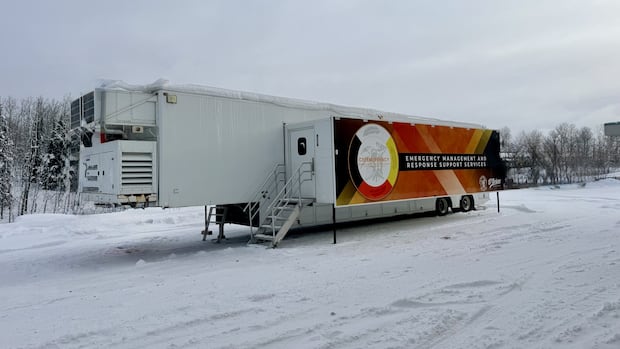
A mobile clinic has been established in Kapuskasing, Ontario, by a corporation majority-owned by the Kashechewan First Nation to provide medical care for evacuees from the community. These evacuations began in early January 2024 after Chief Hosea Wesley declared a state of emergency due to a failure at the local water treatment plant, leaving the community without access to clean water. So far, over 1,900 of Kashechewan’s 2,300 residents have relocated to various cities across Ontario, including Kapuskasing, Timmins, Kingston, and Niagara Falls.
Christopher Thind, the director of health for Kashechewan, noted that the community formed Creemergency the previous year to gain greater control over evacuation management, which is frequently necessary each spring due to flooding risks. Traditionally, the federal government, through Indigenous Services Canada, and the provincial Ministry of Emergency Preparedness and Response have selected vendors for these evacuations.
Mobile Clinic Aims to Alleviate Local Healthcare Strain
Creemergency has partnered with the O’Briens Corporate Group in Kapuskasing to manage medical services for the evacuees. Thind explained the need for the clinic, stating, “We recognize that most health systems in the north are relatively fragile in terms of either lack of staffing or different schedules. What we wanted to do was provide a service that complemented what was available at the hospital.”
To date, 81 evacuees have utilized the mobile clinic for medical assistance, which Thind described as “an absolutely impeccable use of resources.” By providing care at the mobile clinic, these individuals have been kept out of the local hospital system, reducing pressure on the Sensenbrenner Hospital.
The mobile clinic is staffed by volunteers, including registered nurses and nurse practitioners from the Canadian Medical Assistance Teams, an organization typically engaged in international missions. Support for the clinic has come from various sources, including a $50,000 donation from mining company Agnico Eagle, which operates the Detour Lake Gold Mine northeast of Kapuskasing.
Future of Mobile Clinics Uncertain
Currently, there are no immediate plans to set up similar clinics in other cities hosting evacuees, as those areas typically have greater healthcare capacity. However, Thind mentioned that some evacuees might end up in Cochrane, and the possibility exists for relocating the clinic there temporarily if necessary.
The initiative exemplifies a proactive approach to ensure that evacuees receive necessary healthcare while minimizing disruptions to local health services. As the situation evolves, the community remains focused on addressing the immediate needs of its members during this challenging time.













UPEI’s High-Tech Simulation Centre Enhances Future Healthcare Skills

Canadian Astronaut Chris Hadfield Advocates for Eye Health

GPIQ and QYLD: Evaluating Strategies Amid Market Stagnation

Norovirus Outbreak Forces Canada’s Hockey Game Postponement

Fauna Robotics Unveils Sprout: A Humanoid Robot for Home Use

Team Canada Faces Goaltending Concerns Ahead of Olympics

Celebrating the Life of Irena Peritz: A Legacy of Love and Resilience

India, U.S. Announce Urgent Trade Deal to Slash Tariffs Now

American Airlines Pilots Challenge Management After Poor Results

Secwepemc First Nation Seeks Aboriginal Title Over Kamloops Area

Scientists Unearth Ancient Antarctic Ice to Unlock Climate Secrets

Urgent Fire Erupts at Salvation Army on Christmas Evening

Canadian Curler E.J. Harnden Announces Retirement from Competition

Manitoba’s Burger Champion Shines Again Amid Dining Innovations

Fatal Crash on Highway 11 Claims Three Lives, Major Closure Ongoing

Trump and McCormick to Announce $70 Billion Energy Investments

Four Astronauts Return to Earth After International Space Station Mission

TransLink Launches Food Truck Program to Boost Revenue in Vancouver
-
 Politics3 months ago
Secwepemc First Nation Seeks Aboriginal Title Over Kamloops Area
-
 World7 months ago
Scientists Unearth Ancient Antarctic Ice to Unlock Climate Secrets
-
 Top Stories1 month ago
Urgent Fire Erupts at Salvation Army on Christmas Evening
-
 Sports1 month ago
Canadian Curler E.J. Harnden Announces Retirement from Competition
-
 Lifestyle5 months ago
Manitoba’s Burger Champion Shines Again Amid Dining Innovations
-
 Top Stories2 months ago
Fatal Crash on Highway 11 Claims Three Lives, Major Closure Ongoing
-
 Entertainment7 months ago
Trump and McCormick to Announce $70 Billion Energy Investments
-
 Science7 months ago
Four Astronauts Return to Earth After International Space Station Mission
-
 Lifestyle7 months ago
TransLink Launches Food Truck Program to Boost Revenue in Vancouver
-

 Technology5 months ago
Apple Notes Enhances Functionality with Markdown Support in macOS 26
-

 Top Stories1 month ago
Blue Jays Sign Kazuma Okamoto: Impact on Bo Bichette’s Future
-

 Top Stories2 months ago
NHL Teams Inquire About Marc-André Fleury’s Potential Return