
Politics
Alberta Government Pushes Higher Speed Limits Despite Concerns

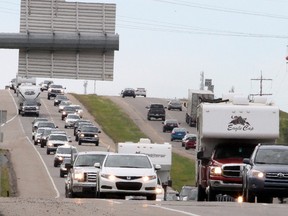
The Alberta government has announced plans to increase highway speed limits, a decision supported by a recent survey that gathered responses from approximately 59,000 individuals. This group, representing only about 1.7 percent of licensed drivers in the province, indicated that 68 percent were in favor of the change. Critics argue that this narrow consultation raises questions about the legitimacy of the claim that “Albertans are ready” for higher speeds.
Many residents express concern that the survey results reflect a form of “confirmation theatre.” This sentiment suggests that the government may have already made its decision before seeking public input. As one commentator pointed out, it is reminiscent of a radio program that pretends to solicit opinions on a policy that has already been established. The implications of such an approach extend beyond speed limits.
Alberta is preparing for a season when respiratory illnesses are expected to rise, yet the province remains under the guidance of an interim chief medical officer of health. The government’s vaccination campaign has been criticized for lacking urgency, likened to a clearance sale with insufficient resources. Critics argue that the government is not risk-averse in its decision-making, but rather is cautious about alienating its political base.
In a separate but related issue, John Clarke, a developer, contends that the opposition to infill development and increased density in Edmonton is primarily rooted in a resistance to change among residents. While he acknowledges the city’s challenges in expanding revenue, he suggests that those opposed to increased density should consider paying an additional 10 percent property tax to support the city’s financial needs.
However, many Edmonton residents believe that increased density can be beneficial if executed properly. D.M. Kresic, a local resident, argues that many infill projects are poorly designed and fail to complement existing neighborhoods. He proposes an alternative idea: implementing a tax on developers who do not prioritize aesthetics and community integration, echoing sentiments previously expressed by former mayor Stephen Mandel.
The conversation surrounding these issues has been complicated further by recent tragic events in other parts of the world. Following a mass shooting at Bondi Beach in Australia, the Australian Prime Minister announced plans to tighten gun control laws. In stark contrast, Alberta’s Premier has stated intentions to prevent the enforcement of federal buy-back regulations for firearms, raising eyebrows among those concerned about public safety.
As Alberta navigates these contentious issues, the balance between public consultation and government decision-making remains a focal point of debate. The decisions made in the coming weeks will likely shape the province’s policies and public sentiment for years to come.










Morris Churches Unite for Annual Good Friday Walk With the Cross

Chloe Zhao’s ‘Buffy’ Reboot Cancelled: Sarah Michelle Gellar Speaks Out

Essential Ingredients for Life Found in Ryugu Asteroid Samples

Urgent Rescue: NSR Airlifts Injured Climber from Nanaimo

Riverside Heart Ball Achieves Record $815,000 for Mental Health

Cognizant Launches AI Factory to Enhance Enterprise AI Scalability

Samsung’s Galaxy Watch 9 to Feature Larger Battery Than Before

Toronto’s AIDS Memorial Faces Potential Redesign Amid Community Concerns

Bayern Munich Loses Luis Díaz Red Card Appeal Despite Referee’s Admission

Secwepemc First Nation Seeks Aboriginal Title Over Kamloops Area

Fatal Crash on Highway 11 Claims Three Lives, Major Closure Ongoing

Manitoba’s Burger Champion Shines Again Amid Dining Innovations

Canadian Curler E.J. Harnden Announces Retirement from Competition

Urgent Fire Erupts at Salvation Army on Christmas Evening

Scientists Unearth Ancient Antarctic Ice to Unlock Climate Secrets

Minister Faces Scrutiny Over Delayed Foreign Interference Watchdog Appointment

Trump and McCormick to Announce $70 Billion Energy Investments

Monika Hibbs Unveils Acres Market & Interiors in Major Rebrand
-
 Politics5 months ago
Secwepemc First Nation Seeks Aboriginal Title Over Kamloops Area
-
 Top Stories4 months ago
Fatal Crash on Highway 11 Claims Three Lives, Major Closure Ongoing
-
 Lifestyle7 months ago
Manitoba’s Burger Champion Shines Again Amid Dining Innovations
-
 Sports4 months ago
Canadian Curler E.J. Harnden Announces Retirement from Competition
-
 Top Stories4 months ago
Urgent Fire Erupts at Salvation Army on Christmas Evening
-
 World9 months ago
Scientists Unearth Ancient Antarctic Ice to Unlock Climate Secrets
-
 World5 months ago
Minister Faces Scrutiny Over Delayed Foreign Interference Watchdog Appointment
-
 Entertainment9 months ago
Trump and McCormick to Announce $70 Billion Energy Investments
-
 Lifestyle9 months ago
Monika Hibbs Unveils Acres Market & Interiors in Major Rebrand
-

 Science9 months ago
Four Astronauts Return to Earth After International Space Station Mission
-

 Lifestyle9 months ago
TransLink Launches Food Truck Program to Boost Revenue in Vancouver
-

 World2 months ago
Ranchman’s Cookhouse & Dancehall to Relocate by Early 2027