
Politics
Alberta Should Leverage Fiscal Influence to Reform Federal Relations

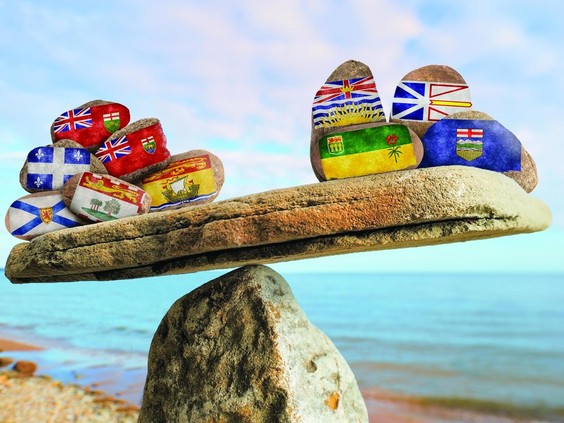
The Alberta government should shift its focus from political theatrics regarding separatism to utilizing its substantial fiscal contributions for meaningful reform of federal-provincial fiscal relations. Alberta has consistently been a significant net fiscal contributor to Canada, with contributions amounting to approximately $267.4 billion from 2007 to 2023, according to the latest data from Statistics Canada. This trend is projected to continue, with estimates suggesting that Albertans will contribute over $250 billion in net fiscal contributions over the next 15 years.
Given this financial context, Alberta has the opportunity to lead initiatives aimed at reforming key federal transfer programs, such as the equalization program, the Canada Health Transfer, the Canada Social Transfer, and the Fiscal Stabilization Program. Previous analyses conducted within the Alberta government, particularly by the Treasury Board and Finance as well as the Executive Council, have explored viable options for reforming these fiscal arrangements. Despite this, recent access to information requests yielded limited results, raising questions about the transparency of the process.
The current equalization program is set to continue until March 31, 2029. Nonetheless, discussions regarding its renewal are anticipated to commence soon, potentially creating an opportunity for a comprehensive review of federal-provincial fiscal arrangements. As the conversation unfolds, it is crucial that provinces, especially Alberta, have a prominent role in shaping these reforms.
Need for Comprehensive Review
To initiate effective reform, there must be consensus among first ministers, including the Prime Minister, to conduct a thorough, independent review of fiscal relations. This review should encompass the equalization program and other major federal transfer programs, providing recommendations that aim to enhance fairness, reduce complexity, increase transparency, promote accountability, and encourage economic growth.
Such an initiative should mirror the 2005-06 Expert Panel on Equalization and Territorial Formula Financing, commonly known as the “O’Brien Panel.” Established following an agreement among first ministers in October 2004, this earlier effort successfully assessed and recommended reforms to fiscal arrangements. A similar approach today could facilitate a more equitable and effective fiscal framework that reflects the contributions and needs of provinces like Alberta.
As Alberta contemplates its fiscal future, the focus should not be on separatism or political posturing but rather on constructive engagement in reforming federal-provincial relations. By leveraging its considerable fiscal influence, Alberta can advocate for a system that ensures all provinces benefit equitably from Canada’s resources while promoting sustainable economic growth.












Morris Churches Unite for Annual Good Friday Walk With the Cross

Chloe Zhao’s ‘Buffy’ Reboot Cancelled: Sarah Michelle Gellar Speaks Out

Essential Ingredients for Life Found in Ryugu Asteroid Samples

Urgent Rescue: NSR Airlifts Injured Climber from Nanaimo

Riverside Heart Ball Achieves Record $815,000 for Mental Health

Cognizant Launches AI Factory to Enhance Enterprise AI Scalability

Samsung’s Galaxy Watch 9 to Feature Larger Battery Than Before

Toronto’s AIDS Memorial Faces Potential Redesign Amid Community Concerns

Bayern Munich Loses Luis Díaz Red Card Appeal Despite Referee’s Admission

Secwepemc First Nation Seeks Aboriginal Title Over Kamloops Area

Fatal Crash on Highway 11 Claims Three Lives, Major Closure Ongoing

Manitoba’s Burger Champion Shines Again Amid Dining Innovations

Canadian Curler E.J. Harnden Announces Retirement from Competition

Urgent Fire Erupts at Salvation Army on Christmas Evening

Scientists Unearth Ancient Antarctic Ice to Unlock Climate Secrets

Minister Faces Scrutiny Over Delayed Foreign Interference Watchdog Appointment

Trump and McCormick to Announce $70 Billion Energy Investments

Monika Hibbs Unveils Acres Market & Interiors in Major Rebrand
-
 Politics5 months ago
Secwepemc First Nation Seeks Aboriginal Title Over Kamloops Area
-
 Top Stories4 months ago
Fatal Crash on Highway 11 Claims Three Lives, Major Closure Ongoing
-
 Lifestyle7 months ago
Manitoba’s Burger Champion Shines Again Amid Dining Innovations
-
 Sports4 months ago
Canadian Curler E.J. Harnden Announces Retirement from Competition
-
 Top Stories4 months ago
Urgent Fire Erupts at Salvation Army on Christmas Evening
-
 World9 months ago
Scientists Unearth Ancient Antarctic Ice to Unlock Climate Secrets
-
 World5 months ago
Minister Faces Scrutiny Over Delayed Foreign Interference Watchdog Appointment
-
 Entertainment9 months ago
Trump and McCormick to Announce $70 Billion Energy Investments
-
 Lifestyle9 months ago
Monika Hibbs Unveils Acres Market & Interiors in Major Rebrand
-

 Science9 months ago
Four Astronauts Return to Earth After International Space Station Mission
-

 Lifestyle9 months ago
TransLink Launches Food Truck Program to Boost Revenue in Vancouver
-

 World2 months ago
Ranchman’s Cookhouse & Dancehall to Relocate by Early 2027