
Politics
Albertans Prepare for Conflicting Petitions Ahead of 2026 Vote

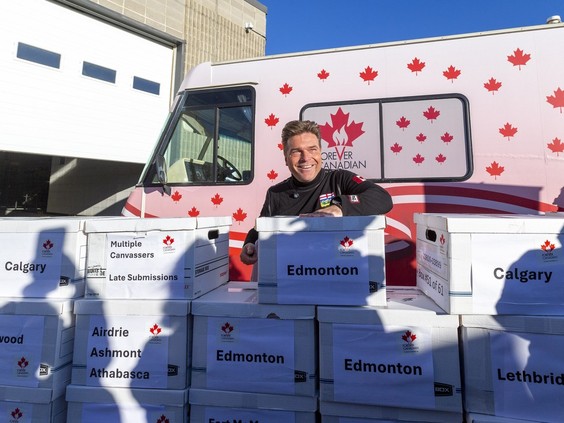
Albertans are set to face a complex array of petitions as they approach the polls in 2026, with potential votes covering a range of contentious issues. These include immigration, constitutional amendments, the future of the Canada Pension Plan, provincial policing, education policy, coal mine development, and even discussions around Alberta’s separation from Canada. This environment marks a significant shift for the province, as it prepares for a pivotal year that will follow five years since the last provincewide referendums.
Premier Danielle Smith has not indicated that her government will impede any of these potential referendums. In fact, her administration appears to be accommodating the various initiatives emerging from citizen groups. This is particularly evident with the Alberta Prosperity Project, which recently received the green light to gather signatures for its proposed referendum question. This approval came after legislative changes introduced by the United Conservative Party (UCP) through Bill 14, which removed previous obstacles that had stalled separatist efforts.
As the political landscape evolves, clarity is essential for Albertans. The government’s approach has raised questions, especially regarding whether multiple petitions on similar issues can coexist. For instance, if the government were to propose a referendum on establishing an Alberta Pension Plan while simultaneously considering whether to maintain the Canada Pension Plan, it could create confusion for voters. The potential for overlapping questions complicates the process and could lead to a lack of coherence in the decision-making landscape.
The situation illustrates a broader concern about the clarity of the referendum process. While reasonable individuals may hold differing opinions on whether separation from Canada merits a referendum, Albertans should expect transparency and certainty as they navigate these significant questions. The government’s measures to facilitate the separatist agenda—such as lowering the petition threshold—have sparked debate about the implications for provincial governance and citizen engagement.
Interestingly, the first successful petition regarding Alberta’s relationship with Confederation came from the group Forever Canadian, led by former Member of the Legislative Assembly (MLA) and cabinet minister Thomas Lukaszuk. This initiative, despite facing a higher requirement for signatures within a shorter timeframe, was filed before the Alberta Prosperity Project. The success of this petition reflects the diverse perspectives among Albertans concerning their province’s future and the nature of its relationship with the rest of Canada.
As Alberta heads into a year of significant political activity, citizens will be tasked with evaluating the various petitions and their implications. The province’s voters are not only grappling with questions of identity and governance but also with the potential impact of these decisions on their everyday lives.
The forthcoming elections promise to be a pivotal moment for Alberta, with far-reaching consequences that will shape the province’s direction for years to come. Clarity and effective communication from the government will be crucial as Albertans prepare to make their voices heard in 2026.












Morris Churches Unite for Annual Good Friday Walk With the Cross

Chloe Zhao’s ‘Buffy’ Reboot Cancelled: Sarah Michelle Gellar Speaks Out

Essential Ingredients for Life Found in Ryugu Asteroid Samples

Urgent Rescue: NSR Airlifts Injured Climber from Nanaimo

Riverside Heart Ball Achieves Record $815,000 for Mental Health

Cognizant Launches AI Factory to Enhance Enterprise AI Scalability

Samsung’s Galaxy Watch 9 to Feature Larger Battery Than Before

Toronto’s AIDS Memorial Faces Potential Redesign Amid Community Concerns

Bayern Munich Loses Luis Díaz Red Card Appeal Despite Referee’s Admission

Secwepemc First Nation Seeks Aboriginal Title Over Kamloops Area

Fatal Crash on Highway 11 Claims Three Lives, Major Closure Ongoing

Manitoba’s Burger Champion Shines Again Amid Dining Innovations

Canadian Curler E.J. Harnden Announces Retirement from Competition

Urgent Fire Erupts at Salvation Army on Christmas Evening

Scientists Unearth Ancient Antarctic Ice to Unlock Climate Secrets

Minister Faces Scrutiny Over Delayed Foreign Interference Watchdog Appointment

Trump and McCormick to Announce $70 Billion Energy Investments

Monika Hibbs Unveils Acres Market & Interiors in Major Rebrand
-
 Politics5 months ago
Secwepemc First Nation Seeks Aboriginal Title Over Kamloops Area
-
 Top Stories4 months ago
Fatal Crash on Highway 11 Claims Three Lives, Major Closure Ongoing
-
 Lifestyle7 months ago
Manitoba’s Burger Champion Shines Again Amid Dining Innovations
-
 Sports3 months ago
Canadian Curler E.J. Harnden Announces Retirement from Competition
-
 Top Stories3 months ago
Urgent Fire Erupts at Salvation Army on Christmas Evening
-
 World9 months ago
Scientists Unearth Ancient Antarctic Ice to Unlock Climate Secrets
-
 World5 months ago
Minister Faces Scrutiny Over Delayed Foreign Interference Watchdog Appointment
-
 Entertainment9 months ago
Trump and McCormick to Announce $70 Billion Energy Investments
-
 Lifestyle9 months ago
Monika Hibbs Unveils Acres Market & Interiors in Major Rebrand
-

 Science9 months ago
Four Astronauts Return to Earth After International Space Station Mission
-

 Lifestyle9 months ago
TransLink Launches Food Truck Program to Boost Revenue in Vancouver
-

 World1 month ago
Ranchman’s Cookhouse & Dancehall to Relocate by Early 2027