
Politics
B.C. Premier David Eby Reflects on a Challenging Year Ahead

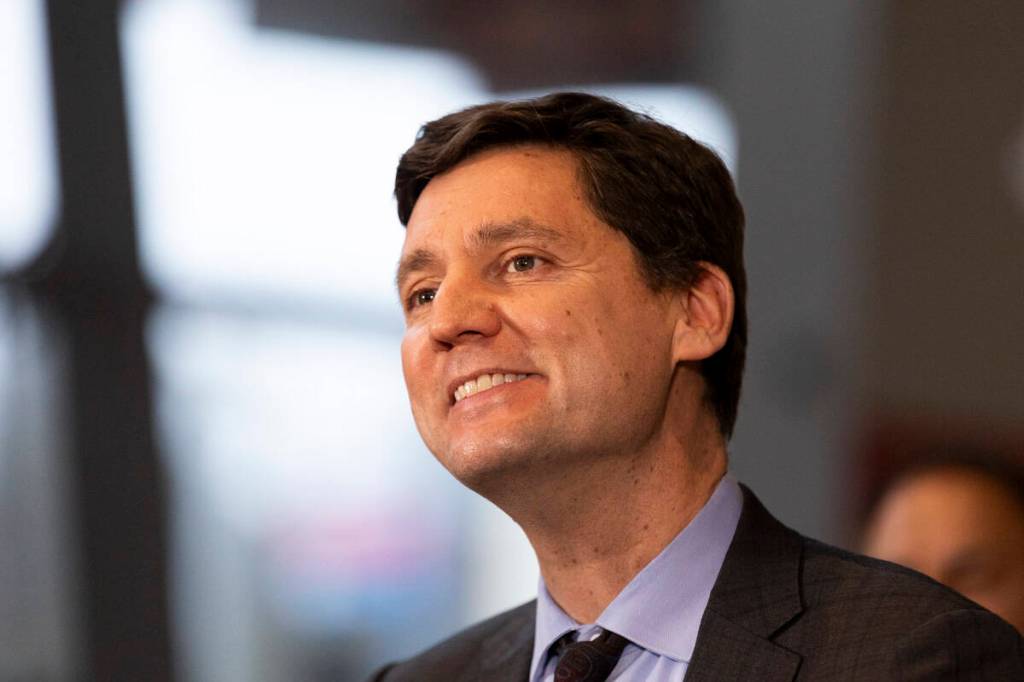
In a year marked by significant challenges, British Columbia Premier David Eby has acknowledged the evolution of his leadership style and priorities. In a year-end interview with Black Press Media, Eby reflects on how his responsibilities as premier and as a father have shaped his understanding of the complexities facing the province.
Over the past year, British Columbia has grappled with pressing issues, including healthcare accessibility, rising living costs, entrenched homelessness, and a projected budget deficit of $11.2 billion. Eby noted the emergence of new challenges, such as tariffs and contentious court decisions, which have complicated his administration’s efforts. “As a father and as an almost 50-year-old, I’ve matured in my view around issues,” Eby stated, recognizing the intricate realities of governance.
Adapting to New Realities
The past year has pushed Eby to make difficult decisions, sometimes at odds with the values of his party, the New Democratic Party (NDP). While the NDP traditionally champions labor rights, Eby’s government found itself on the employer’s side during the longest public service strike in the province’s history. Additionally, despite environmental concerns within the party, he has advocated for natural gas projects to stabilize the economy.
Eby’s transition from activist lawyer to premier reflects a broader shift in his constituency. “Now my constituency is the entire province,” he explained, contrasting his previous focus on marginalized groups in Vancouver’s Downtown Eastside with the broader responsibilities he faces today. This shift has sparked internal tensions within the NDP, although Eby received a solid 82.3 percent support in a November leadership review.
According to Stewart Prest, a political science lecturer at the University of British Columbia, many left-leaning governments struggle to gain recognition for economic progress while facing criticism during downturns. “They’re fighting that battle against significant economic headwinds,” Prest commented, highlighting the complexities of Eby’s position.
Challenges and Controversies
One of the most significant controversies this year involved the government’s decision to purchase four ferries from a Chinese shipyard, which raised questions about Eby’s relationship with former NDP leader Joy MacPhail, who now chairs the BC Ferries board. Eby described MacPhail as his most trusted advisor, acknowledging her invaluable insights during crises.
The ferry deal was just one crisis in a turbulent year for the province. Eby identified a series of threats from U.S. President Donald Trump regarding a potential trade war as a defining moment. “The reverberations of those tweets echo through to today,” he said, noting that the situation provided him with political capital to advance legislation aimed at economic recovery.
However, tensions with First Nations have also escalated. Many leaders have criticized Eby’s administration for advancing infrastructure and energy bills without adequate consultation. The recent Cowichan Tribes court ruling, which challenged traditional land rights, further complicated the government’s relationship with Indigenous communities. The province is currently appealing this decision.
Adding to the challenges, the B.C. Court of Appeals declared parts of the Mineral Tenure Act invalid, citing conflicts with the Declaration on the Rights of Indigenous Peoples Act (DRIPA). Eby, who played a key role in the passage of DRIPA in 2019, faced backlash as critics argued that the law should not invalidate existing statutes.
As Eby navigates this complex landscape, political communications expert David Black suggests that he needs to reclaim control of the narrative surrounding key issues, such as the proposed oil pipeline from Alberta. “Taking possession of the pipeline issue and making it less something that’s done to them but something they’re doing for themselves might be their way out of this dilemma,” Black advised.
Looking ahead, Eby recognizes the need for careful balancing between economic growth and environmental protection. “What we’re trying to do is recognize that these are really serious and challenging issues, and that is going to take time,” he said. As he prepares for another year in office, it remains clear that Eby will continue facing significant hurdles while striving to implement meaningful change across British Columbia.











Morris Churches Unite for Annual Good Friday Walk With the Cross

Chloe Zhao’s ‘Buffy’ Reboot Cancelled: Sarah Michelle Gellar Speaks Out

Essential Ingredients for Life Found in Ryugu Asteroid Samples

Urgent Rescue: NSR Airlifts Injured Climber from Nanaimo

Riverside Heart Ball Achieves Record $815,000 for Mental Health

Cognizant Launches AI Factory to Enhance Enterprise AI Scalability

Samsung’s Galaxy Watch 9 to Feature Larger Battery Than Before

Toronto’s AIDS Memorial Faces Potential Redesign Amid Community Concerns

Bayern Munich Loses Luis Díaz Red Card Appeal Despite Referee’s Admission

Secwepemc First Nation Seeks Aboriginal Title Over Kamloops Area

Fatal Crash on Highway 11 Claims Three Lives, Major Closure Ongoing

Manitoba’s Burger Champion Shines Again Amid Dining Innovations

Canadian Curler E.J. Harnden Announces Retirement from Competition

Urgent Fire Erupts at Salvation Army on Christmas Evening

Scientists Unearth Ancient Antarctic Ice to Unlock Climate Secrets

Minister Faces Scrutiny Over Delayed Foreign Interference Watchdog Appointment

Trump and McCormick to Announce $70 Billion Energy Investments

Monika Hibbs Unveils Acres Market & Interiors in Major Rebrand
-
 Politics5 months ago
Secwepemc First Nation Seeks Aboriginal Title Over Kamloops Area
-
 Top Stories4 months ago
Fatal Crash on Highway 11 Claims Three Lives, Major Closure Ongoing
-
 Lifestyle7 months ago
Manitoba’s Burger Champion Shines Again Amid Dining Innovations
-
 Sports3 months ago
Canadian Curler E.J. Harnden Announces Retirement from Competition
-
 Top Stories3 months ago
Urgent Fire Erupts at Salvation Army on Christmas Evening
-
 World9 months ago
Scientists Unearth Ancient Antarctic Ice to Unlock Climate Secrets
-
 World5 months ago
Minister Faces Scrutiny Over Delayed Foreign Interference Watchdog Appointment
-
 Entertainment9 months ago
Trump and McCormick to Announce $70 Billion Energy Investments
-
 Lifestyle9 months ago
Monika Hibbs Unveils Acres Market & Interiors in Major Rebrand
-

 Science9 months ago
Four Astronauts Return to Earth After International Space Station Mission
-
 Lifestyle9 months ago
TransLink Launches Food Truck Program to Boost Revenue in Vancouver
-

 World1 month ago
Ranchman’s Cookhouse & Dancehall to Relocate by Early 2027