
Politics
Canada Advances Military Funding to Meet NATO Targets by 2035

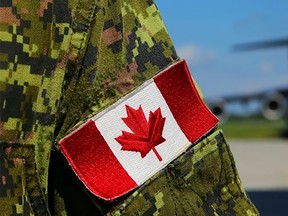
Canada is making significant strides in its military investment, aiming to reach a defence spending target of two per cent of GDP this fiscal year, with a long-term commitment to meet NATO’s five per cent target by 2035. Last June, Prime Minister announced these ambitious goals, and as the year progresses, the specifics of how this funding will manifest have not received the media attention they warrant. With global security challenges intensifying, the importance of this investment is underscored.
Key Investments and Strategic Changes
According to senior government officials, the two per cent target remains on track, demonstrating a commitment to strengthening national defence despite historical challenges in procurement processes. Much of the initial funding has been directed towards foundational elements that may not be visible to the public but are crucial for long-term military effectiveness.
The most noticeable change came last August when the government implemented a substantial increase in pay and benefits for the Canadian Armed Forces (CAF). This initiative alone represents an investment of approximately $2 billion this year and in subsequent years. This measure highlights the government’s awareness of the critical issues surrounding recruitment and retention in the military.
Further, a $9 billion funding package includes essential investments in training, recruitment, health care, and improvements to the CAF grievance system, addressing persistent issues faced by military personnel. These investments are not just financial but also strategic, aimed at bridging long-standing capability gaps.
Among the key advancements is the acceleration of payments for the over-the-horizon Arctic radar program, which signals to allies, including the United States, that Canada is serious about its role in North American defence. Investments in long-range precision strike systems are also underway, enhancing the army’s capabilities to match modern military expectations. Additionally, new logistics vehicles and Arctic mobility platforms are progressing, with initial funding already allocated to kickstart these projects.
Addressing Operational Readiness and Infrastructure
Equally important are the less visible investments focused on maintenance and infrastructure. The Department of National Defence reported that in the fiscal year 2022-23, only 61 per cent of force elements met operational readiness targets, a situation deemed both embarrassing and operationally dangerous. Improvements in spare parts availability and maintenance capacity are now being prioritized, and there is a renewed focus on upgrading facilities such as training ranges and naval ports.
New recruits arriving at military bases can expect modern and functional environments, a significant change from conditions that have persisted for decades. The government’s Defence Industrial Strategy, although delayed, is anticipated to foster regional investments and establish industrial partnerships in critical areas, including Arctic security and satellite communications.
A notable shift in decision-making speed was evidenced by the rapid selection of submarine providers last fall, indicating a commitment to streamline processes that previously took years. Attention is also being directed towards enhancing the digital infrastructure necessary for modern military operations.
Collectively, these investments indicate that the Canadian government is well-positioned to meet its two per cent commitment for this fiscal year. The relative lack of public attention on these efforts may stem from a desire among officials to avoid premature celebration until the goals are firmly achieved. As Defence Minister David McGuinty stated, “It may not sound sexy and it’s not front-page, but without reinvesting, rearming, and rebuilding the CAF, you ain’t running bases.”
As Canada continues to address its military capabilities, observers will closely monitor its progress, particularly given the country’s historical challenges in delivering on military promises. Critical decisions lay ahead regarding investment priorities and partnerships with allies. If Ottawa successfully meets the two per cent threshold by March 2025, it will demonstrate Canada’s commitment to enhancing its military capabilities in an increasingly unpredictable global landscape.
Gen. (ret’d) Tom Lawson serves as board chair and Wendy Gilmour is vice-chair of the Conference of Defence Associations Institute.













Morris Churches Unite for Annual Good Friday Walk With the Cross

Chloe Zhao’s ‘Buffy’ Reboot Cancelled: Sarah Michelle Gellar Speaks Out

Essential Ingredients for Life Found in Ryugu Asteroid Samples

Urgent Rescue: NSR Airlifts Injured Climber from Nanaimo

Riverside Heart Ball Achieves Record $815,000 for Mental Health

Cognizant Launches AI Factory to Enhance Enterprise AI Scalability

Samsung’s Galaxy Watch 9 to Feature Larger Battery Than Before

Toronto’s AIDS Memorial Faces Potential Redesign Amid Community Concerns

Bayern Munich Loses Luis Díaz Red Card Appeal Despite Referee’s Admission

Secwepemc First Nation Seeks Aboriginal Title Over Kamloops Area

Fatal Crash on Highway 11 Claims Three Lives, Major Closure Ongoing

Manitoba’s Burger Champion Shines Again Amid Dining Innovations

Canadian Curler E.J. Harnden Announces Retirement from Competition

Urgent Fire Erupts at Salvation Army on Christmas Evening

Scientists Unearth Ancient Antarctic Ice to Unlock Climate Secrets

Minister Faces Scrutiny Over Delayed Foreign Interference Watchdog Appointment

Trump and McCormick to Announce $70 Billion Energy Investments

Monika Hibbs Unveils Acres Market & Interiors in Major Rebrand
-
 Politics5 months ago
Secwepemc First Nation Seeks Aboriginal Title Over Kamloops Area
-
 Top Stories4 months ago
Fatal Crash on Highway 11 Claims Three Lives, Major Closure Ongoing
-
 Lifestyle7 months ago
Manitoba’s Burger Champion Shines Again Amid Dining Innovations
-
 Sports4 months ago
Canadian Curler E.J. Harnden Announces Retirement from Competition
-
 Top Stories4 months ago
Urgent Fire Erupts at Salvation Army on Christmas Evening
-
 World9 months ago
Scientists Unearth Ancient Antarctic Ice to Unlock Climate Secrets
-
 World5 months ago
Minister Faces Scrutiny Over Delayed Foreign Interference Watchdog Appointment
-
 Entertainment9 months ago
Trump and McCormick to Announce $70 Billion Energy Investments
-
 Lifestyle9 months ago
Monika Hibbs Unveils Acres Market & Interiors in Major Rebrand
-

 Science9 months ago
Four Astronauts Return to Earth After International Space Station Mission
-

 Lifestyle9 months ago
TransLink Launches Food Truck Program to Boost Revenue in Vancouver
-

 World2 months ago
Ranchman’s Cookhouse & Dancehall to Relocate by Early 2027