
Politics
Federal Court Ruling Promotes Financial Transparency for First Nations

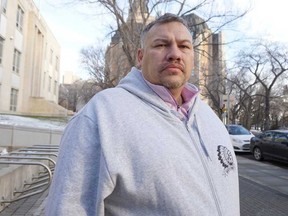
A recent decision by the Federal Court of Canada has affirmed the right of individual First Nations band members to access financial documents regarding their community’s expenditures. This ruling emerges from a case initiated by Hans McCarthy, a band member of the Frog Lake First Nation, in collaboration with the Canadian Taxpayers Federation. The court’s ruling underscores the importance of transparency and accountability in managing community funds, particularly in light of significant financial discrepancies.
Significant Ruling on Financial Accountability
The court’s decision highlights the necessity for transparency as a means to ensure accountability within First Nations governance. The Access to Information Act aims to promote an open and democratic society, a principle that the court believes should extend to the relationship between members and their local governance. The ruling emphasizes that without visibility into financial dealings, it becomes challenging for community members to hold their leaders accountable.
In 2013, the trust fund of the Frog Lake First Nation, primarily sourced from natural resource revenues, was valued at approximately $102 million. By 2024, however, less than $9 million remained in the fund. Despite inquiries about the missing funds, community members received no answers regarding the allocation and spending of their resources.
McCarthy remarked on the disparity in accountability mechanisms available to Indigenous communities. While many Canadians can seek investigations into financial matters through the auditor general, First Nations communities lack similar resources. “We have nobody to call,” he noted, highlighting the need for a dedicated auditor general for First Nations.
Legal Battle for Transparency
To address the lack of accountability, McCarthy and the Canadian Taxpayers Federation filed requests for access to information with the federal government, seeking clarity on the financial management of their community. Despite knowing that relevant documents existed, federal officials denied access, leaving McCarthy and his fellow community members without the information they needed.
In a decisive turn, the Federal Court ruled that the federal government was legally obligated to provide band council records, reinforcing the principle that financial management of community trust funds must be transparent to band members. This ruling is significant, as it sets a precedent for future accountability in First Nations governance.
“This decision ensures that band members can verify how those funds are being used,” said McCarthy, emphasizing the broader implications for communities across Canada.
Despite this victory, the federal government has since appealed the court’s decision, seeking to prevent the release of the documents. McCarthy expressed concern that the ongoing legal battles detract from the fundamental goal of transparency and accountability that should be standard practice.
In light of the challenges faced by First Nations communities, advocates like McCarthy argue for the establishment of an independent auditor general specifically for Indigenous communities. Such a role could provide a vital channel for accountability, enabling activists to seek answers without resorting to legal action.
Research commissioned by the federal government and the Assembly of First Nations has indicated that a dedicated First Nations auditor general would significantly benefit communities today and in the future. McCarthy emphasizes that enhancing financial transparency will ultimately lead to healthier First Nations communities, contributing to the well-being of Canada as a whole.
As the legal landscape evolves, the push for accountability continues. The recent ruling represents a crucial step towards ensuring that First Nations communities can hold their leaders accountable and access vital information regarding the management of their funds.












Morris Churches Unite for Annual Good Friday Walk With the Cross

Chloe Zhao’s ‘Buffy’ Reboot Cancelled: Sarah Michelle Gellar Speaks Out

Essential Ingredients for Life Found in Ryugu Asteroid Samples

Urgent Rescue: NSR Airlifts Injured Climber from Nanaimo

Riverside Heart Ball Achieves Record $815,000 for Mental Health

Cognizant Launches AI Factory to Enhance Enterprise AI Scalability

Samsung’s Galaxy Watch 9 to Feature Larger Battery Than Before

Toronto’s AIDS Memorial Faces Potential Redesign Amid Community Concerns

Bayern Munich Loses Luis Díaz Red Card Appeal Despite Referee’s Admission

Secwepemc First Nation Seeks Aboriginal Title Over Kamloops Area

Fatal Crash on Highway 11 Claims Three Lives, Major Closure Ongoing

Manitoba’s Burger Champion Shines Again Amid Dining Innovations

Canadian Curler E.J. Harnden Announces Retirement from Competition

Urgent Fire Erupts at Salvation Army on Christmas Evening

Scientists Unearth Ancient Antarctic Ice to Unlock Climate Secrets

Trump and McCormick to Announce $70 Billion Energy Investments

Minister Faces Scrutiny Over Delayed Foreign Interference Watchdog Appointment

Four Astronauts Return to Earth After International Space Station Mission
-
 Politics5 months ago
Secwepemc First Nation Seeks Aboriginal Title Over Kamloops Area
-
 Top Stories4 months ago
Fatal Crash on Highway 11 Claims Three Lives, Major Closure Ongoing
-
 Lifestyle7 months ago
Manitoba’s Burger Champion Shines Again Amid Dining Innovations
-
 Sports3 months ago
Canadian Curler E.J. Harnden Announces Retirement from Competition
-
 Top Stories3 months ago
Urgent Fire Erupts at Salvation Army on Christmas Evening
-
 World9 months ago
Scientists Unearth Ancient Antarctic Ice to Unlock Climate Secrets
-
 Entertainment9 months ago
Trump and McCormick to Announce $70 Billion Energy Investments
-
 World5 months ago
Minister Faces Scrutiny Over Delayed Foreign Interference Watchdog Appointment
-
 Science9 months ago
Four Astronauts Return to Earth After International Space Station Mission
-

 Lifestyle9 months ago
Monika Hibbs Unveils Acres Market & Interiors in Major Rebrand
-

 Lifestyle9 months ago
TransLink Launches Food Truck Program to Boost Revenue in Vancouver
-

 World1 month ago
Ranchman’s Cookhouse & Dancehall to Relocate by Early 2027