
Politics
How Hamas Dominated Palestinian Elections and Stays in Power

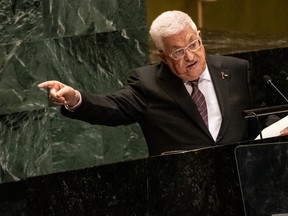
On January 25, 2006, the Palestinian Authority conducted elections for the Palestinian Legislative Council (PLC), marking the last electoral process of its kind in nearly two decades. In a surprising turn of events, the militant group Hamas secured a decisive victory, winning 74 out of 132 seats in the PLC. This outcome has allowed Hamas to maintain significant influence over Palestinian governance, even as the political landscape has evolved.
The elections were initially called by then-chairman of the P.A., Mahmoud Abbas, shortly after he assumed office in 2005, succeeding the late Yasser Arafat. In a bid to ensure participation from all factions, Abbas insisted that various groups, including those designated as terrorist organizations, such as Hamas and Palestinian Islamic Jihad, be allowed to run. This decision would ultimately play a crucial role in shaping the political dynamics within the Palestinian territories.
Despite expectations from Abbas and his Fatah party that they would easily win, the electoral results shocked many. Abbas had secured approximately $50 million in U.S. aid, along with an additional $2.3 million explicitly intended to support the elections. He also altered the voting system, expanding the PLC from 88 to 132 members in a bid to consolidate power. Nevertheless, these efforts failed to prevent Hamas from gaining a majority.
After the election, Abbas found himself in a position where he had to invite Hamas leader Ismail Haniyeh to form a government. On March 29, 2006, Haniyeh officially took office, establishing Hamas’s control over the Palestinian Authority’s administrative functions. The ensuing months saw a marked increase in militant activities, with Hamas launching over 1,700 rocket attacks from the Gaza Strip against Israeli targets in 2006 alone.
Hamas’s consolidation of power included significant military operations, underscored by their ability to smuggle large quantities of weapons into Gaza. In that year, Hamas reportedly imported 28 tons of explosives and thousands of firearms, reinforcing their position as an armed political entity. Despite initially tolerating Hamas’s government, Abbas took decisive action in early 2007, replacing Haniyeh’s administration with a technocratic government. This move, deemed unconstitutional by Hamas, led to violent clashes and ultimately to Hamas’s unilateral takeover of the Gaza Strip.
In the aftermath of Hamas’s ascent, Abbas continues to face challenges in maintaining his authority. The Palestinian Legislative Council convened and appointed a speaker, Aziz al-Dweik of Hamas. According to Palestinian law, if the president becomes incapacitated, the speaker steps in as interim president. To circumvent this possibility, Abbas dissolved the PLC in 2018, promising new elections that have yet to materialize.
Abbas’s integration of P.A. institutions into the Palestine Liberation Organization (PLO) further complicated the political landscape. The PLO operates its own legislative body, which is exclusively open to its members. Abbas’s decision to designate the PLO’s speaker, Rawhi Fattouh, as the potential interim president has been met with skepticism, particularly given the controversial nature of Abbas’s leadership.
As it stands, Hamas remains the legitimate governing body of the P.A., a status that raises questions about the future of Palestinian democracy. Public sentiment among Palestinians indicates widespread dissatisfaction with Abbas and the Fatah party. With Abbas now aged 90 and showing no signs of resigning, the political vacuum he may leave raises concerns about whether Hamas or Fatah will emerge as the dominant force in future governance.
The international community faces a dilemma regarding any potential future elections in Palestinian territories. Allowing Hamas and other designated terrorist organizations to participate could lead to a significant shift in power dynamics, complicating international relations and support for Palestinian governance. As the situation evolves, clarity from Israel regarding its stance on the participation of such groups in any future elections is essential.
Understanding the complexities of this political landscape is vital for any discussions surrounding peace and governance in the region. The legacy of the 2006 elections continues to shape Palestinian politics, with implications that resonate beyond its borders.









Morris Churches Unite for Annual Good Friday Walk With the Cross

Chloe Zhao’s ‘Buffy’ Reboot Cancelled: Sarah Michelle Gellar Speaks Out

Essential Ingredients for Life Found in Ryugu Asteroid Samples

Urgent Rescue: NSR Airlifts Injured Climber from Nanaimo

Riverside Heart Ball Achieves Record $815,000 for Mental Health

Cognizant Launches AI Factory to Enhance Enterprise AI Scalability

Samsung’s Galaxy Watch 9 to Feature Larger Battery Than Before

Toronto’s AIDS Memorial Faces Potential Redesign Amid Community Concerns

Bayern Munich Loses Luis Díaz Red Card Appeal Despite Referee’s Admission

Secwepemc First Nation Seeks Aboriginal Title Over Kamloops Area

Fatal Crash on Highway 11 Claims Three Lives, Major Closure Ongoing

Manitoba’s Burger Champion Shines Again Amid Dining Innovations

Canadian Curler E.J. Harnden Announces Retirement from Competition

Urgent Fire Erupts at Salvation Army on Christmas Evening

Scientists Unearth Ancient Antarctic Ice to Unlock Climate Secrets

Trump and McCormick to Announce $70 Billion Energy Investments

Minister Faces Scrutiny Over Delayed Foreign Interference Watchdog Appointment

Monika Hibbs Unveils Acres Market & Interiors in Major Rebrand
-
 Politics5 months ago
Secwepemc First Nation Seeks Aboriginal Title Over Kamloops Area
-
 Top Stories4 months ago
Fatal Crash on Highway 11 Claims Three Lives, Major Closure Ongoing
-
 Lifestyle7 months ago
Manitoba’s Burger Champion Shines Again Amid Dining Innovations
-
 Sports3 months ago
Canadian Curler E.J. Harnden Announces Retirement from Competition
-
 Top Stories3 months ago
Urgent Fire Erupts at Salvation Army on Christmas Evening
-
 World9 months ago
Scientists Unearth Ancient Antarctic Ice to Unlock Climate Secrets
-
 Entertainment9 months ago
Trump and McCormick to Announce $70 Billion Energy Investments
-
 World5 months ago
Minister Faces Scrutiny Over Delayed Foreign Interference Watchdog Appointment
-
 Lifestyle9 months ago
Monika Hibbs Unveils Acres Market & Interiors in Major Rebrand
-

 Science9 months ago
Four Astronauts Return to Earth After International Space Station Mission
-

 Lifestyle9 months ago
TransLink Launches Food Truck Program to Boost Revenue in Vancouver
-

 World1 month ago
Ranchman’s Cookhouse & Dancehall to Relocate by Early 2027