
Politics
Japan Approves Record Defence Budget Exceeding $58 Billion

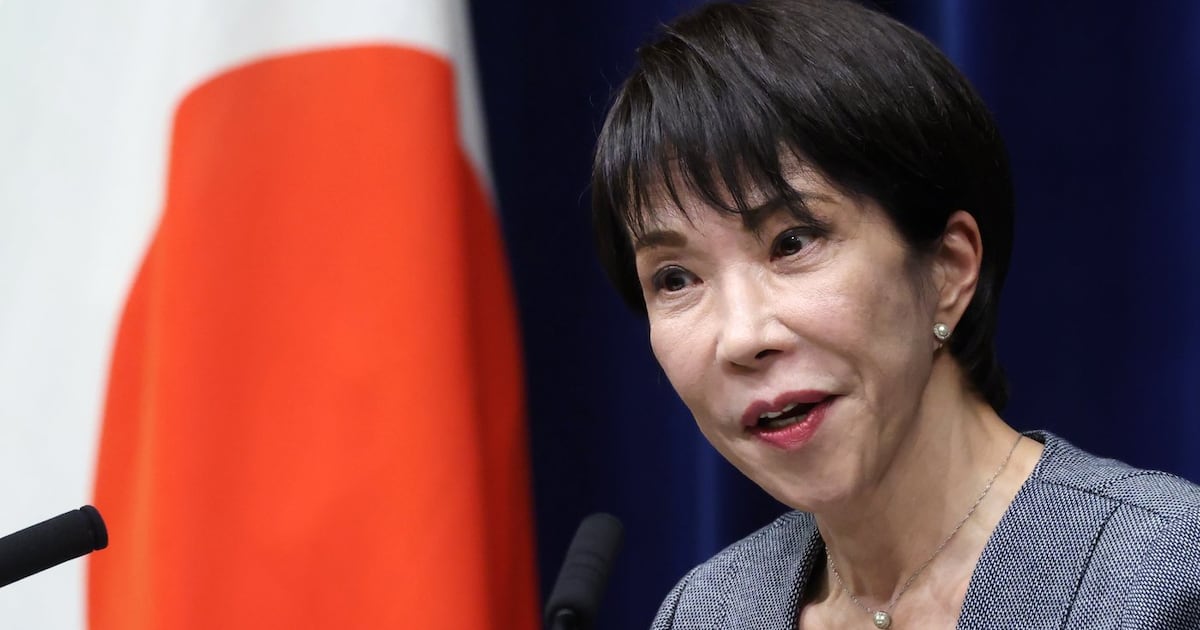
Japan’s Cabinet has approved a historic defence budget plan exceeding 9 trillion yen (approximately $58 billion) for the fiscal year starting in April 2026. This budget aims to enhance the nation’s military capabilities amid escalating regional tensions, particularly with China. The approved budget reflects a 9.4% increase over the previous year and marks the continuation of Japan’s five-year initiative to double its annual military spending to 2% of its gross domestic product.
The strategic shift is underscored by remarks from Japanese Prime Minister Sanae Takaichi, who indicated that Japan’s Self-Defense Forces (SDF) may engage if China were to act against Taiwan, a self-governing island claimed by Beijing. Under pressure from the United States, Takaichi’s administration is committed to achieving the 2% target by March 2025, two years ahead of schedule. Additionally, Japan plans to revise its security and defence policies by December 2026, further strengthening its military posture.
Investment in Advanced Military Capabilities
The new budget allocates over 970 billion yen (about $6.2 billion) specifically for enhancing Japan’s standoff missile capabilities. Included in this investment is a 177 billion yen (approximately $1.13 billion) expenditure on domestically developed Type-12 surface-to-ship missiles, which have a range of about 1,000 kilometers (around 620 miles). The first deployment of these missiles is scheduled for Japan’s southwestern Kumamoto prefecture by March 2025, ahead of the original timeline.
Japan’s current security strategy identifies China as its primary strategic challenge, advocating for a more offensive role for the SDF in collaboration with the U.S. As Japan contends with an aging population and a military facing staffing shortages, the government views unmanned technologies as vital to its defence strategy. Consequently, Japan plans to invest 100 billion yen (approximately $640 million) in developing unmanned air, sea-surface, and underwater drones under a program known as “SHIELD,” which is set for a March 2028 launch.
Escalating Tensions with China
This budget announcement coincides with rising tensions between Japan and China, particularly following Takaichi’s comments regarding military involvement should China act against Taiwan. Tensions escalated further this month when Chinese aircraft carrier drills near southwestern Japan prompted Tokyo to lodge a formal protest after Chinese aircraft reportedly locked their radar on Japanese planes, an action interpreted as a potential prelude to missile strikes.
In response to these developments, Japan’s Defence Ministry plans to establish a new office dedicated to monitoring China’s military activities in the Pacific. Reports indicate that two Chinese aircraft carriers were observed operating near Japan’s Iwo Jima for the first time, raising alarms about Beijing’s expanding military presence beyond its borders and within the disputed East China Sea.
Japan is also pursuing joint military developments with allied nations to bolster its domestic defence industry. For the 2026 budget, more than 160 billion yen (around $1 billion) is earmarked for collaborating with the UK and Italy on a next-generation fighter jet, anticipated for deployment in 2035. Additionally, there are plans for the development of AI-operated drones to accompany the new fighter jets.
In another significant move, Japan’s Mitsubishi Heavy Industries was selected by Australia in August to upgrade its Mogami-class frigates, replacing an aging fleet of ANZAC-class ships. The budget allocates nearly 10 billion yen (approximately $64 million) to support the domestic arms industry and promote international sales.
The budget plan must receive parliamentary approval by March to be enacted as part of a comprehensive national budget bill valued at 122.3 trillion yen (around $784 billion). The five-year defence spending initiative is projected to elevate Japan’s annual military expenditures to nearly 10 trillion yen (about $64 billion), positioning the nation as the world’s third-largest military spender, trailing only the U.S. and China.
Funding for this military expansion is planned through corporate and tobacco tax increases, along with a proposed income tax hike set to take effect in 2027. However, the long-term sustainability of maintaining defence spending at a higher percentage of GDP remains uncertain.












Morris Churches Unite for Annual Good Friday Walk With the Cross

Chloe Zhao’s ‘Buffy’ Reboot Cancelled: Sarah Michelle Gellar Speaks Out

Essential Ingredients for Life Found in Ryugu Asteroid Samples

Urgent Rescue: NSR Airlifts Injured Climber from Nanaimo

Riverside Heart Ball Achieves Record $815,000 for Mental Health

Cognizant Launches AI Factory to Enhance Enterprise AI Scalability

Samsung’s Galaxy Watch 9 to Feature Larger Battery Than Before

Toronto’s AIDS Memorial Faces Potential Redesign Amid Community Concerns

Bayern Munich Loses Luis Díaz Red Card Appeal Despite Referee’s Admission

Secwepemc First Nation Seeks Aboriginal Title Over Kamloops Area

Fatal Crash on Highway 11 Claims Three Lives, Major Closure Ongoing

Manitoba’s Burger Champion Shines Again Amid Dining Innovations

Canadian Curler E.J. Harnden Announces Retirement from Competition

Urgent Fire Erupts at Salvation Army on Christmas Evening

Scientists Unearth Ancient Antarctic Ice to Unlock Climate Secrets

Minister Faces Scrutiny Over Delayed Foreign Interference Watchdog Appointment

Trump and McCormick to Announce $70 Billion Energy Investments

Four Astronauts Return to Earth After International Space Station Mission
-
 Politics5 months ago
Secwepemc First Nation Seeks Aboriginal Title Over Kamloops Area
-
 Top Stories4 months ago
Fatal Crash on Highway 11 Claims Three Lives, Major Closure Ongoing
-
 Lifestyle7 months ago
Manitoba’s Burger Champion Shines Again Amid Dining Innovations
-
 Sports3 months ago
Canadian Curler E.J. Harnden Announces Retirement from Competition
-
 Top Stories3 months ago
Urgent Fire Erupts at Salvation Army on Christmas Evening
-
 World9 months ago
Scientists Unearth Ancient Antarctic Ice to Unlock Climate Secrets
-
 World5 months ago
Minister Faces Scrutiny Over Delayed Foreign Interference Watchdog Appointment
-
 Entertainment9 months ago
Trump and McCormick to Announce $70 Billion Energy Investments
-
 Science9 months ago
Four Astronauts Return to Earth After International Space Station Mission
-

 Lifestyle9 months ago
TransLink Launches Food Truck Program to Boost Revenue in Vancouver
-

 Lifestyle9 months ago
Monika Hibbs Unveils Acres Market & Interiors in Major Rebrand
-

 World1 month ago
Ranchman’s Cookhouse & Dancehall to Relocate by Early 2027