
Politics
Manitoba Schools Reject Quebec’s Civility Rules, Embrace Flexibility

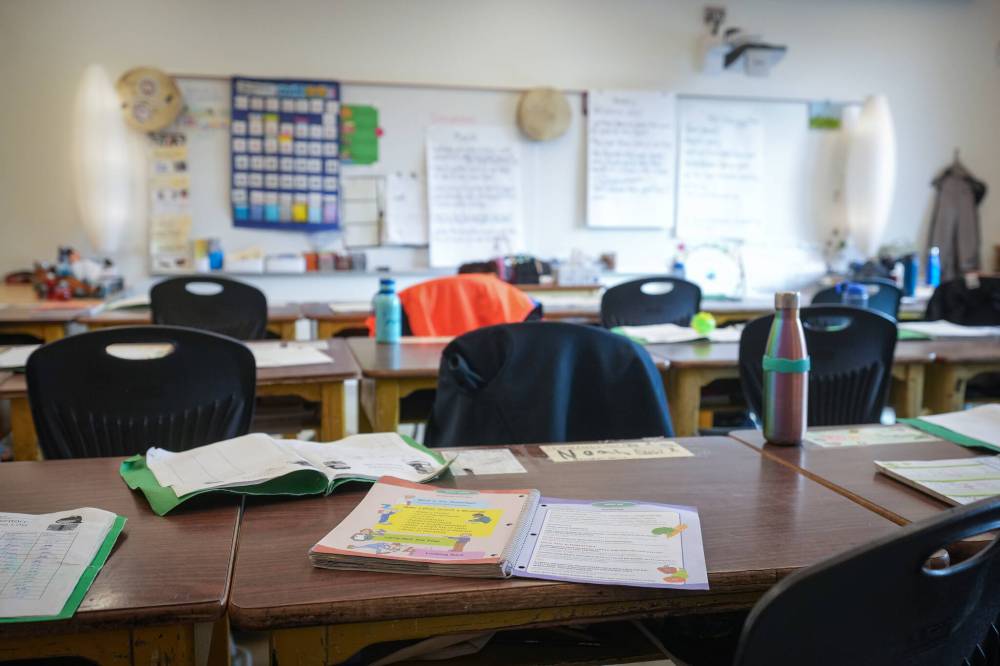
Manitoba schools have decided not to adopt new civility rules recently implemented in Quebec, allowing teachers the freedom to choose how they wish to be addressed by students. This decision has been met with approval from many educators in the province who value a more informal and approachable relationship with their students.
Starting in March 2024, Quebec has mandated that all students refer to their teachers with formal titles such as “Mr.” or “Ms.” This initiative aims to foster respect and civility within kindergarten to Grade 12 classrooms. In contrast, Manitoba educators continue to embrace a more relaxed approach, which they argue helps create a more inviting learning environment.
High school internship coordinator David Zynoberg emphasizes the benefits of first-name introductions. He believes that this practice humanizes teachers, allowing them to connect better with students. “We’re not just authority figures in the school,” Zynoberg stated. “It makes us more approachable.”
Principal Jane Suchy of Exchange Met School shares this perspective. By inviting students and parents to call her “Jane,” she expresses her commitment to building relationships and valuing their input. “Students are learning alongside their teachers. Teachers aren’t the experts of every single piece of knowledge,” she remarked, highlighting the importance of collaboration in her school’s philosophy.
Supporters of the current informal practices in Manitoba argue that teachers should have the autonomy to decide what works best for their individual classroom cultures. Over the past decade, there has been a noticeable trend towards casual titles, particularly in elementary schools, according to Lillian Klausen, president of the Manitoba Teachers’ Society. She noted that this shift reflects a broader push for flexibility and recognition of individuals’ preferences regarding names and pronouns.
The absence of a gender-neutral prefix in French has also influenced how some teachers address their students. Klausen, who has used “Mme. Klausen” throughout her 30-year career, asserts that the method of address is not the key factor in creating a positive classroom atmosphere. Instead, she emphasizes the importance of building relationships with students and understanding their individual needs.
Cameron Hauseman, an associate professor at the University of Manitoba, encourages his education students to establish classroom agreements that define shared expectations. He believes that modern pedagogy is increasingly collaborative rather than teacher-centered. As Manitoba schools face challenges such as chronic absenteeism, Hauseman notes that teachers are exploring all avenues to make students feel welcomed and engaged.
In contrast, etiquette coach Jessica LoRusso advocates for a reconsideration of Manitoba’s stance. She argues that instilling basic social skills, including the use of honorifics, can enhance students’ confidence and interpersonal abilities. LoRusso warns that the absence of these skills can lead to misunderstandings and conflicts in professional settings.
While Manitoba’s francophone school division, led by Alain Laberge, has occasionally looked to Quebec for inspiration—such as implementing a ban on cellphones—Laberge does not see the latest civility rules as beneficial. He contends that formal titles like “vous” can create distance between educators and students.
For Zynoberg, the essence of professionalism lies in teachers’ behaviors rather than what they are called. “Leaders can present as leaders, no matter what they’re called,” he said. “What makes somebody a leader is how they treat others, how they manage themselves, and how they deal with conflict resolution.”
As Manitoba educators continue to champion a culture of approachability and flexibility, the province remains distinct from Quebec’s formal approach to civility in schools. The ongoing dialogue around these practices highlights varying perspectives on the best ways to foster respect and connection in educational environments.













Morris Churches Unite for Annual Good Friday Walk With the Cross

Chloe Zhao’s ‘Buffy’ Reboot Cancelled: Sarah Michelle Gellar Speaks Out

Essential Ingredients for Life Found in Ryugu Asteroid Samples

Urgent Rescue: NSR Airlifts Injured Climber from Nanaimo

Riverside Heart Ball Achieves Record $815,000 for Mental Health

Cognizant Launches AI Factory to Enhance Enterprise AI Scalability

Samsung’s Galaxy Watch 9 to Feature Larger Battery Than Before

Toronto’s AIDS Memorial Faces Potential Redesign Amid Community Concerns

Bayern Munich Loses Luis Díaz Red Card Appeal Despite Referee’s Admission

Secwepemc First Nation Seeks Aboriginal Title Over Kamloops Area

Fatal Crash on Highway 11 Claims Three Lives, Major Closure Ongoing

Manitoba’s Burger Champion Shines Again Amid Dining Innovations

Canadian Curler E.J. Harnden Announces Retirement from Competition

Urgent Fire Erupts at Salvation Army on Christmas Evening

Scientists Unearth Ancient Antarctic Ice to Unlock Climate Secrets

Minister Faces Scrutiny Over Delayed Foreign Interference Watchdog Appointment

Trump and McCormick to Announce $70 Billion Energy Investments

Four Astronauts Return to Earth After International Space Station Mission
-
 Politics5 months ago
Secwepemc First Nation Seeks Aboriginal Title Over Kamloops Area
-
 Top Stories4 months ago
Fatal Crash on Highway 11 Claims Three Lives, Major Closure Ongoing
-
 Lifestyle7 months ago
Manitoba’s Burger Champion Shines Again Amid Dining Innovations
-
 Sports3 months ago
Canadian Curler E.J. Harnden Announces Retirement from Competition
-
 Top Stories3 months ago
Urgent Fire Erupts at Salvation Army on Christmas Evening
-
 World9 months ago
Scientists Unearth Ancient Antarctic Ice to Unlock Climate Secrets
-
 World5 months ago
Minister Faces Scrutiny Over Delayed Foreign Interference Watchdog Appointment
-
 Entertainment9 months ago
Trump and McCormick to Announce $70 Billion Energy Investments
-
 Science9 months ago
Four Astronauts Return to Earth After International Space Station Mission
-

 Lifestyle9 months ago
TransLink Launches Food Truck Program to Boost Revenue in Vancouver
-

 Lifestyle9 months ago
Monika Hibbs Unveils Acres Market & Interiors in Major Rebrand
-

 World1 month ago
Ranchman’s Cookhouse & Dancehall to Relocate by Early 2027