
Politics
Mark Carney’s Financial Strategy: A Five-Step Guide to Creative Accounting

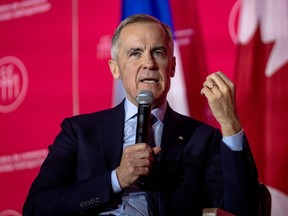
A recent satirical piece by Franco Terrazzano from the Canadian Taxpayers Federation outlines a tongue-in-cheek approach to government budgeting, presenting a five-step guide for effectively managing public finances. The analysis, while humorous, draws on real-world practices that have been observed in political finance management, focusing on the strategies that can lead to significant financial misrepresentations.
Step One: Balancing the Budget
The first step in this satirical guide advocates for a selective approach to budgeting. Instead of balancing the entire budget—which includes cutting a hefty $78 billion—the recommendation is to only balance one side. The author suggests that politicians should avoid disclosing the incomplete nature of this balance, as it could lead to public concern regarding future debt burdens on Canadian citizens. The use of confusing terminology, such as “fiscal anchor,” is advised to mask the reality of operating budget deficits.
This tactic relies on creating a perception that the budget is under control, despite the underlying issues. The guide warns that such practices will not alleviate the interest costs incurred from additional borrowing.
Step Two: Crafting a Catchy Slogan
Next, the guide encourages the use of a compelling slogan to accompany any borrowing. A straightforward phrase like “Taking on more debt to spend more on capital” is deemed too transparent. Instead, a more ambiguous slogan such as “Spend less to invest more” is suggested. This reflects an ongoing trend in political messaging that aims to simplify complex financial decisions into digestible soundbites, despite the underlying mathematical realities remaining unchanged.
As noted in the piece, the use of slogans does not alter financial outcomes, echoing sentiments from previous political leaders about the dangers of compound interest.
Step Three: Re-labeling Expenses
The third step involves a creative approach to categorizing spending. Instead of implementing actual budget cuts, the guide suggests re-labeling what constitutes “capital investment.” For instance, shifting $94 billion of operating expenditures into the capital investment category creates an illusion of reduced governmental spending.
While this may present a temporary victory in budget presentations, it risks scrutiny from financial watchdogs who may question the legitimacy of such categorization based on accepted accounting practices.
Step Four: Promising Future Savings
Canadians have shown a strong aversion to wasteful government spending. To mitigate public backlash, the guide recommends projecting savings of $60 billion over the next five years, without necessitating immediate cuts. By highlighting future savings without clear, actionable plans, the government can distract from the reality of increasing expenditures, which could see an increase of $100 billion over the same period.
This tactic suggests that immediate cuts can be deferred, with vague promises of future reductions buried deep within budget documents, making them less visible to the public.
Step Five: Altering Fiscal Targets
The final step advises a change in the fiscal targets used to evaluate financial health. By shifting focus from reducing the debt-to-Gross Domestic Product (GDP) ratio to a deficit-to-GDP ratio, the government can obscure the reality of its financial situation. Assertions that Canada has “the lowest net debt-to-GDP ratio of the G7” can create a misleading impression of fiscal stability, while the true state of the country’s debt remains more complex.
Such strategies may lead to eventual repercussions, as credit rating agencies could express concerns over persistent fiscal expansion and rising debt burdens.
Conclusion: A Cautionary Tale
While Terrazzano’s guide employs satire to illustrate the complexities and potential pitfalls of government budgeting, it serves as a cautionary tale about the risks of creative accounting. The assumption that the public remains unaware of growing debt and interest charges poses a significant risk to these strategies.
In a landscape where clear financial communication is paramount, the methods discussed might provide short-term gains but could ultimately undermine long-term fiscal responsibility. The reflections presented in this piece emphasize the importance of transparency and accountability in managing public finances, particularly in the wake of increasing governmental debt.












Alberta Judge Declares Premier’s Referendum Bill Undemocratic

Federal Minister Confirms 500 Algoma Steel Jobs Could Be Saved

Canadian Foodgrains Bank and Bunge Renew Commitment to Combat Hunger

Aisin Canada Secures $2.2 Million to Expand Production in Stratford

Kainoa Ancog Wins Athlete of the Week with Stellar Performance

Lyons Township High School Unveils New South Campus Facilities

U.S. Military Strikes Boat in Controversial Drug Operation

Mark Carney’s Financial Strategy: A Five-Step Guide to Creative Accounting

Manitoba Government Selects New Site for Supervised Consumption

Secwepemc First Nation Seeks Aboriginal Title Over Kamloops Area

Scientists Unearth Ancient Antarctic Ice to Unlock Climate Secrets

Trump and McCormick to Announce $70 Billion Energy Investments

Four Astronauts Return to Earth After International Space Station Mission

TransLink Launches Food Truck Program to Boost Revenue in Vancouver

Apple Notes Enhances Functionality with Markdown Support in macOS 26

Manitoba’s Burger Champion Shines Again Amid Dining Innovations

Urgent Update: Fatal Crash on Highway 99 Claims Life of Pitt Meadows Man

Ukrainian Tennis Star Elina Svitolina Faces Death Threats Online
-
 Politics4 weeks ago
Secwepemc First Nation Seeks Aboriginal Title Over Kamloops Area
-
 World5 months ago
Scientists Unearth Ancient Antarctic Ice to Unlock Climate Secrets
-
 Entertainment5 months ago
Trump and McCormick to Announce $70 Billion Energy Investments
-
 Science5 months ago
Four Astronauts Return to Earth After International Space Station Mission
-
 Lifestyle5 months ago
TransLink Launches Food Truck Program to Boost Revenue in Vancouver
-
 Technology3 months ago
Apple Notes Enhances Functionality with Markdown Support in macOS 26
-
 Lifestyle3 months ago
Manitoba’s Burger Champion Shines Again Amid Dining Innovations
-
 Top Stories2 months ago
Urgent Update: Fatal Crash on Highway 99 Claims Life of Pitt Meadows Man
-
 Politics4 months ago
Ukrainian Tennis Star Elina Svitolina Faces Death Threats Online
-

 Sports5 months ago
Search Underway for Missing Hunter Amid Hokkaido Bear Emergency
-

 Politics5 months ago
Carney Engages First Nations Leaders at Development Law Summit
-

 Technology5 months ago
Frosthaven Launches Early Access on July 31, 2025