
Politics
Northern Ontario Correctional Workers Demand Fair Pay and Support

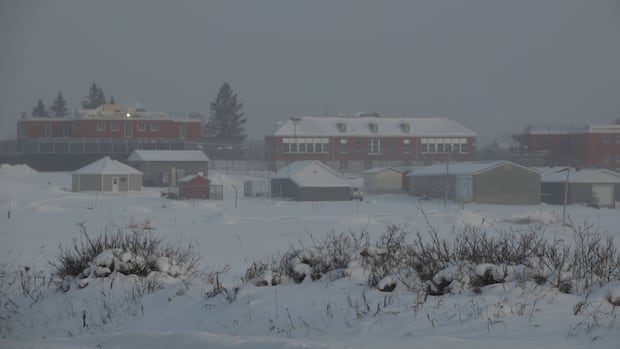
Correctional workers in northern Ontario are raising urgent concerns regarding significant pay disparities, the reliance on contract hiring, and a deteriorating mental health crisis among staff. These issues are exacerbated by chronic staffing shortages in provincial jails, leading to an environment described as being in “crisis mode.”
Dr. Louisa Marion-Bellemare, who provides medical care within a northern Ontario jail, highlighted the dire situation. “Instead of working on prevention, you’re always working in crisis mode, you’re always putting out fires… because our resources are so limited. And is that the best way to work? Absolutely not,” she stated. Her comments reflect a growing alarm as the inmate population continues to rise while the number of available staff remains insufficient.
The emotional toll on correctional workers is significant. Ken Steinbrunner, a guard at the Monteith Correctional Complex near Iroquois Falls and president of the Ontario Public Service Employees Union (OPSEU) local, reported that the mental health of staff has suffered severely under current conditions. He mentioned a recent suicide of a colleague, noting, “It’s a tough job and it can ruin lives. It has ruined lives.”
The rising concerns regarding mental health among correctional staff are underscored by statistics from Adam Cygler, a social worker at the Ontario Correctional Institute in Brampton. According to Cygler, the union has tracked at least 11 correctional workers who died by suicide since October 2021, and he emphasized that this number may not be exhaustive. “In 2023 alone, five Ontario correctional workers died by suicide,” he reported, pointing to the harsh realities faced by staff who experience repeated exposure to violence and trauma.
Staffing Shortages and Pay Disparities
Recent data indicates that northern Ontario jails are among the most overcrowded in the province. Steinbrunner and Cygler noted that the Ontario government’s claims of hiring more than 2,500 new staff for jails fall short of addressing the root problem. Cygler explained that many of these positions are not new but are instead contract roles intended to backfill existing vacancies. He likened the situation to hiring substitute teachers to manage a growing student population, stating, “It’s a temporary solution, but it’s not permanent.”
The pay structure for correctional workers also presents challenges. The union’s findings reveal that registered practical nurses in corrections earn approximately $34.45 per hour, while their counterparts in hospitals earn significantly more. Similarly, psychologists and social workers in jails receive $13 to $18 less than those in forensic hospitals. These financial gaps make recruitment increasingly difficult for a job already marked by high rates of violence and stress.
Cygler further elaborated on the impact of agency nurses in jails, who are often brought in to fill shifts. The province’s spending on agency nurses has surged from $13.9 million in 2020–21 to an estimated $51.3 million in 2024–25. While these temporary nurses earn more, they do not provide the continuity necessary for effective care within the correctional environment.
Calls for Improved Mental Health Support
The mental health benefits currently available to jail workers are capped at $2,500 annually, which Cygler argued is insufficient for staff potentially coping with complex trauma or post-traumatic stress disorder (PTSD). “We are essentially waiting to intervene until somebody is in one of the most challenging places in terms of their mental health,” he said, stressing the need for better access to mental health professional assessments and services.
Steinbrunner highlighted the critical work that jail guards perform daily, including intervening in medical emergencies and preventing violence among inmates. He asserted that without significant improvements in staffing levels, fair wages, and robust mental health support, the situation for correctional workers will likely worsen. “We need to make a sincere effort to change the working conditions because the jails are not just where we house people that are alleged to or have committed crimes. It’s also a workplace,” he stated.
As these issues continue to unfold, the Ontario Ministry of the Solicitor General has yet to respond to inquiries regarding the concerns raised by unionized workers. The health and safety of correctional staff, alongside the welfare of inmates, remain at the forefront of discussions surrounding the future of the province’s correctional system.

Morris Churches Unite for Annual Good Friday Walk With the Cross

Chloe Zhao’s ‘Buffy’ Reboot Cancelled: Sarah Michelle Gellar Speaks Out

Essential Ingredients for Life Found in Ryugu Asteroid Samples

Urgent Rescue: NSR Airlifts Injured Climber from Nanaimo

Riverside Heart Ball Achieves Record $815,000 for Mental Health

Cognizant Launches AI Factory to Enhance Enterprise AI Scalability

Samsung’s Galaxy Watch 9 to Feature Larger Battery Than Before

Toronto’s AIDS Memorial Faces Potential Redesign Amid Community Concerns

Bayern Munich Loses Luis Díaz Red Card Appeal Despite Referee’s Admission

Secwepemc First Nation Seeks Aboriginal Title Over Kamloops Area

Fatal Crash on Highway 11 Claims Three Lives, Major Closure Ongoing

Manitoba’s Burger Champion Shines Again Amid Dining Innovations

Canadian Curler E.J. Harnden Announces Retirement from Competition

Urgent Fire Erupts at Salvation Army on Christmas Evening

Scientists Unearth Ancient Antarctic Ice to Unlock Climate Secrets

Minister Faces Scrutiny Over Delayed Foreign Interference Watchdog Appointment

Trump and McCormick to Announce $70 Billion Energy Investments

Four Astronauts Return to Earth After International Space Station Mission
-
 Politics5 months ago
Secwepemc First Nation Seeks Aboriginal Title Over Kamloops Area
-
 Top Stories4 months ago
Fatal Crash on Highway 11 Claims Three Lives, Major Closure Ongoing
-
 Lifestyle7 months ago
Manitoba’s Burger Champion Shines Again Amid Dining Innovations
-
 Sports3 months ago
Canadian Curler E.J. Harnden Announces Retirement from Competition
-
 Top Stories3 months ago
Urgent Fire Erupts at Salvation Army on Christmas Evening
-
 World9 months ago
Scientists Unearth Ancient Antarctic Ice to Unlock Climate Secrets
-
 World5 months ago
Minister Faces Scrutiny Over Delayed Foreign Interference Watchdog Appointment
-
 Entertainment9 months ago
Trump and McCormick to Announce $70 Billion Energy Investments
-
 Science9 months ago
Four Astronauts Return to Earth After International Space Station Mission
-

 Lifestyle9 months ago
Monika Hibbs Unveils Acres Market & Interiors in Major Rebrand
-

 Lifestyle9 months ago
TransLink Launches Food Truck Program to Boost Revenue in Vancouver
-

 World1 month ago
Ranchman’s Cookhouse & Dancehall to Relocate by Early 2027